While some might say that digital has opened the doors to online players and has blurred the existence of local retail stores, new research says that the relationship between digital marketing & in-store shopping is far more interconnected than that. Foot traffic & word-of-mouth which were the assets of offline retailers before digital & mobile entered the lives of people, are not anymore the only assets which can be relied on.
Local retailers, in general, believe that online marketing works only for e-commerce websites. But, digital doesn’t just drive e-commerce, it actually gets consumers into local stores.
We are living in “always-on search world”, where people are always able to search. When they want to buy things or when they do have a query, they turn to their smartphones. Consumers now spend more than 15 hours per week researching on their smartphones.
There was a time when people would have to get to their computers. But now, searches on the desktop have dropped as mobile is always in reach. It is found that 21 percent of in-store shopping in urban India is influenced by digital and 18 percent is influenced by mobile. If you have a physical store, then mobile search is the new threshold to your store.
Most offline retailers in India are not aware of various mobile marketing techniques which they think are only for e-commerce players. This has led to them not making efficient use of the web to provide necessary information to the customer. Whereas, according to research customers are likely to go to an offline store when they find the store they are looking for listed in search results. It is found that 3 out of 4 shoppers who find local information in search results helpful are more likely to visit stores.
Image source- https://www.thinkwithgoogle.com/
The retailers need to realize that consumers shop digitally before going into the store and they should make sure they provide all the information that customers are looking for online. Thus, retailers should have the right digital marketers as this will help to drive more customers to visit the stores.
What most offline retailers lack is the right guidance how digital marketing can be leveraged to bring sales. There are many different ways in which the visits to their local store can be boosted.
This is the most effective method to reach out to as many customers as possible as shown by recent statistics. Many big companies engage in Pay Per Click (PPC) advertising. This is because PPC ads work in a way that brings best customer attention with minimal expenditure.
Brand Search Advertising reinforces the brand name, increases brand value and brings about brand awareness. These ads are so effective because they give the customer all the information he/she needs to know about the brand within a few lines. This way the customer does not spend a lot of time reading the ad, but manages to get the required information.
Also, ads can be shown to the people who search for the products using relevant terms. For example, one who is looking for a laptop store close to his location can be targeted using relevant search terms like laptop store near me, laptop stores in Chennai, which people normally use.
Another advantage of the PPC ads is that they can be targeted to the desired audience of a particular location, preferably places around their stores using Radius targeting. This way the ads are shown only to the people who might be interested in the product or service and more likely visit the store.
Since the retailer is charged each time these ads are clicked, showing these ads to a targeted audience will result in an increased conversion rate which will in turn result in an increased ROI. Where they appear is chosen by the retailer, but its ranking is decided by Google based on a number of factors.
This is the most traditional method by which offline retailers can show up on a customer’s search field below top PPC ads without having to pay a penny. A link to the retailer’s website automatically shows on the customer’s screen when he/she searches for something relevant to the products offered by the local store.
Where the retailer’s website is listed is again decided by Google based on the relevance of content and other factors. What the retailer should ensure is to provide the right and relevant content on the website of the store so that it shows up higher in the organic search listings. Hence, by this way the store can get a few more customers to visit its website by making sure it has a user -friendly website.
An important feature that drags customers to stores near their current location is the store locator available on Google. Using this feature the customers can know exactly how far the store is located from their present location and they can head straight to the store with the navigation feature of Google maps. Hence it is essential that all stores add their location on Google using Business map locator.
When a customer searches for something like textile stores, a list of textile stores nearby his/her location shows up with the address information of each store. By clicking on any of these stores in the list the customer can know exactly how far the store is and how long will it take to get there with the help of Google maps. Hence, if a customer knows that a store is close by to his/her location, then it drives the customer to visit the store.
In order to track the source of the leads that we receive through the above advertising methods, it’s recommended to generate unique phone numbers for each advertising channel. This way we can measure the effectiveness of each channel.
Today the consumer's path to purchase is becoming increasingly mobile. Retailers that provide relevant, local information online will increase both reach and sales. While helping to drive customer in-store it will also help to enhance the customer’s experience once he/she has entered the store. Mobile has reshaped the way the people shop, that is in a good way and retailers who make use of this in the right way will see themselves moving ahead.
Online Reputation Management has become an integral part of any brand’s digital strategy, as the online consumer base is constantly growing. According to a recent survey, 70% of Indians online prefer or have used Social Media for customer service or purchase recommendations at least once. With more and more consumers actively sharing and looking out for information online, it becomes crucial for brands to have a successful ORM strategy in place.
It is the process of managing and improving your brand's reputation through positive content promotion and prompt redressal of consumer complaints and grievances online. This customer-centric approach ensures credibility and helps monitor the brand sentiment online. In order to maintain a positive brand image, businesses need to constantly monitor conversations around their brand and the industry across social media, community forums, review sites, blogs and all over the internet. There are ORM tools available to track, analyse and manage online content, thereby making it easy for brands to streamline the process and carryout quality checks frequently.
Understanding how Online Reputation Management can impact your brand identity and business objectives is important, no matter how big or small the enterprise is. Here are some pointers on the key aspects of ORM can make or break your brand:
• Listen or Lose: Knowing what your customers are talking about your business online is very crucial for customer retention and acquiring new prospects. Majority of the consumers today refer to reviews and recommendations on various sites and social media platforms before making a purchase decision. Witnessing negative feedback about your service or product online can lead to distrust and drop in sales.
Hence, a timely response system needs to be in place to address customer grievances not just on social media, but also on review portals and forums that can show up on the Google Search results.
• Respond to Regain Trust: One of the most common mistakes that brands make when it comes to Online Reputation Management is deleting or avoiding a customer complaint. Covering up an issue is never a solution, as customer stories tend to have a greater reach and impact. Consumers appreciate public signs of transparency and honesty; hence always respond to negative comments and take the issue offline if needed.
When the issue is resolved promptly, there are higher chances of this troubled customer turning into a brand evangelist and post positive feedback about the brand’s approach and customer service. To know how you can efficiently track and respond to feedback on social media, see our detailed blog.
• Be Quick to Acknowledge Feedback: According to an average Internet user, a brand needs to respond to a consumer’s query or feedback online within 30 minutes or an hour. Prompt response with a relevant solution goes a long way in showing consumers that you are listening to them. It’s also one of the easiest ways to win back your customer’s trust and let them know you value them.
If you are unsure about something, it is always better to inform your customers that you are looking into the issue and will get in touch shortly regarding the corrective action. Because, more the time taken to respond, severe the damage is. If you are a B2C brand where the consumer engagement rate is high, opt for ORM tools that can help you streamline this process.
• Climb the Search Engine Ladder: There are close to 91 Million searches performed on Google each day. How many of those do you think could be about your brand? Big or small, leverage on SEO to make positive content dominate the Google Search results and push down the negative references about your brand. Promoting fresh, useful and positive content on various web pages about your brand can help in outranking negative comments over a period of time.
Most brands also take an integrated approach to effectively use Influencer Marketing in order to create positive word-of-mouth. This includes creation of blogs or reviews across community platforms, online review portals and social media.
• Customer Delight Made Easy: Being available online and making customer interactions meaningful helps in exceeding their expectations. A happy customer likes to share positive experiences and eventually becomes a brand loyalist. Businesses in the servicing industry can take the ORM route to dominate the competitive marketplace and demonstrate their trustworthiness & commitment to customers.
In order to achieve this, brands need to actively track brand mentions and follow conversations online to respond and initiate conversations. Being proactive not only helps to keep negative sentiments at bay, but also helps in building a positive brand perception.
• Establish your Brand Personality: Even though most brands are online and making efforts to improve customer experience, only few stand out. A unique approach towards addressing concerns and encouraging conversations helps in building the brand and differentiating yourself from the competitors. Online Reputation Management also serves as an opportunity to showcase your brand persona and cultivate a social media voice that will amaze your consumers.
Being witty and creative is one of the easiest ways to get noticed and make an impact on digital media platforms. Below is an example of Ola’s quirky response to a customer.
Online Reputation Management could be the missing piece in your digital strategy if you’re looking to create a difference and delight customers, but not there yet. Have you deployed effective ORM strategies for your brand and witnessed how it’s making or breaking your brand? Do write to us in the ‘Comments’ section.
Micro Moments has become a buzzword in the digital marketing environment in recent times. Especially, after Google’s content marketing team, Think with Google, came up with this phrase, more and more digital marketers are trying to utilize the micro moments to benefit their brands.
To start with, more and more consumers are using smart phones for most of their browsing. According to two different Google consumer surveys, almost 68% of smart phone users say that they check their smart phone within 15 minutes of waking up every morning; also, 30% of these users admit that they actually get anxious, when they don’t have their smart phones with them. In most countries, searches happen more via mobiles than desktop computers. This means that digital marketers, who intend to make an impression with their clients, should adapt mobile first strategy religiously.
According to the often quoted KPCB Internet Trends Report, it is said that most people check their phones about 150 times a day and they spend 177 minutes on an average with their phones per day. This means that, on an average, a mobile session lasts for just 70 seconds. Apart from texting their partners, sharing their selfies or travel pictures, commenting on their friends’ photos, there is a specific point of time where people look at their smart phones to get influenced by brands. These small moments where the consumers look for information on their phones are the micro moments that every digital marketer should utilize.
According to Think with Google, these micro moments can be classified into four, namely:
These are the four micro moments that are crucial for any business. With consumers’ online attention span being very low, i.e. as low as few seconds, to leverage these micro moments of consumers, brands must adapt mobile first strategy.
To grasp your consumers’ micro moments, a brand must refine all its contents to be mobile responsive and follow these four approaches.
One of the interesting facts about most consumers is that they might not be rigid on what brand they want. If they are looking at their phone for information or merely browsing, they might be more interested to buy your products if the information you provide interest them. Especially, while looking for information, users pick the business that are there in their search results and that have the most attention-seeking content.
By being there always in their smart phone, via both paid and organic methods, you stand a more chance than your competitors to convert them into your customers. One may think that by merely being there in the social media, how can a brand make the smart phone users become its consumers. The true fact is that by being there when users need some information, your brand is helping customers in their decision journey.
Also, at this point, mobile first strategy plays a major role. Since most of the searches happen via mobile phones, your website, landing pages, ads, posts, and any content should be mobile responsive. Also, it must be interesting and crisp to be read within those micro moments.
While you can make an amazing first impression with the first approach, to make the users your clients/customers, you need to do something more; in fact, you must do something more powerful. Bounce rate of many sites and uninstalling of many apps are on a rise; the main reason for this is that most of these brands fail to be useful to their customers in the four micro moments explained above.
If your consumer is on a search engine searching to buy a product related to your brand, he or she is more likely to pick your brand over a hundred others when your content is useful than the others. We have a detailed strategy on how to create 10X better content than your competitors. With mobile first strategy, you are in a good spot because it allows you create and showcase more pertinent content in these micro moments. This is why in our view a blog is important for every business. Using information like their past search history, location, time of search, and keywords, one can efficiently decide what to showcase to which user.
For example, if you are a brand that has multiple products, based on the target group, their preferences, you can use retargeting to showcase products/creatives that are useful to them. Rest assured, you would have definitely leveraged their micro moment.
If your mobile site or app takes a long time to load, the users are more likely to leave your site/app for other that of other brands. All your efforts of providing useful content and being there goes waste, if the speed at which your information loads is slow. To optimize your mobile site and app speed to suit the speed of your customers, you must follow these steps:
Almost 40% of users wait not more than 3 seconds for a site to load before leaving the site, if you do not optimize your site better, all your other efforts becomes futile.
You have done your best by being there, being useful, and being quick. With mobile first approach, these efforts will definitely reap results. The results can either be customers or leads to prospective customers. However, on the longer run, measuring and reviewing your micro moments strategy is what helps you to refine and evolve with the evolving trends.
The real estate industry in India and Bangalore in particular is growing rapidly with real estate companies establishing new developments in and around the city. Real estate developers are also using digital marketing to update their clients and potential clients on the new projects and any exciting news that they may have.
From opting for a responsive website to having engaging social media content across channels, real estate developers are including digital marketing as part of their marketing and sales strategy. Keeping this in mind, we have put together a detailed report on the digital marketing strategies of some of the top real estate developers in Bangalore.
With developments ranging from residential to retail, from commercial to hospitality sectors, Mantri Developers are one of the few real estate businesses that have provided high-quality properties that match the current trends and future needs.
Mantri Developers have a descriptive website that covers details of all their projects elaborately.
Key features:
Website Insights:
| Total visits | Avg time on site | Page views | Bounce rate |
| 46.2K | 0:02:57 | 3.8 | 49.58% |
span style="font-weight: 400;">UX Audit: From a user’s perspective, this website has a lot of useful information. However, a more organized and spacious layout would connect better with the users and improve their experience.
Moz Rank: They have a Moz Rank 40 for Domain Authority.
Website Speed:
Twitter: They have an active Twitter account with around 3k followers. They do 4 to 5 tweets per week and have many promoted tweets too. The tweets are good from the users’ perspective. However, the engagement is low.
Facebook: They also have an active page with only organic posts and around 20k followers. Although they have tried interactive posts like the one shown below, the engagement is quite low. However, they can try to boost their posts to make it reach masses.
LinkedIn: They have a LinkedIn business page with around 4k followers. No recent updates are there in the page, but the older posts have good engagement. They respond to the comments on posts, which gives really good impression to the audiences.
YouTube: They have an active YouTube account with 164 subscribers. They post one or two videos every month which has good engagement.
Their Google+ and Instagram Pages are not active.
They have a Wordpress blog, but the last post was in August 2013. Blogs can give them a lot of traffic, so they should start posting at least one blog per month.
Prestige Developers is a real estate company that has triumphantly built a lot of residential, commercial, retail, leisure & hospitality based properties.
Prestige Developers have a common website, which covers detail of all their projects across all the cities they are serving currently. Their website is mobile responsive.
Website Insights:
| Total visits | Avg time on site | Page views | Bounce rate |
| 147.7K | 0:02:56 | 2.89 | 54% |
UX Audit: The elite images rolling in the banner connects the user to the luxury of the brand. The main menu could have been more prominent, instead of being placed against the sliding banners, but that apart, the site has very nice organization of the project information - presented state-wise and sorted by price.
Moz Rank: They have a Moz Rank 42 for Domain Authority.
Website Speed:
Twitter: They have an active Twitter account with around 2.5k followers. They do 10 to 12 tweets per week and have no promoted tweets. The tweets are mostly about their projects or on reasons to buy property. And the engagement on tweets is decent.
Facebook: This is also an active page with around 4 lac followers. All posts are organic and the engagement is low. They have almost same posts on Facebook as the ones they have posted on Twitter.
LinkedIn: They have a LinkedIn business page with around 3.5k followers. The page is active and engagement is also decent but they are posting same content on all the channels. They should differentiate the content as the audiences are different in different channels of Social Media.
YouTube: They have a YouTube account with 867 subscribers but it is not active. The last post was posted a year ago.
Their Google+ is not an active account, and they don’t have Instagram Page.
They don’t have any blog linked to their website. Blogs are a very good source of traffic and link building, so they should start a blog and link it to their website.
Tata Housing is one of India's leading real estate developers. It is a closely held public limited company and is a subsidiary of TATA Sons.
They have a website that covers details of all their current projects. Website has many tools like EMI calculator, Property finder, etc. and has a payment option as well.
Key Features:
Website Insights:
| Total visits | Avg time on site | Page views | Bounce rate |
| 144K | 0:01:47 | 2.72 | 65.56% |
UX Audit: The website comes with a clean layout and a very neat color scheme. One of the hugely useful utility – Search, is well planned here. User experience could be enhanced by placing the search in the primary top portion of the layout – so that it is easily discoverable. Every internal page corresponding to a project, has a different color scheme suited to the image. Even though the common practice is to maintain color consistency across pages, from the UX perspective this is indeed appealing.
Moz Rank: They have a Moz Rank 39 for Domain Authority.
Website Speed:
Twitter: They have an active Twitter account with around 14.5k followers. They do 3 to 4 tweets per week and don’t have promoted tweets. They have a diverse set of tweets ranging from customer testimonials to the initiatives they have taken in general. The engagement on tweets is good.
Facebook: This is also an active page with around 2 lac followers. All posts are organic and the engagement is good. They have interesting posts like the one shown below:
LinkedIn: They have a LinkedIn business page with around 12.5k followers. The page is active, and the engagement is also good. Content is exactly same as what they have posted on Twitter.
YouTube: They have an active YouTube account with 1187 subscribers. They post 1 video every month mostly about their new projects.
Their Google+ is active with around 600 followers, and their Instagram account is not active.
They have a blog which is linked to their website. The blog is not active as last post was on 6th Jan 2016.
Founded in 1976, Sobha Group is one of the largest real estate organisations in India and the Middle East. Today, they have presence in 24 cities and 13 states across India and throughout the Middle East.
They have a website that covers detail of their current project in all the cities they are serving in India, and they have an option to go directly to Dubai site.
Key features:
Website Insights:
| Total visits | Avg time on site | Page views | Bounce rate |
| 226.8K | 0:03:10 | 3.3 | 59.85% |
UX Audit: The submenus on the main menu are very interesting, with an image and well placed submenu items. Even for mobile, the menu is optimized well. The banner is the most informing entity of their website. It covers all the deals, promotions, new launches, etc. Usually extensive sliding banners don’t work, from user perspective. However, since the information below the banner is very minimal, the user has a better opportunity to focus on the extensive banner.
Moz Rank: They have a Moz Rank 32 for Domain Authority.
Website Speed:
Twitter: They have an active Twitter account with around 2k followers. They do 5 to 6 tweets per day, which is a lot as compared to their competitors. They have a diverse set of tweets ranging from their new projects to the general industry based news. Despite these, engagement is low on tweets.
Facebook: They have an active page with around 5.5 lac followers. All posts are organic, and the engagement is good. They have interesting posts like customer testimonial which is shown below:
LinkedIn: They have a LinkedIn business page with around 15k followers. The page is active and engagement is also good. Content is almost same as what they have posted on Facebook.
YouTube: They have a YouTube account with 466 subscribers but it is not very active. The last post was 8 months back.
Their Google+ is active with around 515 followers, and their Instagram account is not active.
They have a blog which is not active. They do not have any mention to their blog on their website.
Century Real Estate prides itself on being an integrated, full-service landholdings development company that offers the best real estate & property developers in Bengaluru.
They have a descriptive website, which covers detail of their current project in all the cities they are serving in India.
Key features:
Website Insights:
| Total visits | Avg time on site | Page views | Bounce rate |
| 20.5K | 0:04:48 | 3 | 46.54% |
UX Audit: The elevation overview image used in the banner is very attractive. It gives a very detailed idea of the luxury and environment of the residential project. The location sorter-tab is a good utility to filter residential projects in specific areas. The slide-in enquiry form looks neat and works comfortably.
The section ‘Bangalore - the place to be’, is well aligned with the idea of living in a place overlooking green luxury – the strength of their residential project.
Moz Rank: They have a Moz Rank 27 for Domain Authority.
Website Speed:
Twitter: They have an active Twitter account, but the followers are very less; it is around 50 only. They do 5 to 6 tweets per week, but the engagement is very low. Some of the tweets are interesting which give emphasis on Call-To-Action as the one mentioned below:
Facebook: They have an active page with around 47k followers. Some posts are organic, and some are boosted, and the engagement is good overall. They have interactive posts like the one shown below:
LinkedIn: They have a LinkedIn business page with around 1.2k followers. They don’t have any post on their page till now.
YouTube: They have a YouTube account with only 13 subscribers and it is not very active. They post once in around 3 months.
Their Google+ is not active, and they don’t have Instagram account.
They have an active blog which is linked to their website. And they have newsletter sign-up option for their blog.
The Puravankara Group commenced operations in Mumbai and has established significant presence in the metropolitan cities of Bangalore, Kochi, Chennai, Coimbatore, Hyderabad, Mysore and overseas in Dubai, Colombo and Saudi-Arabia.
They have a website with categories for cities they are serving in India and then cities have description of their current projects.
Key Features:
Website Insights:
| Total visits | Avg time on site | Page views | Bounce rate |
| 91.4K | 0:01:44 | 2.2 | 67.51% |
UX Audit: They have a very interesting drop down menu with all their residential projects listed. The supporting icons plus location information makes way of navigating to residential options more convenient.
Website Speed:
Twitter: They have an active Twitter account but the followers are very less, it is around 360. They do 5 to 6 tweets per week but engagement is low. Most of the tweets are themed around investment like the one shown below:
Facebook: They have an active page with around 37k followers. The posts are organic and have decent engagement.
LinkedIn: They have a LinkedIn business page with around 4k followers. They don’t have any post on their page till now.
YouTube: They have an active YouTube account with around 400 subscribers.
Their Google+ is not active, and they don’t have Instagram account.
They have a blog, but it is not active. It is also not linked to their website. The last post was in 2014.
Ozone Group one of the top builders in Bangalore & Chennai among the real estate construction companies.
They have a website with description of their projects on the banner images, which is very visual and catches the attention.
Key Features:
Website Insights:
| Total visits | Avg time on site | Page views | Bounce rate |
| 72.2K | 0:01:23 | 1.76 | 72.22% |
UX Audit: The information architecture of this page is very well-planned. Banner information with different projects and their status, makes it a valuable source of information. The website has a very well-built footer with latest news, enquiry form, and contact us.
Moz Rank: They have a Moz Rank 35 for Domain Authority.
Website Speed:
Twitter: They have an active Twitter account with around 1.5k followers. They do 2 to 3 tweets per week, but engagement is low. Most of the tweets are informative, like the one shown below:
Facebook: They have an active page with around 1 Lac followers. The posts are organic and have decent engagement. They have many images posted for different occasions.
LinkedIn: They have an active LinkedIn business page with around 800 followers. They have posts related to their achievements and activities on their page.
YouTube: They have an active YouTube account, but the subscribers are less. They have almost one video upload every week.
Their Google+ is not active, but the Instagram account is active with similar posts as Facebook.
They have a blog which is active, and it is linked to their website. Content is mostly about their projects.
Architect led design company in real estate development, Total Environment creates luxury apartments and villas for sale in India.
They have a website with very less content. They have put images of all their projects and every image has a small description of the project.
Key Features:
Website Insights:
| Total visits | Avg time on site | Page views | Bounce rate |
| 10.7 K | 0:04:42 | 11.86 | 22.30% |
UX Audit: The image slider is very different from the usual websites. It focused on every facility that the residence provides, thereby giving the user an entire perspective of what they’re signing up for.
On the con-side, there is no evident attractive information about their residential projects; the user might lose out on the purpose of the page
Moz Rank: They have a Moz Rank 21 for Domain Authority.
Website Speed:
Twitter: They have a Twitter account with only 100 followers. The account is not active, last tweet was in April.
Facebook: They have an active page with around 15k followers. The posts are organic and have good engagement. They have interesting posts like the one shown below:
LinkedIn: They have a LinkedIn business page with around 2k followers. They have very few posts that are about job openings only.
YouTube: They don’t have an YouTube account.
Both their Google+ and Instagram are not active.
They do not have a blog.
Nitesh Estates is the luxury real estate brand, which has developed state-of-the-art homes, hotels, office buildings and shopping malls in India.
They have descriptive and visually appealing website, which tells about their projects and promotional activities in detail.
Key Features:
Website Insights:
| Total visits | Avg time on site | Page views | Bounce rate |
| 17K | 0:04:30 | 3.9 | 29.11% |
UX Audit:
Moz Rank: They have a Moz Rank 31 for Domain Authority.
Website Speed:
Twitter: They have an active Twitter account with around 9k followers. They do 5 to 6 tweets per week, but engagement is low. They have tried engaging in campaigns like the one shown below:
Facebook: They have an active page with around 42k followers. The posts are organic and have decent engagement. They have many posts that talk about the facilities they have in their projects like the one shown below:
LinkedIn: They have an active LinkedIn business page with around 3k followers. They have posts related to their projects and the engagement is good on their page.
YouTube: They have an active YouTube account with around 1.2k subscribers. They have almost 2 to 3 video uploads every 2-3 months.
Their Google+ is not active but the Instagram account is active with similar posts as Facebook.
They have a blog which is active and it is on their website. Content is very diverse ranging from general topics of real estate to specific topics like tour of their property.
Brigade Group is a real estate and property developer in Bangalore & the rest of South India since 1986.
They have very colorful website, which tells about their projects across various cities. Their website is Mobile responsive.
Website Insights:
| Total visits | Avg time on site | Page views | Bounce rate |
| 99.7K | 0:01:55 | 2.22 | 58.56% |
UX Audit: Quick Finder turns out to be an excellent feature and well-placed to a user’s visibility. Categorizing their properties based on Commercial, Retail and Hospitality is very thoughtful. However the second half of the website could have maintained a more prominent and vibrant color theme like the first half of the site.
Moz Rank: They have a Moz Rank 40 for Domain Authority.
Website Speed:
Twitter: They have an Twitter account with around 150 followers. The account is not active, and the last tweet was in 2015.
Facebook: They have an active page with around 13k followers. The posts are organic and engagement is low. They have tried interactive posts but still the engagement is low as the one shown below:
LinkedIn: They have an active LinkedIn business page with around 9k followers. They have posts related to their projects and the engagement is decent on their page.
YouTube: They don’t have YouTube account.
Their Google+ is not active, and they don’t have an Instagram account.
They have a blog, which is on their website. It is not active; last post was in December 2015.
3 decades of delivering Quality Homes has made DRA a name synonymous with quality apartment constructions in Bangalore.
They have a website with good description of their ongoing as well as upcoming projects.
Key Features:
UX Audit: Each of the individual projects has a set of features that can viewed by a simple click, and all changes being reflected in a single space. This is a very simple navigation.
Moz Rank: They have a Moz Rank 19 for Domain Authority.
Website Speed:
Twitter: They have an active Twitter account with around 300 followers. They do 4 to 5 tweets per week but engagement is low. Most of the recent tweets are about their new project.
Facebook: They have an active page with around 25k followers. The posts are organic and have decent engagement. They have most recent posts only about their new project.
LinkedIn: They have an LinkedIn business page with around 80 followers. They have no posts till now.
YouTube: They don’t have a YouTube account.
Their Google+ is not active and they don’t have Instagram account.
They don’t have a blog.
Casa Grande defines designs and develops quality livings spaces and operates in niche residential segments like luxury villas and apartments in Chennai, Bangalore, Coimbatore and Cochin. The company also sells plotted development spaces. Projects in the pipeline are to the tune of around 2500 crores in the luxury apartments and villas category across these 4 geographies.
They have a website which is visually appealing with big banner images, info-graphics and video testimonials from clients.
Key Features:
Website Insights:
| Total visits | Avg time on site | Page views | Bounce rate |
| 76K | 0:05:29 | 3.21 | 43.02% |
UX Audit: The semi-parallax look adds a luxurious feel to the general theme of Casa Grande. The well laid-out contact information at the top of the page facilitates easy contact. The feature that shows the number of completed, ongoing, and upcoming projects. Clean color theme of the website and well organized layout is a great advantage.
Moz Rank: They have a Moz Rank 22 for Domain Authority.
Website Speed:
Twitter: They have an active Twitter account with around 2k followers. They do 4 to 5 tweets per week, but engagement is low. Most of the tweets are same as the ones posted on Facebook.
Facebook: They have an active page with around 1.2 Lac followers. The posts both organic as well as sponsored posts have decent engagement. They have some engaging posts like the one shown below:
LinkedIn: They have an active LinkedIn business page with around 490 followers. They have posts related to their offers but the engagement is very low on their page.
YouTube: They have an active YouTube account but the subscribers are around 200 only. They have almost two video uploads every month.
Their Google+ is active but engagement is low, and they don’t have a Instagram account.
They have a blog which is active and it is linked to their website. They post almost twice per month which is good as compared to their competitors.
They have a website with description of their projects and lot of content related to their mission/ vision. They have videos of testimonials by their clients.
Key Features:
UX Audit:
Moz Rank: They have a Moz Rank 24 for Domain Authority.
Website Speed:
Twitter: They have an active Twitter account with around 150 followers. They do 4 to 5 tweets per month which is low as compared to competitors. The engagement is low on their posts.
Facebook: They have an active page with around 8k followers. The posts are organic and have decent engagement. They post once a week mostly.
LinkedIn: They have an active LinkedIn business page with around 100 followers. They have posts related to their achievements and activities on their page but the engagement is low.
YouTube: They have an active YouTube account but the subscribers are less. The last video they uploaded was 9 months back.
Their Google+ is active, but they don’t have Instagram account.
They have a blog tab on their website but after clicking it is re-directed to their home page only.
Mahindra Lifespaces is one of the most reputed real estate property developers and they provide a one stop solution for NRI investment in India.
They have a website which is very colorful and interactive.
Key Features:
Website Insights:
| Total visits | Avg time on site | Page views | Bounce rate |
| 56.6K | 0:02:19 | 1.76 | 65.56% |
UX Audit: Using green as a theme is very impressive to an audience in real-estate. The simple and clean design appeals to the user’s experience. Sticky enquire and book now buttons, really serve the purpose of contacting, comfortably.
Moz Rank: They have a Moz Rank 41 for Domain Authority.
Website Speed:
Twitter: They have an active Twitter account with around 1k followers. They do 2 to 3 tweets per week but engagement is low.
Facebook: They have an active page with around 1 Lac followers. They have both organic as well as sponsored post and have decent engagement. They have some video posts that are quite interactive.
LinkedIn: They have an active LinkedIn business page with around 22k followers. They have posts related to their projects mostly and the engagement is decent.
YouTube: They have an active YouTube account but the subscribers are less. They have almost 2 to 3 video uploads every month.
Their Google+ is not active and the Instagram account is active but engagement is low.
They have a blog which is active and it is on their website. Content is diverse which ranges from general real estate topics to specific topics like their projects.
Godrej Properties has been instrumental in the construction of Residential, commercial and township projects across 12 major cities in India & continues to be.
They have a website with all the information needed but it is very simple in terms of design. They have all the information on the banner images which is very visual.
Key Features:
Website Insights:
| Total visits | Avg time on site | Page views | Bounce rate |
| 209.2K | 0:01:20 | 2.05 | 72.01% |
UX Audit:
Moz Rank: They have a Moz Rank 46 for Domain Authority.
Website Speed:
Twitter: They have multiple Twitter accounts according to projects.
Facebook: They have multiple Facebook accounts according to projects.
LinkedIn: They have an active LinkedIn business page with around 33k followers. They have posts related to their activities and the engagement is good.
YouTube: They have an active YouTube account with around 550 subscribers. They have almost one video upload every week.
Their Google+ is active and in Instagram account they don’t have any posts.
They have a multiple blogs for various summits and projects.
~Other contributors to this blog post are Allan William, Pournima Balasubramanian, Nandita Raman, Rohit Uttamchandani, Srilakshmi Indrasenan, and Akila Priyadarshini.
Blogs are no longer just an expression of an individual or a platform to share one’s ideas and thoughts. Blogs have started to be one of the most influential and useful tools in the market space. It’s an excellent way to showcase thought leadership as well as keep consumers updated on what’s happening in the company and with the products/services. It is important to note that, in business blogging, the blogs must be related to the key area of the business and needs to be engaging for the readers. That being said, there are still a lot of businesses that are not very active in the blogging in spite of the inherent benefits of blogging. This blog aims to bring out the importance of business blog!
Increases traffic to your website
A website is a great asset to any company and anything that brings traffic to the site only doubles the asset’s value. The traffic on a website is very crucial, which indeed serves in achieving the objective of the site. One of the main reasons why people don’t return to a brand’s website is because it is idle and inactive. Blogs give the internet users a great reason to visit your site and increase the traffic. According to a HubSpot survey, 60% of the brands who have constant blogging on their websites acquire more customers than the others. Blogs help people or potential customers discover your website amongst million others. This happens when the blogs are informational and also related to what users would like to read from your website. It is also said that blogging shows a professional approach for the brand business. By providing useful information, it attracts people to visit the site even repeatedly. Who wouldn’t like more visitors to their website, anyway?
Increases Search Engine traffic
To appear in SERP #1 is a dream! And to get there, you need to really work hard . There are more than 200 aspects which determine your rank in Google. But, nothing like some good content! Blogs are now a vital part of Search Engine Optimization and can be leveraged upon in two ways. One, include it as just an additional index page to your website which Google then identifies and eventually will garner organic search results. Another way is to include targeted keywords and links which will help in increasing the ranking of the site by getting you noticed more in the search results. This exercise becomes easier with the help of SEO plug-ins. By using an SEO plug-in like Yoast which calculates the density of the appearance of the focus keyword in the blog will check whether the right keyword is used on the blog. Research shows blogging increases inbound links by 97 percent, the most important factor in Google’s ranking algorithm. Quality content and regular updates are an indication to Google that the website is active with a routine content flow! Explore some of the latest SEO hacks, here.
Customer Acquisition and Lead generation
The ultimate goal for every business, big or small is to generate revenue and blogs help you do that. Regular blogging, as mentioned earlier increases the traffic to your website. Small businesses with blogs are said to generate more leads by 126%. The increase in traffic will result in more people taking note of your business and eventually exploring the rest of your website where all your business services are listed. This is a great way of acquiring customers without bombarding them with self-promotional content. While creating content you should keep in mind that every person who visits your website has the potential to be a customer. When your target audience finds your blog interesting, they may be more interested in your business than they were before and the chances of conversion are higher.
Content creation for social media platforms
Another reason why blogs are important to your business is that they create a huge content value for Social Media Marketing. It is almost mandatory for brands to have an identity on social media and the only differentiation is content. Content defines your brand identity and helps you stand apart from the rest of the crowd. Creating quality content in the form of blogs and sharing them on the social media channels can help get more reach. The number of likes, shares, retweets will testify for your content. Here’s an interesting and informative blog post that was shared on social media for amplification.There are many other ways to amplify your content online. Click here to read about it.
Helps in building the brand
Branding is the core element to develop your business. Every business is striving hard to create a brand for them and to make people see them as THE BRAND and not just any brand. Blogging is a huge opportunity for you to build a brand for your company. It is, after all, the most organic method of getting people to notice your brand online. The key is to create a blog which adds value and is unique in its content approach and style. By creating specific, targeted content, you may focus more specifically on your target audience leading to increasing your exposure among people. Learn how Content Marketing is one best way to give your brand an image!
Establishes authority and expertise
A good blog always answers a question, solves a problem or gives something valuable for a takeaway. When a brand constantly shares blogs that are useful to the customers, it develops an authoritative image in their minds. For example, for a group of angel investors, blog topics like- Tips for entrepreneurs, How to grow as a startup etc. along with other business strategies are going to be of some value to their readers. The ultimate aim is that when a user reads your blog, he/she should finish it with some value-addition. When people find answers or solutions on our blog, they are more likely to become your follower and they start seeing you as a source of information. Here are 10 ways to create better content for your readers.
Increases customer interaction
It is important for any brand to stay connected with their audience. The underlying factor behind the success of any business is the concern to satisfy the end customer and not just run your firm for money. To do so, brands should establish a good rapport with the customers. To improve on the customer interactions front, brands need to establish higher recall. The question is how do blogs help in this aspect? A higher recall can be established for your brand when you provide knowledge to your consumers and this, in turn, improves the relationship your brand has with the customers. It helps build trust which turns into brand loyalty eventually.
In a world where content speaks for itself and does half the job of a brand, blogs are the most crucial thing to look upon as a marketer. When blogging becomes a strategy in your marketing plan, you get a powerful tool to fight against your online competitors. If your company hasn’t started blogging, this piece is an indicator that it should!
Was this blog useful? Share your thoughts on other reasons you started blogging!
Social media and SEO are two interlinked strategies as both are organic driven and is dependent on fresh content appealing to the viewers. There is no direct mention by Google that increase in social media followers will directly improve the rankings for a specific set of reason. However,Google always insists on quality links and content rather than the quantity of shares and links. This article will be a guiding tool to realise how social media matters the most for SEO in a very specific technical context in contrast to other articles available online to show how all these strategies work in real time to improve the search rankings.
Social media helps in improving quality dwell times
As per Google patent: Document ranking based on document classification, 17 July 2012, we find that Google has invented algorithms to determine dwell times, which is a term used by Google to determine the engagement rate of the visitors to your website. This means that the time spent by visitors on your website must grow from first time to the second time and so on. Otherwise, Google will assume that your content is becoming stale. How do you do this? Of course,social media is going to play a vital role in improving your dwell times by constantly posting external inbound links to the content of your website. But the most important hidden factor, which Google is trying to tell here, is that growing the number of followers in social media alone is not going to work out. To satisfy the criteria of dwell times, there must be quality followers who really want to follow your content. Otherwise, even though you have 10,000 followers your search ranking is not going to improve.
Facebook and Twitter are the best platforms to increase your dwell times due to their popularity and the presence of huge user database.It is a good idea to post quality content onyour website,Facebook and twitter pages. Posting atleast two quality blogs per week and publicising the blog in your social media pages will gain you more organic leads and catch the eyes of Google. Another method to improve the number of quality followers can be to announce special offers in social media space. Contests, games and gifts attract the most and hence brands have resorted to this method as the next criteria for attracting visitors. Hence it is recommended to organise regular interesting contests and announce winners in social media and make a leader board of frequent visitors in your page to gain more visibility.
Gain ranks on link based criteria with the help of Social Media
As per Google patent: Document scoring based on link based criteria, 27 August 2013 we find that earning links is going to be an important strategy for SEO. But the earning must be steady and not altogether. For instance, Google algorithm does not count the aggregate backlinks but counts your backlink earnings over time. If you have a content published today and the number of backlinks is more this week than the upcoming weeks, then it is not considered fresh by Google. Fresh backlinks are something, which has steady demandeven after months after the date of sharing.
Although Facebook and Twitter platforms too help you score back links, the presence of the most recent option in the news feed and the limitation in number of friends who can view your posts will restrict the back links score. Quora and YouTube are the ideal platforms for this.For example, Quora is going to help you gain back links even after months from the date of posting. The reason behind this is people visit Quora for their queries and if you can manage to give quality answers with appropriate backlinks, then there are high chances for your content being visible even after a month or year. The same is in the case for blogs and YouTube videos.
Let us look into how backlinks in Quora works as a SEO strategy.
Quora is the only platform where students, investors, marketers etc. easily connect with each other without any restrictions. Beyond a Q&A search engine, Quora has become a tool to increase web traffic. Let us take a case study of how companies promoting credit card business use Quora as tool to market their product:
A person searching for answers for best credit cards in Quora not only has answers of various options but also tends to come across back links to the websites. When they click the links, the organic traffic to the website increases and becomes a basis for free lead generation.
Social Media has now become a Search Engine on its own
People do not view social media as a sharing platform alone anymore. It acts as a search engine too. For example, if someone wants to know more about a company or a person then they look into Facebook and Twitter activities as well apart from doing just a Google search. This way the organic searches in these platforms present a pool of opportunities for companies to capture and improve their visibility in digital space.
As a result of this, Facebook and Twitter pages/YouTube videos too appear in search engine results!
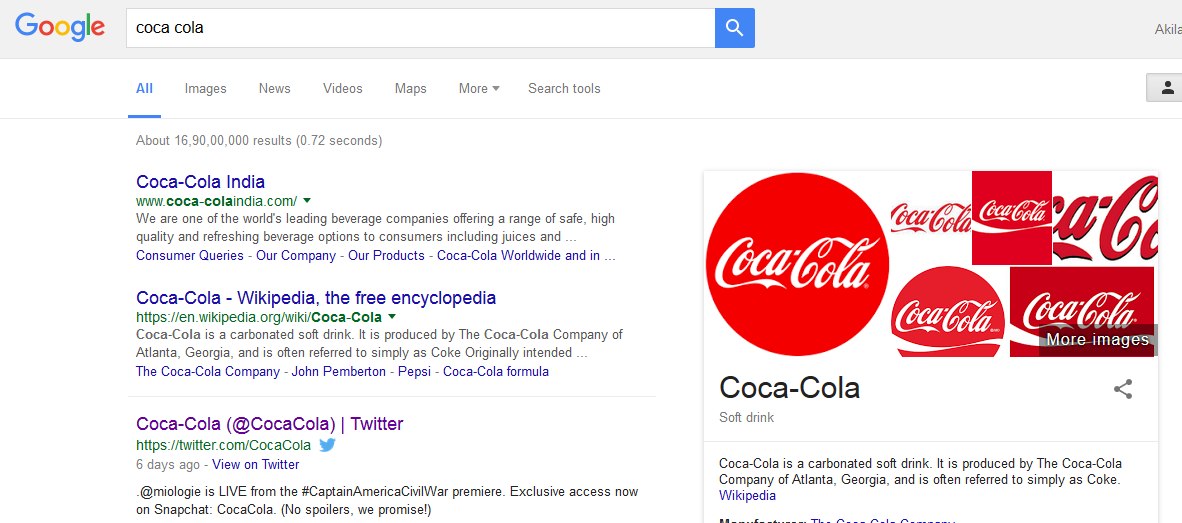
Google crawls through social media pages too for the content posted. Google claims that every Tweet/Facebook share/comments are content for them rather than features and hence they are able to crawl. Similarly if a Facebook or Twitter page appears in search results then it means that it is solely for the content in that particular page. Hence companies with optimised high quality social media pages are found to earn greater benefits from social media accounts in Google SERPs. For example when you type Coca Cola in the google search, you can find the links to social media pages in the search results. This is a clear indication that social media pages too matter in Google search.
What does research and experts say?
“Social media and SEO are somewhat integrated” – Quick sprout
Very recently an infographic released by quick sprout caught the attention of many digital marketers. The survey report clearly reveals that social media marketing is definitely one of the factors for the new SEO strategy with 50% of the companies saying that social media marketing and SEO are somewhat integrated.
“Social media as a SEO strategy is still a weak factor” – Moz report
However,Moz released a report on Search Engine Ranking factors 2015 which says otherwise. According to the report,social media is still less influential from SEO point of view. However engagement rate and content still being in one of the top factors can be indirectly related to social media. Hence we can expect that high quality content and engagement rate in social media will continue to give signals to Google.
How each platform impacts the search ranking?
Let us now check out how each social signal affects the search engine ranking based on the research reports of search metrics on “Search ranking factors for 2016”
Facebook:
The research by search metrics shows that signals from Facebook are high for the brands in Top 10 ranks of Google search and maintains a positive correlation. From the below graph we can see that there is a distinct difference between top 5 and the rest. We can also see that there is a drastic fall after rank 1, which means that top rank guy is distinct in the way he handles Facebook as a medium to drive traffic as compared to the one in second place and hence he continues to dominate.
Twitter:
The number of tweets and retweets too has a positive correlation with SEO strategy.However in 2016, the percentage has decreased and hence the down arrow. But twitter signals do matter in determining Google search rank positions.
Pinterest:
Compared to other social media platforms, Pinterest has increased across all rank positions in the year 2016 and is expected to increase even in the years to come. This tells us that almost all the rank positions are having more or less similar strategies using Pinterest and the one who is going to come up with a different way of using Pinterest will have high chances in sending dominating signal to Google.
So how do we leverage social media signals effectively for search?
From the above observations, we can see that social media does send signals to Google, although it is not a direct SEO strategy just like a Television. In television, good quality interesting program high attention, number of viewers increases with the buzz and finally gets high rating and people mark these channels as most viewed. Similarly quality contents and videos in social media send signals to Google with increasing views and Google ranks in their search engine accordingly. Thus we can call social media as a broadcasting platform.
Here are 5 essentials you must definitely do to leverage various social mediachannels.
1. Create a blog for your website
2. Post regular content
3. Share the articles in different social media platforms
4. Optimise the post with catchy taglines, infographics and videos
5. Update latest events happening in the company to get local attention and increase local searches for brand awareness, which may ultimately be a signal to SEO.
The metrics which matters the most for Social media as SEO strategy:
For businesses, results are the major area of concern. The number of likes and followers can no longer be shown as KPI by social media managers. Hence from SEO point of view, there are lot of metrics and analytics behind to prove that social media is indeed helping in SEO and ultimately increasing the profitability of the business. Let us now see the various metrics used to measure the ROI on a particular campaign:
Conversion rate:
This tells us the number of replies or comments, which we get from the audience for a particular post.
Amplification rate:
Amplification rate is the rate at which your content is shared regularly on different social media platforms. For twitter it is calculated by number of retweets, on Facebook or Google+it is the number of shares. On YouTube, the number of share clicks per video gives us the amplification rate.
Appreciation rate or applause rate:
As the word indicates, it gives us the extent of appreciation for our post.It is nothing but the number of likes on Facebook/Twitter/Youtube and +1s in Google+.
Number of leads for the cost spent:
Tools such as Facebook business manager, Google analytics and Twitter analytics have inbuilt analytics to find out the number of leads from a particular campaign.It also gives the total cost spent for the selected time period so that you can calculate the cost per lead from a particular campaign and compensate the price accordingly in the upcoming sales.
If all the above metrics are good, then search engine rank is also found to be higher for a particular page.
Tools that help you track and measure the metrics:
1. Using Google analytics to track business results:
Google analytics is the most powerful tool to determine who has visited your website, which platform works for converting leads for you and for day to day tracking of your marketing campaign. The top 5 things one should definitely analyse using analytics tool include:
2. Use Google Webmaster Tools to determine top destination pages :
Using Google Webmaster tools, one can determine the top pages under a particular search category and can plan out new content campaigns accordingly. You can also get an insight on which content gets more visibility and search engine conversions by viewing the destination pages displayed in the SERPs.
3. Use smart link managers to determine the quality links:
There are various link manager tools like raven link manager, which guide you to build possible referral links in your social media posts for building more traffic. Not only that, they automatically send you a report on the links, which get converted for smarter traffic building and better SEO.
4. Use BuzzSumo to find out the top shared articles and top influencers:
Buzz sumo is one of the most important content marketing tools that has the ability to identify what content is doing well in your field of interest. Also this application gives you details of top bloggers and influencers who you can leverage for making social media campaigns effective.
5. Moz research tools to determine the traffic and page ranks:
Moz is a tool that gives you details such as page rank, number of active visitors and the traffic to your website. Moz rank of 41 or above is considered to be good as per industrial standards.
On the whole, although social media is considered as a weak strategy by experts like Moz and there is no direct mention by Google, it is always an important area from SEO perspective. We recommend marketers who have not yet realised the importance of an active presence in social media platforms to pull up their socks, keeping in mind the above mentioned facts.
Email Marketing is one of the most actively used marketing channels. But every now then, we get queries that question the effectiveness of email marketing. Many feel its passé while others equate it to spamming. The truth is email marketing has never been more alive than it is today.
The dynamics of emailer marketing is changing fast but basics shall always remain the same – if you share something valuable with your audience, they are likely to engage with your content. Purchasing a database does not work anymore. Brands need to develop their own database of interested customers or potential customers who are more likely to engage with your email. Emails to your curated database is a personal, dependable and a direct way of reaching out to your audience.
'Out of all of the channels I tested as a marketer, email continually outperforms most of them'
- Neil Patel (Co-founder, KISSmetrics)
In this article, we have listed down useful ways in which you can develop your own email marketing database.
Make your email sign-up form visible on relevant pages on your website, more importantly the Blog page. Use either an embedded form or a Call-to-Action for people to click through to a dedicated sign-up page. Make sure that it’s in a prominent spot above the fold. The info about the possibility to sign up for the newsletter can be also placed in a pop-up window.
If you have a sign-up form on your site, make sure it’s easy to fill. Make it straightforward and resist the temptation to collect lots of demographic & lifestyle information at this stage. It will get in the way of collecting those email addresses. Always remember Short and Sweet is the King!
Good email content deepens the connection with your audience – it could be a powerful subject line (which get your messages opened); your unique voice (which gets your messages read); or niche-specific content your subscribers would find useful and shares with others (which inspires referrals and word-of-mouth). What works is “value exchange” — your valuable information for your prospect’s valued time. Your subscribers need to know they can trust you and that you’re not a self-promoting spam-bot.
We all need a little incentive to hand over our email address, but we don’t need too much if we feel an affinity with the brand. Try these…
- Offer a discount off their first purchase
- Explain what they’ll get: special offers, private sales, hints and tips, magazine articles…
- Show them what they’ll get (see our recent articles, news, reader offers etc)
You’ve built the perfect form. Now where to place it? Will more people see it on the ‘Contact’ page or ‘About us’ page? Should you keep the newsletter signup on your homepage? Or put it in the sidebar too? Decisions, decisions! Here are some top places to try placing an email signup form (or two or three) on your site:
Like a lot of other issues when it comes to websites and e-commerce, speed matters because Google says that it matters. On 09 April 2010, Google’s Webmaster Central Blog announced that, “We’ve decided to take site speed into account in our search rankings.” In other words, faster web pages will rank higher on search engine results pages (SERP) than slower sites.
A gated homepage is when a person has to enter their email address on the homepage in order to gain entry to a website’s content. One a person does so, a cookie is kept on their browser so that they don’t have to fill in their email address again to get access. But it is not always appropriate to Gate your homepage. You should have a lot of in-depth content which people are dying to read for them to give their email address. The right time is important too! To find the right moment, you want ‘yes’ answers to questions like:
Your landing pages should focus on one main detail and that’s converting visitors into subscribers. Whether you’re asking for contact details in exchange for a discount, a free webinar or something else that the subscribers would like to have, you are bound to get more to sign up. The Design of the Landing Page has to be exceptional too. Your subscribers are only as great as the landing page that get them.
If you don’t have social sharing buttons there’s a likelihood that your content won’t get shared. Someone might want to share the content with a friend but by the time they open up a new window and sign in to their social network, they will get distracted and forget about it completely. Don’t take the risk. Add share buttons so that blog visitors will stay on your site longer. Support your present subscribers to share and forward your content by including an "Email to a Friend" button. That way, you'll access a fresh network of new people who sign up for your emails. Do not forget to incorporate a "Subscribe" button as well in the footer.
“Subscribe” is up there with “Register” as an Internet no-no! Remove the words “subscription” and “subscribe”. The term implies a commitment and worse, money. Do away with any “Submit” or “Sign up”! Use first-person language instead – Try out phrases like “Sign me up” or “Send me updates.” Tell people exactly what they are getting by subscribing. Hint: It’s not a weekly email.
Online networking and social media marketing are useful tools to improve your online leads from which you can derive the email addresses of your potential subscribers. Build relationships with your target market via some of the popular social media networks such as Facebook, Twitter, and Google Plus.
You can host a Facebook contest or giveaway either on an application tab or on your Facebook timeline. However, if you’re hosting the promotion on your Facebook timeline, it’s next to impossible to collect emails. Hosting your promotion from a Facebook Offers App is the best approach since your target audience will have to fill in their email address to redeem the offer.
A combination of audio and video marketing using rich media can greatly improve the number of subscribers you get. Studies have shown that people like and share content that is mostly Emotional or Funny. You can share the content on your social media pages and drive fans to your website.
Do not miss the opportunity to showcase your website / content links at the right place – for example, your video on YouTube can have your website link in the description. You can also create Cards to drive more traffic. The Subscription part then depends on the last mile conversion on your website.
List Builder by SumoMe is for those individuals who want to seriously build their email list at a fast pace. The List Builder uses an email popup form to invite new visitors to join your email list, thus helping you get more subscribers. List Builder contains many features that help make it to the top of our list of email building tools. It’s A/B testing, no branding policy, fantastic templates, display controls, conversion tracking and multiple-popups will easily help you take your email list to the next level.
Welcome Gate is another great tool for building a list but this one works a bit differently. Why? That’s because it directs every new visitor to a well-designed landing page without showing a popup. Visitors are only redirected to the Welcome Gate page when they go to your home page. So if someone comes straight to a blog post through social media or any other source link, it would not be shown. A cookie keeps a track of this so the visitor will only see the Welcome Gate page once in their lifetime. After quite a lot of testing we came realized this plugin is more effective and powerful than other similar plugins.
ManyContacts is an easy to setup pop-up bar that sits on top of your website and helps to convert visitors into qualified subscribers. It was designed to help owners of all kinds of websites to increase their conversion rate through the collection and qualification of contacts. It also has a platform where you can easily export emails with details of each of your subscriber (email, device used, location, etc.), which you can add to your email archives.
OptinMonster utilizes opt-in forms as a part of an endeavor to transform your visitors into subscribers. The plugin gives out of the box integration with a popular email marketing service which makes the setup exceptionally easy. The business page of the plugin brags a 1 minute setup time and we can definitely acknowledge that. But you will need to spend more on customization and creation of forms based on your site design and goals.
A WordPress plugin that pops up in a place on your blog that grabs the attention of your readers without blocking their view of your content. Your visitors can open and close the pop-up whenever they want. It works well with any WordPress theme and is integrated with all of the popular email services: Mailchimp, Aweber, GetResponse, Office Autopilot and Infusionsoft.
There are probably thousands of visitors that come to your site every year and that never contact you. Increase the chances of gaining a new lead by using live chat to automatically reach out to your potential customers that visit your site. The best part about Zopim is that you don't have to lounge around on the PC throughout the day. By utilizing a programmed trigger, Zopim can naturally send every guest a message following 10 seconds of being on the site saying something like “Hey – do you have any inquiries I can help with?” In the event that they react, they will also be asked for their name and email address which is a win-win situation.
Numerous people have Facebook pages where they engage with fans by posting offers, running contests or uploading photographs. But this can be a pretty can be tedious task for an individual. That is the place an online networking promoting plugin like Woobox can offer assistance and help you take care of all this engagement seamlessly with its page tags. For marketers there is a twofold advantage here. Not just are you enhancing your online networking presence, but you are getting the email address of all those who redeem an offer or take part in a contest.
Digital Marketing Experts around the world have reiterated the effectiveness of emailer marketing. So you should not miss an opportunity to effectively connect with your audience. Get going!
“Page abandonment increases with every second longer it takes for your website to load”
You just created the sleekest website on WordPress that has a super responsive user interface and killer content, but you’re not getting any conversions! It all boils down to page load time at the end of the day. No matter how wonderfully you craft your website, if your page loads slowly, your visitor will navigate away. They’ll navigate to an uglier website with terrible content but that loads quicker. You don’t want that.
Page abandonment increases with every second longer it takes your website to load. All hope is not lost, however. With just a few simple and easy to implement ideas, take your tortoise of a webpage and give it a turbo boost.
First of all, test your website’s load time with this handy tool from Pingdom or pagespeed from Google. Does your website pass the 2-second rule? According to several surveys that a Kissmetric article researched, most web users look for a website that loads within 2 seconds. The longest they’ll wait is 3 seconds! Any longer than that and your page needs heavy optimizing.
Before reading any further make sure you have a good server and has servers based in India (if you are targetting the Indian market. We would recommend Bluehost for a shared Linux hosting or a Wordpress optimised hosting if your site is on Wordpress.
So you’ve run the test for your website and it’s pretty slow. What next? Check out these scientifically-backed tips to improve your website’s speed.
Yes, implement LazyLoad into your website design to improve the amount of time it takes for your site to load. With LazyLoad, you can cut back on the page load time, and allow users to save their bandwidth. Win-win for all!
Images (in sizes) are indirectly proportional to any website speed. Bigger the image, slower the loading, best solution is to compress images without losing quality. You can use free image compression tools like Caesium to compress images without losing much of its sharpness & clarity. In wordpress, there are plugins like Smush.It or Ewww Image Optimizer which use lossless/lossy method to optimize the images. The great thing about these plugins is that they work in the background every time you upload a new image you can also run it retrospectively on all of the images uploaded to your media library. They come with limitations that the base image should not be more than 1mb in size (so Caesium can be used to compress initially).
The WP-Optimize plugin allows you the freedom to optimize your MySQL database with just a click!
Want to be a cache-all master? With the W3 Total Cache, make caching a breeze. This will let your website load at blazing hot speeds, and ultimately lead to better conversions and leads. It can take care of elements like browser caching, Javascript, CSS & HTML Minification, setting expiry headers etc. Be careful in using the tool as it can affect your design & CSS files too.
Are your images, content, Javascript code and CSS in the same location? Consider having them on external files via a Content Delivery Network (CDN) like Cloudflare for the same.
Want a winning idea for speeding up your website? Reduce or get rid of cookies altogether. Your visitor will also be thankful that cookies don’t bog their system down.
Don’t redirect. When you redirect your visitor to another page, you’re only adding an additional HTTP which makes your page load slower.
Outbound and Interruption Marketing is losing its sheen in favor of Content Marketing and Native Advertising. Though they seem similar but there is quite a difference between the two forms of marketing. This article will help you understand the difference between Content Marketing and Native Advertising.
Content Marketing is a marketing approach that involves creating valuable and useful non-promotional content by brands. The important part in the first sentence is “valuable and “useful”. Self-serving and promotional content cannot be placed in the content marketing bucket: Value-add is the only secret.
Goals of Content Marketing:
The goals for content marketing can be broadly categorized as follows:
Different Forms of Content Marketing
Content Marketing can be done in varied formats but some of the key ones are discussed here.
Metrics to track the effectiveness of Content Marketing:
Tips for an effective content marketing strategy:
Native Advertising is a form of paid advertising where the content put out seems similar to the native content of the platform. You would have come across one or the other form of native advertising daily – while reading an e-newspaper, browsing through an ecommerce portal or on your favorite Google Search Engine. According to Business Insider, The global native advertising spend is estimated to cross $21 billion by the year 2018.
Goals of Native Advertising
Different Forms of Native Advertising
Metrics to track in Native Advertising
Tips for Native Advertising
Content is any brand’s most powerful weapon which can be used to fulfill marketing and branding objectives. A strategic approach towards creating and distributing content creatively can attract customers and propel them to take the desired action. While all brand managers are aware of this mantra and are working towards it, how can you differentiate your brand amongst the rest and make it trend?
Here are some interesting content marketing tips to make your brand famous and captivate your audience:
THINK DIFFERENTLY
While most brands that fall under the same industry or category have similar social media strategy, the one who thinks differently always reaps better results. Having a fresh perspective towards generic concepts can help in delivering content that interests the user and eventually improves your organic reach and engagement.
To quote an example, Planet SuperHeroes came up with an infographic on the New Year’s to show its audience how their lives will look like in 2016. Unlike many brands that did run-of-the-mill updates and wishes on this occasion, PSH went ahead with content that’s relevant to its audience. Boy, did this unique approach towards content marketing bring them organic results? See for yourself below!
Here's another example of unique content marketing strategy by the Tamil Nadu's Chief Election Officer, where movie and television references were used to spread awareness about the upcoming State Assembly Elections.
CREATE USER-FOCUSED CONTENT
Instead of just talking about your brand’s product and services, create useful content that interests your audience. This way, understanding your target group’s expectations and behavior can positively impact your social media content strategy. Spend time on public forums and communities to study the relevant topics discussed by your consumers. Create content that your customers are most likely to consume and will come back to you for more such information.
Petwish is an online pet portal brand who published a series of posts on different dog breeds and their lifestyle characteristics – to help customers choose the ideal dog breed for their family. This being an example of a customer-centric content approach, the campaign went viral garnering 42K shares and 20K likes on the page, all organically. Through this campaign, the brand was able to position itself as a knowledge source for its customer base and indirectly boost its branding and marketing efforts.
TAKE PLATFORM-SPECIFIC APPROACH
While planning your content marketing strategy, keep the communication same across platforms but approach them differently. Design your content to suit the language, environment and behaviors on different digital media platforms. While creating unique content is one thing, distributing it thoughtfully across platforms will help get the most value out of it.
Thus, understanding the potential of each platform and taking a channel-specific approach could result in reaching the right audience, the right way.
HIJACK LATEST TRENDS OR TOPICS
Creating content around trending topics or events is an age old technique that many brands have used and succeeded in the past. Spontaneity, messaging and creative presentation are the three important factors to keep in mind while plugging-in your content around a trending event. Use the right hashtags or keywords to make your content easily discoverable. And a tinge of good humour or objective take on a social issue would go a long way in increasing the shareability and making your brand trend along with the topic.
Below are some of the examples of brands that capitalized on the ‘Be like Bill’ meme that took over the Internet few weeks back.
USE HUMOUR, IF RELEVANT
Who doesn’t love humour when it’s appropriate and impressive? With memes and funny illustrations dominating the social media world, humour is undoubtedly the best universal language that brands love to speak.
Witty or good humour bridges the gap between a brand and its customer in so many levels and helps in building a community. Spontaneity coupled with creative humour has resulted in a number of successful brand campaigns in the past and will continue to do so.
MAKE USE OF VISUAL MEDIUM
2016 seems to be year of Visual Marketing with video content and infographics having the best ROI and reception amongst the users. Visual content grabs the audiences’ attention much faster than text and generates more social engagement. According to a recent study by Cisco, video will account for 80 percent of the global internet traffic by 2019. And the numbers have already begun to rise, as more and more brands are gradually moving some of their TV budgets to digital videos.
With the increasing availability of platforms such as YouTube, Vine, Periscope, Blab, Flipagram, etc. and the user community shifting to mobile and social, brand managers should make use of these visually appealing content forms to gain valuable results.
ROPE IN INFLUENCERS TO AMPLIFY CONTENT
If you have great content and are trying to amplify it through impactful sources, look no further. Influencer marketing helps in identifying leaders with a significant follower base, who can deliver your brand’s message to a wider audience and influencer their opinions / purchase decisions. Using influencers for your content campaigns can result in higher reach and engagement, thus giving you more mileage than your competitors.
What are the content marketing efforts that you’ve taken so far to improve your brand’s online presence? Do let us know about your thoughts in the ‘Comments’ section!