Be it a blog, an e-mailer or even posting a simple creative online, a business reaps all the benefits of digital marketing. While the world is rapidly shifting from analogue to digital, is it the same case even in Tier II and Tier III cities in India? One might still be doubtful on how a business in Bihar, or in a small town like Tiruchengode might make use of the digital medium but Social Beat begs to differ.
With more than 3,133 cities that fall under the tier II and tier III category, comprising of almost 31.16% of India’s total population, one cannot simply avoid taking them into consideration while discussing advertising and marketing online. According to a report by one of world’s leading media investment management group, 2016 and early 2017 was supposed to see a 51% increase in digital marketing in Tier II and Tier III cities. We are also seeing a lot of traction with digital content in regional Indian languages.
With internet access and as well as buying power of smart phones, thanks to the initiatives of the Government and some of India’s biggest internet companies, business in these cities now have a larger playground. Since almost 32% of the rural population with the above facilities access the internet on their mobile phones, it is important to generate such content for higher reach and engagement. For example, Facebook now has 160 million users in India, which are spread not just in the top cities but also in smaller towns and even some villages.
Firstly, to leverage digital for smaller websites every digital asset needs to have a great experience on mobile. Be it a website/landing page or a simple single creative – whatever helps in lead generation or branding of a business, it needs to be mobile-friendly. On small screens, the call-to-action button as well as the navigation button needs to be crisp. The copy has to be short, quick and easy to grasp.
Vernacular Ads work the best with respect to lead generation / marketing your brand:
Not just vernacular Ads but vernacular websites work miraculously well for business that either have their base in Tier II and Tier III cities or if they want to target their potential investors in such cities –
While running a Facebook Ad, it is important to understand that the target audience (TA) first needs to be someone in-and-around the city. For example, if it is a real estate project in Trichy selling affordable homes, the TA needs to be someone who when views the Ad will be able to:
A – Relate to the project in terms of location, approachability etc.
B – Compare the price of the project with other such builders
C – Visit the project with ease
D – Take a decision
While the project in the example cited above is in Trichy, the target audience can be just Trichy to start with but will not have a lot of reach unless we explore the little towns and cities in-and-around Trichy itself.
Selecting even the tiniest of towns that we might think will not make a big difference will definitely show results. The potential reach crosses over 730,000 people out of which there is a chance of a bare minimum of 40% to convert into customers.
With regards to the interests and behavior of the target audience, it is always better to keep it a little generic such as focusing on job titles, important IT companies / industries around the city etc. including minor yet vital details like their interest in Business magazines, stocks, shares, etc. If the campaign does well, and if it is for a real estate project in particular (where you think NRIs would like to invest in), go ahead and try a few NRI targeting options too – you never know, it might work wonders!
Looking at utilizing Google Adwords as a platform to advertise in Tier II and Tier III, it is highly recommended for the below reasons:
The keywords used for these Ads are usually very simple, straight forward terms. For example, for an e-commerce organic food store business, Google AdWords are likely to work better for keywords – ‘healthy food’, ‘organic vegetables’, ‘fresh organic food’ etc. rather than keywords like ‘organic grocery’, ‘organic farm food’ etc.
Planning to start up a business from the tier 2 and tier 3 cities of India? Follow our YouTube channel Arrear Irundalum Career for more insights. Here's a short video to get you started! Be sure to also visit our Arrear Irundalum Career website for further career guidance tips.
Tier II and Tier III cities’ have the potential for most businesses and these cities are growth drivers of the future. Tell us which strategy has worked for you in smaller towns!
By now many of you would have come across the latest feature released by Google Adwords called “Account Health Score for Search”. It can be found in the opportunities tab of the AdWords interface, where it displays a certain score along with a list of suggestions to improve your account health across various parameters, as shown in the image below.
This is a beta tool introduced by Google that analyses the AdWords account and grades it based on how well the Search Network campaigns are configured. It comes with a set of recommendations that when implemented, will help in improving the score and performance of your search campaigns. The score is between 0% and 100%. The better your campaigns are configured, the better it performs in terms of conversions and cost per conversion (lead or online sale). While starting a new ppc campaign or optimising an adwords campaign can be quite tedious, this tools gives you a ready checklist.
When you click on the get started button, you’ll be taken to the page where all the live search campaigns currently running in your account will be listed along with its health. Additionally, it also gives you a set of recommendations to improve the score for every campaign as shown in the image below:
For all businesses, there are a certain set of goals that needs to be achieved to succeed and ward off the competition. Some of the most important goals of businesses are as follows:
Increasing Traffic to Your Website:
If you don’t get any traffic to your website or the landing page, it will be similar to living in a ghost town with no people. Nobody wants that and paid traffic is one of the quickest ways to acquire your customers. While running search ads, Google recommends a certain set of suggestions which helps you in increasing the traffic to your website. They're as follows:
Increasing Click Through Rate (CTR):
Click Through Rate (commonly referred to as “CTR”) is a commonly used metric by digital advertisers to measure the success of an online advertising campaign. The higher the CTR, the more effective the marketing campaign will be in bringing traffic to a website. Google has listed out some set of recommendations for achieving higher CTR. They’re as follows:
Increasing Conversion Rate (CVR):
Every digital marketer in the world can acknowledge that conversions are the lifeblood of any online marketing campaigns. The main goal of running a lead generation digital marketing campaign is to acquire customers for your business. Measuring the conversion rate is a crucial metric for all digital businesses. For increasing the average conversion rates, Google suggests to implement a particular set of recommendations which are as follows:
Increasing Return on Investment (ROI):
ROI is typically the most important measurement for advertisers because it shows the real effect that AdWords has on your business. While it's helpful to know the number of clicks and impressions you get, it's even better to know how your ads are contributing to the success of your business. Hence, Google has set of recommendations to implement for getting better results. They’re as follows:
By implementing these suggestions, it can definitely help in improving your ROI to some extent. To know more about ROI, check out - Measuring ROI of Digital Marketing.
Reducing Waste Spends:
No in the world can create a perfect campaign in one go and forget about it all together. Every advertising campaigns need to be fine tuned and optimised on a continuous basis. One of the important ways to improvise effectiveness of the campaigns is to reduce the waste spends. For this Google recommends you to do the following:
Conclusion:
Our recommendation is to make use of this tool and implement all the suggestions provided by Google. It helps you to take advantage of many features that Google has to offer you and get the best out of your advertising efforts.
The ninth edition of the Digital Chai Pe Charcha in Chennai was held on 25th February 2017.It received an excellent response with about 35 participants including entrepreneurs, professionals, digital marketers and social media influencers taking an active part. The topic of discussion was Digital Marketing Trends to expect in 2017.
Here’s a quick summary of the key takeaways from the session:
You may find it interesting to read our other blogs on Digital Marketing.
We are delighted to share that Social Beat and Casa Grande, a leading real estate developer in South India, were recently awarded the Best Search Marketing and Display Campaign at the BBC Knowledge National Digital Marketing Awards at Taj Lands’ End, Mumbai.
Casa Grande was looking to scale up its digital presence and sales through lead generation online. We ran highly successful Ad Campaigns across Facebook, LinkedIn & the Google Search and Display Network leading to a 10x growth in number of leads generated and a 30% reduction in cost-per-lead.
Key Results achieved:
The Digital Marketing Awards recognises extraordinary work done by the marketing fraternity to take their brands into the digital era and we congratulate the entire Casa Grande Marketing team and Social Beat team on this milestone.
With another year gone by, new technology, tools, and trends have emerged in digital marketing. Keeping this in mind, we have put together eight key trends that we think would be ones to watch out for in 2017.
With 90% of mobile usage on FB and more than half of the searches happening via mobile, its already a focus area. We are going to see brands invest a lot more in the mobile user experience, especially when it comes to speed. Google has already launched Accelerated Mobile Pages (AMP) and Facebook is expanding its Instant Articles feature, both of which is going to expand their reach in 2017. Google is also pushing the Progressive Web Apps (PWA) framework to enable websites to give theirs user an app like experience via the browser. Even social media engagement via mobile is going to change with brands adapting to how they can get more engagement on mobile devices.
Brands often believed that more content is always better, but with millions of content pieces and social media posts going out every day, the opposite is true. 2017 is going to see a sharp trend towards brands focusing on high value content, which is engaging and far more personalised. With voice search growing in scale (currently at 20% of mobile searches in USA) many of our digital activities are going to be conversation. Even more a reason why content needs to be unique and stand out from the competition. Google also tends to pick more structured and details content for their “Answer Box”, which comes above the regular search results.
With automation and machine learning playing a large role in advertising this year will see even smaller brands adapting programmatic advertising. With platforms like Double Click for Google as well as Power Editor for Facebook, a lot of elements will get automated. Google has also launched responsive display advertising allowing for brands to run ads of multiple sizes without having a design team. YouTube is also soon launching a feature to allow for automated product showcase below videos, wherein machine learning would determine which product it is, rather than the brand manually having to tag which videos showcase their products.
The last time Google reported data on this, it showcased that Hindi content was growing faster than English content and this is likely to grow even further in 2017. With Netflix, Amazon Prime and others spearheading the video content in multiple languages, we are also going to see written and visual content growing in regional languages, especially Hindi, Marathi, Tamil, Kannada, Telugu, Malayalam and Bengali. Facebook has also launched an auto-translate feature for all the Brand Pages – though nascent it is bound to improve this year.
Building the brand is key and what better way than videos? Its never been easier to create videos with the help of free and low cost tools. As per statistics by Facebook, users watch an average of 100 million hours of video every day and most of these are on their mobile devices. Facebook has made it even easier with its Facebook Live feature, which is a very engaging tool, especially for the entertainment, fashion and hospitality industries.
Especially for online/offline the attribution will continue to be a grey area. While there have been many initiatives launched and many in the pipeline, most restaurants, retailers and offline stores find it difficult to attribute walk ins and business results to the digital medium. Facebook and Google Maps have been improving their proximity data to understand if users are at a specific location and encourage them to review the location. Google is also in early stage testing of beacons to allow for better attribution but it’s still 1.5 – 2 years away from mass adoption.
Brands have always found it difficult to be active on multiple social media networks and we do expect some consolidation. Twitter has been in talks of selling out and even growth of Snapchat has not increased. As platforms evolve and mature, we will see brands also focusing on select platforms that make sense – usually a maximum of 2-3 platforms.
There has been a lot of talk around virtual reality devices, including the launch of the DayDream by Google. While the experience it provides is phenomenal, it is not going to be main stream yet. While the cost of devices is getting lower, the adoption of these rather bulky devices is still limited to a select few tech savvy individuals at least in India.
The article was originally published at Business Standard.
Consumers are spoilt for choices across multi-devices and multi-channels, thus making sales competitive for marketers. As consumers become more and more digitally sound, marketers constantly feel the need to evolve and source new ways to reach their relevant audience to drive long-term online sales. This has lead marketers to venture out and capitalise on brand and product videos along with text and display ads. Here is an ultimate guide on how to advertise on YouTube, types of ad formats, the best way to optimise and measure results for your campaigns.
Videos are entertaining, engaging and help increase customer retention. Do see our guide on videos can help in content marketing and in engaging with your customers.
As per Google, there are only two things users do more than watch video: sleep & work. Every day, people spend hundreds of millions of hours on YouTube and generate billions of views. Users consume videos to feel the rush, laugh, connect and learn. The youth, younger generation and savvy users are on YouTube most of the times through their mobiles, thus making this channel the most preferred media mix on the go. Studies also claim, 42% use YouTube for pre-purchase research and 64% buy products after watching a video on YouTube, making videos the future of entertainment and online marketing.
YouTube, being the second largest search engines is a powerful media mix to retain old customers, gain new customers and engage savvy customers through video content.
YouTube is also a community-driven social media channel that values genuine content and meaningful engagement with real people and stories. To get the most out of YouTube, the video content and ads need to build a relationship with YouTube users above and beyond the traditional advertiser-customer relationship.
Since consumers purchase decisions are influenced by the video content, promoting content with advertising messages can make it difficult to increase viewer engagement with the brand.
Videos that are light, fun, humorous, emotional, real and true make it through the consumer’s heart and mind. To know more about how to capitalise on online video and how YouTube can play a bigger role, get hooked on this blog for some more time. Do have a look at some of our work with the Murugappa Madras Song to get a sense of it.
To advertise on YouTube, there are several video ad formats and each offers a unique opportunity to attract consumers and achieve goals. Before making an ad, it is prudent to have a clear marketing goal and know the audience to reach them in the most cost effective way.
Skippable ads are designed to capture the attention of the relevant audience in the first five seconds of the video. After five seconds, the audiences are given a skip button, to skip the ad and continue watching their initially selected video. These are an excellent way to increase visibility on a Cost Per View as YouTube charges only after the ad is watched for 30 seconds and more. Skippable YouTube Ads appear on YouTube watch pages right before, during and after other videos and to top it all, gives free visibility for first few seconds. These ads contain a call-to-action button that often links to a landing page.
Skippable ads work best for branding and often have a lower conversion rate. Although these ads are best for people who view similar content on YouTube, avoid targeting by keywords as this could significantly limit the frequency of the ads. To keep viewers from skipping the ads, create an engaging video that can grab the viewer by their collar within the first five seconds.
They are similar to In-Stream Video Ads, but viewers do not have the option to skip the ads. The ads usually play for 15 – 20 seconds and up to 30 seconds. Non-Skippable YouTube Ads also appear on YouTube watch pages right before, during and after other videos and viewers have to view the entire advertisement. They work best when videos are short, simple and showcase good offers.
Bumper Ad formats are designed to increase brand awareness and impressions and reach a wider audience. They are usually non-skippable short video format of six seconds or shorter and plays before, during or after another video. Advertisers are charged on impressions (cost-per-thousand-impressions).
These ads appear at the top right of the YouTube search results page and to the right of the feature videos. They also appear below the player (for larger players) and are meant to capture the attention of the viewers while watching other videos. They blend with organic listings. They have a thumbnail image with a short text, and the advertisers are charged when the viewer chooses to click the thumbnail and watch the ad.
The images on the thumbnails make first impressions and need to provoke the viewers to click and watch further. Choose the video still that highlights the content the best. Also, try and match the image to the content in the promotional text or keywords
Display Ads are best suited to increase subscribers rather than directing them to the landing page.
As the name suggests, these ads are semi-transparent and appear on the lower 20% portion of the watch video space on YouTube. Link the call-to-action to the relevant landing pages as these ads have a higher chance of lead conversion.
With these ad formats, advertisers can advertise their ad inside the videos of their competitors. Overlay ads work well as they get more views without causing interruptions.
Try these tips to optimise your YouTube Videos and keep your viewers engaged for long: -
Link AdWords and YouTube to allow both the networks to work together and provide deeper insights like click and engagement performance, reach and frequency, video viewership and other advanced data and reports.
Hook viewers in 5 seconds. Create an engaging video content to elevate your customer’s video experience to get more viewer engagement.
Clearly, communicate the brand/service and provide a strong call-to-action button to guide the viewers to the next process i.e. make a purchase, visit a landing page, subscribe, like, share, comment and so on. Having a clear call-to-action within the ad helps direct traffic from the ads to your YouTube brands channel or website with additional video content
Deliver the most relevant message when the video begins, so the audience gets the crux of the video content, in case viewers plan to skip the ads after five seconds.
The demographics and other details help to create venturing into a new platform.
YouTube uses playtime or watchtime a factor in the algorithm to suggest videos and creating playlists can be used to boost the overall playtime for your videos. When the next video automatically starts playing at the end of the first video, there is a higher probability of keeping the viewer longer on your page.
YouTube has a feature to Create “Subscription Links” that asks the visitors who click on the link to subscribe to the channel before playing the video. This can help gain more subscribers for the channel, thereby boosting the long-term reach & engagement. This Is How Many Brands Have Grown Their Subscriber Base.
As they say, any publicity is good publicity. While you receive comments and critics, it is also important to respond to the viewers.
YouTube has a potential to reach a vast audience. YouTube is the world's second most-used search engine and the third most visited site after Google and Facebook. It has a total of 1.3 billion users and 300 hours of new video is uploaded every minute.
By Targeting video ads on YouTube, advertisers can reach relevant customers at the spur of the moment, just when they are interested in a particular product or service. YouTube’s varieties of targeting options help reach the right customers when it matters.
Advertisers can use contextual placements to show ads on specific videos, channels or websites – places that attract audiences with high conversion potential. Advertisers can also target by keywords, interests, placements, remarketing lists, location and demographics – age, gender, and parental status.
Advertisers can also place their ads on your competitors’ videos and steal leads from right under their noses.
It is not only the volume of users that make advertising on YouTube so interesting, but also the nature of the platform and how audience interact with videos and the brands.
The cost of making the video depends on the subject, message, length of the video, the kind of the video and depends on from one brand to another. Here is a guide on how your brand can create low cost videos. But advertising on video can be completely controlled and measured. An advertiser can spend as per his/her convenience and only pays when someone engages with the video ad or watches the video for 30 seconds and more. There are also other ways to optimise your Adwords and YouTube campaigns.
YouTube's easy to use in-built analytics helps advertisers monitor the performance of the video ads and channels. Data's like demographics, watch time and traffic sources help the advertisers to optimise the campaigns further. Advertisers can make adjustments to the ads at any time and also are free to run multiple ads at once to see which works best.
Google AdWords also provides certain key metrics to analyse the ad performances in detail. Want to increase leads and multiply your revenue? Log into AdWords account, click on the add new campaigns, select online video and start creating your campaigns. Remember the call-to-action button must make viewers click the ads and optimising the video ads is the key to better results.
Get started and leave comments in case you have any queries.
It was a delightful day when we got the news of being invited for the Google Partner Summit and being upgraded to a Premier Google Partner. So when the time came, Rohit & I packed our bags and took the journey to cover 13,876 kms from Chennai to San Francisco. The journey was not just the distance, but the fact that at the Summit we were amongst 900 partners around the world, who together controlled about 8% of the global digital advertising spend. It was indeed a delightful experience to be part of it.
"Now is our Moment" was an apt theme for the Google Partner Summit with multiple interactions with senior Google product managers and account managers interspersed with knowledge on how to manage talent as well as clients. It was a holistic agenda to help agencies like us succeed.
While a lot of the inputs provided at the Summit were confidential, we have summarized what we are allowed to share. Below were the 5 key takeaways for us:
Apart from the product learnings, it was amazing for us to network and meet Google Partners from around the world and we even got to visit Googleplex and interact with product managers one on one (though we cannot share the details of these discussions yet).
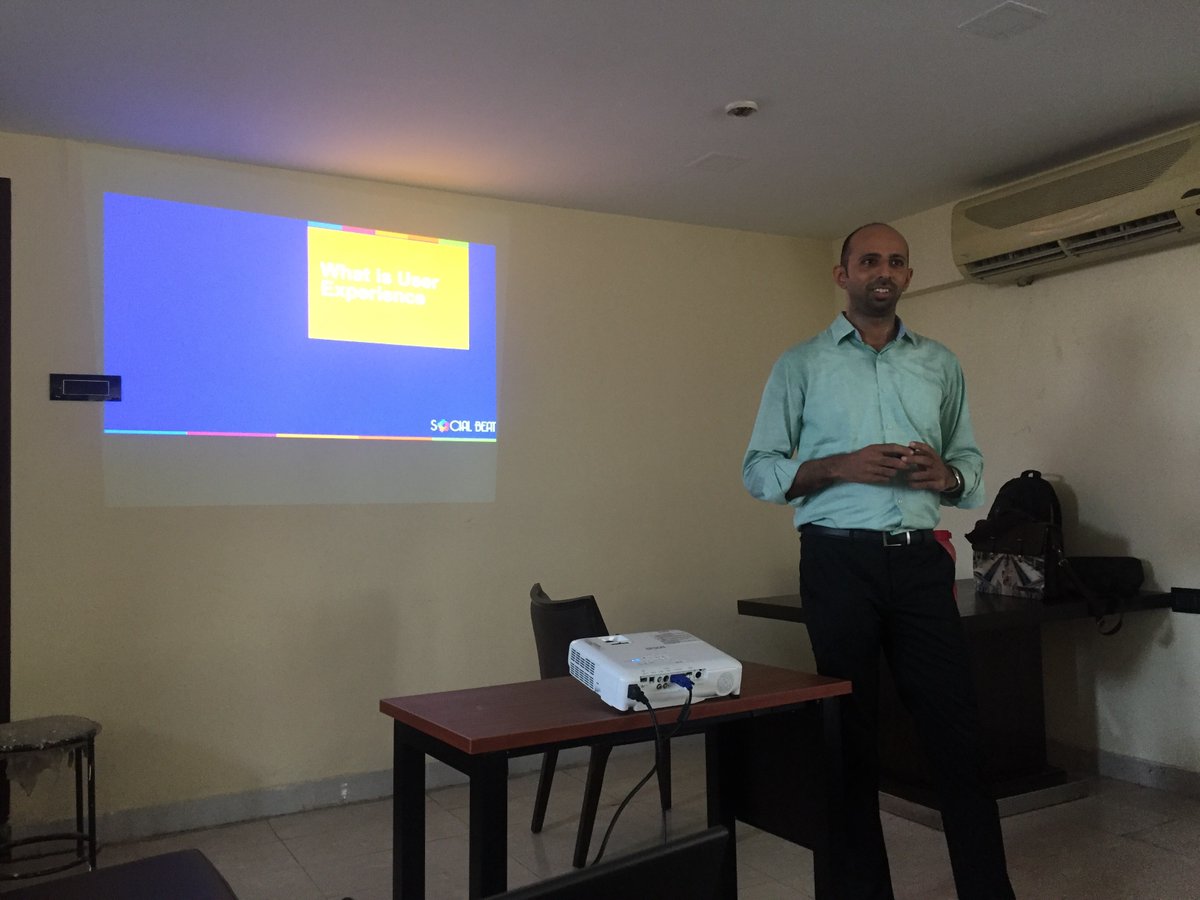
The seventh edition of the Digital Chai Pe Charcha was held in Workafella, one of the best business centres in Chennai on 8th October, 2016. The event saw over 25 participants who were a mix of entrepreneurs, digital marketers, and professionals. User Experience, an important element in any website or app these days, the entire session was insightful, engaging and very informative!
UX or User Experience is exactly what the name suggests – the overall experience one has when they land on your website or your app and the interaction with the company, its services, and its products throughout. In short, the way a website or an app works plus the look and feel of it all together making your user want to come back to your site.
Benefits of good UX –
Research shows that the overall experience of a user right from landing on your site, navigating and scanning through your pages till moving out of your site to another, the emotions that the user feels throughout – satisfied or unhappy – plays a major role on how your brand performs online in comparison to your competitors.
It helps in converting a user into a potential customer and not just that – but converting them at a low cost.
Do a quick study on who your competitors are and analyze their digital mediums. Understand what they do to provide their users with a great experience on their site. Work on your content, have collaborative discussions and put down the necessary inputs to go on your site.
Have a good idea on the different elements you would like to add on to your site – be it a revised sitemap or navigation flowcharts by analyzing user personas and scenarios.
Work on your website with a neat and clear wireframe that should include digital touch-points further building the virality loop.
After your new website is ready to launch, have a quick A/B testing and experiment with heat maps on your site. Analyze the results and rework on the design perspective if necessary.
The speed at which a new user navigates on your site, understands your business and moves through different pages says a lot about the flow of your site.
The user needs to have a smooth experience while navigating through your site, moving from page to page and gathering all the information required.
If your site has a landing page with a form, make sure the form is simple with limited fields keeping in mind to not ask for information that is too personal to the user or fields that will require the user to go back and forth too many times.
Your user’s information should remain confidential and should not be hampered with.
How good is your site’s layout and balance? Is there a consistency in the font? Are the clickable items clear to the user and is the entire page pleasant and easy to navigate?
UX can be improvised with the help of some efficient tools. To improve the overall look and feel of your site, make use of customer surveys, user interviews and case studies. To track your customers’ behavior on your site, experiment with Zarget, Inspectlet, CrazyEgg, Optimizely, Google Analytics and MouseFlow. To understand prototyping, try Balsamiq, Axure, Invision and Pen & Paper.
When the site’s design and flow is focused on establishing a good user experience, the bond between the company and your customer grows building the brand as well as the overall experience of the user with the company.
Click here to understand more on how UX Can Make or Break Your Business
Those of you who missed the first six editions of the Digital Chai Pe Charcha can check them out below:
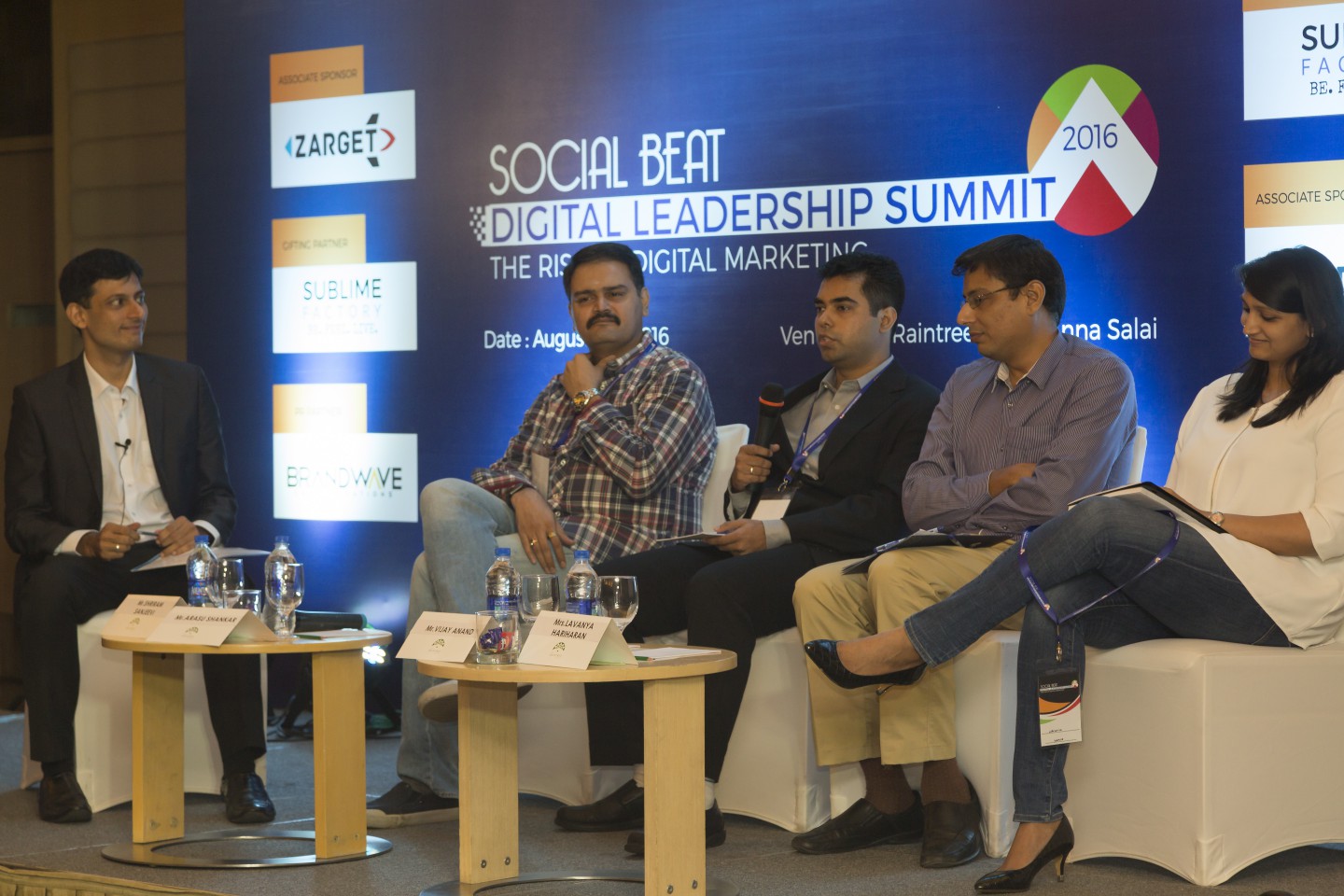
When we conducted our Indian Industry Digital Marketing Survey we found that many brands were facing challenges in measuring the return that their digital marketing and social media marketing efforts were giving. Hence, we included an eclectic panel discussion on “Measuring ROI of Digital Marketing” at our Digital Leadership Summit.
We had four panelists moderated by Suneil from Social Beat: Mr. Vijay Anand - Sulekha.com, Mr. Arasu Shankar - Eshakti.com, Ms. Lavanya Hariharan – Zapluk and Mr. Shriram Sanjeevi - Oyethere.com.
Suneil started off by asking the audience as to how many of them believed you could get ROI from digital marketing; it was a pleasant surprise to see that over 60% of the audience believed it could. We as a digital agency couldn’t agree more. The panel started with a discussion on what each of them feels about the results from digital marketing. We also have had a Digital Chai Pe Charcha on ROI of Digital Marketing, and you can read it here.
The entire panel did agree that the choice of the channel varies with the services/products and the consumer segment. It’s also very important to be smart as you scale adverting, as Arasu pointed out. It’s essential to be clear on what is the message you want to give about your brand.
Vijay continued to be a strong propagator of Google Organic and Google Adwords and said it’s the most scalable as SEO efforts now start showing results in a few days, for existing/older sites. Since they focus on services with low engagement from end consumers they, tend to focus less on social media channels. They did spend 15 crores on their TVC campaign earlier this year it only gives 5000 incremental visitors a day which is minuscule for them as they get about 6-7 lakh visitors a day. Vijay added that for brand building to show results, you need to be at it all the time.
On the other hand, Lavanya, Arasu & Shriram all spoke on how social media and in specific Facebook Marketing has worked extremely well for their businesses to get scaleable results. Lavanya highlighted that for a service wherein the consumer still doesn’t know it exists, the search volume on Google is extremely low hence Facebook & Twitter were the driving growth as they were able to achieve leads along with building the brand and engagement around it.
Arasu & Lavanya also touched upon the importance of building the trust factor with consumers regarding answering their questions and doubts and also in terms of showcasing the products/service in a more holistic way. As Arasu rightly pointed out that Facebook allows for better product showcase via the carousel ads, videos, etc. Even brand awareness and the brand story is better executed via channels like Facebook and Instagram. Talking about the social trust that’s built out, Arasu added that they now see existing customers answering queries raised by potential clients and that it’s a game changer for them.
Shriram added that the approach they take depends on the message, the channel also changes. For example, when they ran a huge campaign around Kabali by selling t-shirts, giving away movie tickets and more; Facebook worked very well for that as it’s a mass channel.
We couldn’t agree more with Arasu when he said that "Channel will depend on product and customer segment." For example, if you are looking to target millennials then Snapchat would be an ideal platform. If your product or service is visual and you are targeting a sub 40-year-old audience, then Instagram would be an excellent channel but there is indeed a demographic difference across channels. eShakti also focusses a lot on Pinterest as it's relevant to many a fashion brand.
Emailer Marketing still works if it’s with your own audience. Vijay of Sulekha spoke about how emailer marketing is an important channel and delivers results when done smartly with smart targeting, in spite of Gmail pushing a lot of emails to the Promotions tab. Of course, once a user is acquired it’s up to the brand to retain them and emailers is a great way to do that.
Influencer Marketing was another channel that works very well and eShakti uses it extensively. Arasu shared that they work with 1000s of bloggers and they have built their network over a period. They calculate the ROI of influencers via direct referral traffic as well as transactions driven by the unique referral code given to each influencer. He also gave an interesting insight that there is higher trust from a consumer that comes via an influencer, so the 5-10% off that they give is covered up there.
There was an interesting question from the audience - Dr. Manoj from Dr. Smilez Group of Dental Centers asked about how they got very low engagement low on social as customers were not very keen on sharing their dental experiences. Lavanya shared her similar experiences as not a lot of women would like to share they got a beauty service or a wax treatment as it’s a personal service. The way Zapluk approaches it is to given them an offer or incentive but in the long run, content marketing is the key. Shriram added saying that ROI cannot always be attributed to direct sales - brand building and marketing is also to be measured
Everyone on the panel agreed that the return on marketing spend is not immediate; hence Life Time Value is an important metric to help scale up business and understand whether it’s moving towards profitability.
The LTV depends on different businesses, and we got varied perspective from the panel. Arasu spoke about phenomenal ROI wherein it just takes them 1.2 transactions to recover marketing cost as they have high-value transactions and very high repeat purchase. For Zapluk and Pamperazi it was three transactions to get the back marketing cost. Whereas for a brand like Sulekha, the end consumer was not paying anything, so it’s difficult to ascertain LTV.
Arasu mentioned that they look at the time taken to recover the marketing cost of acquiring the customer and for them, it’s usually the first 1-2 months whereas it is 3-4 months for Zapluk. Key metrics remain around customer acquisition, retention and finally on how to make them spend more and more often. It of courses varies by cohort, seasonality’s (for example, summer is a strong season for eshakti), types of customers, depends on the marketing channel and the marketing campaign that you run.
Shriram again had a very different perspective and said that "The word LTV is over done. Companies that boasted of High LTvs have shut down in the last couple of months because LTV was more of a myth." He gave an example of Chennai’s leading retail chain Viveks wherein in many cases three generations have been shopping there and apparently they are also grappling with LTV. He also questioned how come Flipkart only had 32% growth in spite of the perceivable high LTV.
One of the participants had a very relevant question - Sejal from Zoho asked what are the tools use for calculating ROI. In most cases, Google Analytics along with data from Google Adwords, FB Ads, Instagram Analytics and other social media analytics tools would suffice. Suneil added that Improvely could be a great tool to understand muti-touch attribution as consumers often interact with the brand multiple times before the sale is closed. This tool allows you to see the history of the person and how they interacted with your brand. Read more about Improvely and other similar analytics tools here.
Suneil also added that there is sometimes a time lag between generating a lead to sale and ROI can be improved if you can figure out how to leverage that time frame to communicate about the brand and the offerings.
Vijay spoke about Google Analytics Premium (GAP) which is more relevant for larger organisations as its costs around USD 90,000 a year. He talked about Google Analytics data being heavily sampled; wherein GAP has unsampled data which can also be downloaded. GAP has only around 15 clients in India but Vijay recommends it’s to e-commerce and digital businesses as repeat customers are harder to track in free analytics tools and attribution is not always clear.
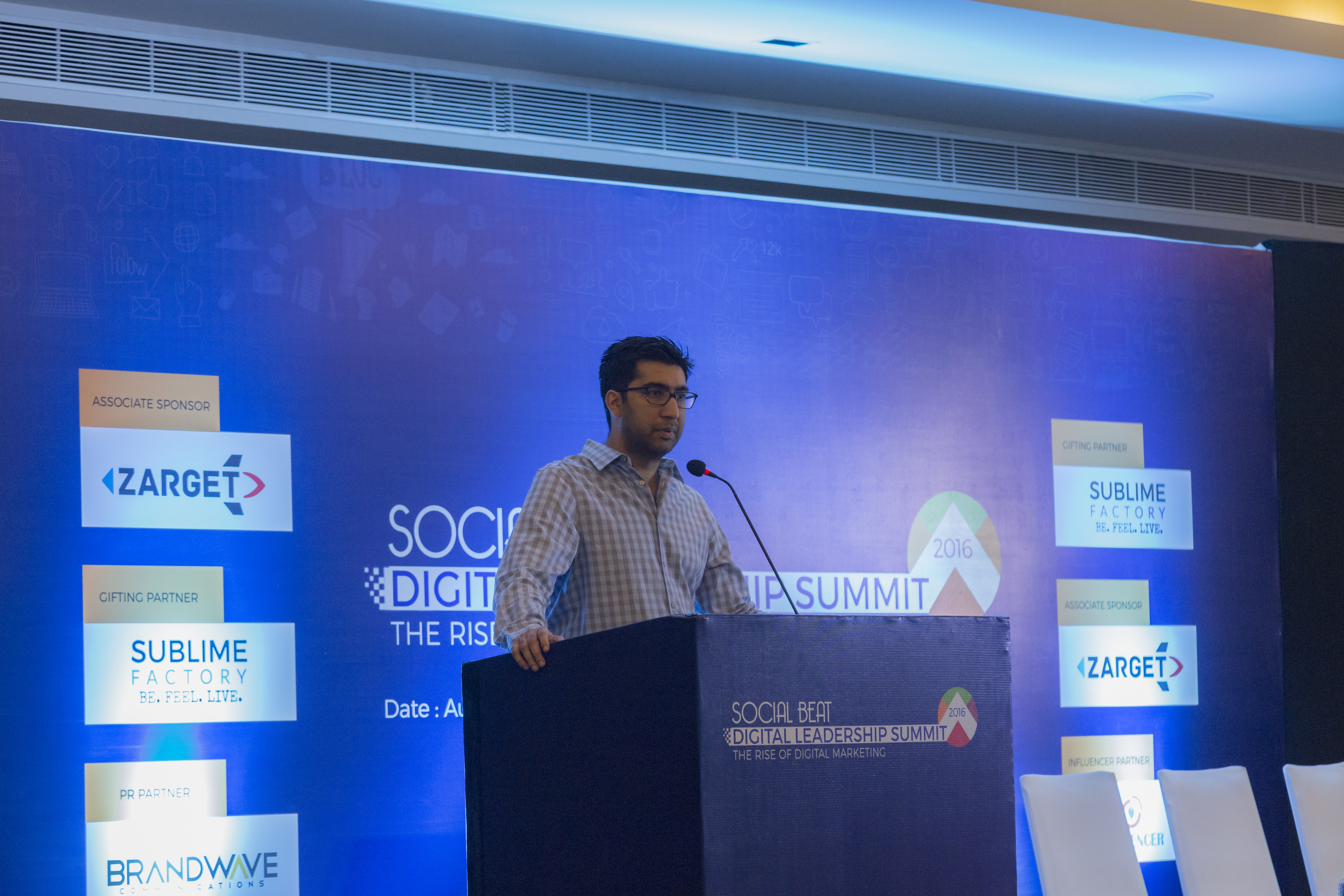
Below is the gist of the talk given by Mithun Sacheti on “How Digital drove the success of Carat Lane” at the Digital Leadership Summit in Chennai in August 2016.
Key Highlights from his talk include:
Mithun started off by highlighting that Chennai as the choice for Carat Lane did not come from the fact that he was based here but based on research that Chennai has the fastest clearing airport in the country. He goes on to talk about how opening the first Jaipur Gems store was challenging. Their biggest learning over the initial years was getting a clear understanding of the top/key customers since they used to get only about three walk-ins a day when they started out. They soon realized that making customers discover the store and new products is key. So when they opened their next store in Coimbatore, they were able to combine their learnings to ensure that 500 key customers walked into the store just on day 1.
They realised that discovery of products is a problem because of the limited walk-ins in retail as well as the limited scope to discover products before walking into the store. E-Commerce fundamentally changes the discovery process.
Today consumers make a choice before entering the retail store – the decision is usually made online. This is why global e-commerce started with books so that the discovery & shopping can happen online. For other products discovery is still lead by digital, but consumption is happening across e-commerce, offline retail, kiosks, etc.
In 2011, Carat Lane opened its first retail store – but they got it wrong in many ways. Firstly, they did not put much jewellery over there, though in hindsight they understood that consumers come in to try out the product. In Mithun’s words “We assumed customers were as obsessed with technology, as we were”. This changed when they opened their future stores. Moreover, their Perfect Look app allows you try out jewellery real time, and this was a big hit amongst consumers.
Mithun highlights on e-commerce evolution in India and candidly pointed out that between 2000 to 2009 there were early adopters who did not focus on last mile delivery and consumer experience - players like Indiatimes, Rediff, infibeam. This mostly led to distrust from consumers because they went through such bad experiences from these brands. This, of course, changed when the new age e-commerce companies started, including Carat Lane in 2008.
Mithun was candid in saying that “Understanding of ROI was missing when we started, but we understood it the right way.”
In 2012 when the company evaluated its results, it realized that cost of acquisition was so high; it would take three transactions to make the customer profitable but an Indian consumer shop for jewellery twice a year so there was something wrong in the approach.
Their retail stores were a game changer because the process of discovery started falling in place. Consumers now started coming to the store with the product photograph wanting to try the product. It became evident that conversions will happen where they have an omnichannel presence. Two years ago they opened six stores in Delhi and now 38% of their revenue comes from Delhi and is the only profitable city of operation at the moment.
Carat Lane is an extremely metric driven business, as Mithun pointed out. They track 4000 data points every month, but the critical ones are
Mithun aptly put it “There is never too little data”. Data helps bring clarity, and while it took Carat Lane 6 years to figure it out, it finally made sense. In the early days, the cost of consumer acquisition was never in focus. You need to know how much you are willing to pay for each of the above actions, as the business profitability depends on that. Each company needs to create its own attribution model - based on customer type. Google Analytics is a good starting point.
Mithun spoke at length about the advanced analysis that is done on TV ad spends. They used tools to find out in which tv program & which ad break & which ad slot had the highest visitors and highest brand search of Carat Lane. As per Mithun, searches & traffic ultimately reflect in conversions & sales assuming you have a great product + great UX. Of course, it’s not a perfect model. You can have assumptions and capture the ROI, in case there are two ads at the same time
Speaking on how they used the funding they got, Mithun admits “Money is like oxygen, the human body is like iron - money can corrupt you”. They have learnt it the hard way and now moving towards profitability with a data-driven approach.
Talking about his investor, Lee Fixel, he mentioned an interesting quote. Apparently, Lee said, “My Fund has ten lives. You as an entrepreneur has 2-3 lives. Carat Lane has one life. If you think omnichannel is the right approach, then let's do it.”
On closing. Mithun said that Digital would own discovery and budgets will move digital - which was also reflected in the Social Beat Industry Report. We, of course, agree when he said that India would be driving the digital transformation and even today with the worst internet bandwidth ever we have achieved this much – it's only up to our imagination what the future holds!