A picture speaks a thousand words, a phrase that we are all familiar with. Snapchat, a social media messaging app proves this phrase right. Similar to Instagram, Snapchat allows users to share pictures and videos for a set amount of time with friends after which the picture self-destructs. It was launched by Evan Spiegal and Bobby Murphy in the year 2011. It is widely popular amongst the teens and young adults and this trend is starting to gain momentum amongst the other generations as well. At Social Media Week’s around the world, Snapchat has become an increasingly discussed topic.
The Snapchat app is available on both google play and app store. Begin by downloading this app.
Source: Hubspot.com
Once you have downloaded the next step is to sign up. Set up your account by entering your email, a username, and a password. However, it is advisable to choose a good username since Snapchat unlike other apps, does not allow you to change your user name once you set it.
Account settings: Adjust your privacy settings. To do this, click on the ghost icon above on the screen. This will lead you to the settings tab in which you can choose who can view your snaps and stories.
Profile picture: Snapchat lets you set an animated profile picture. Tap on the ghost icon on the top of your screen and click on your snapcode and then upload a picture of your brand.
Now that you are all set, it's time to connect with your friends. To add a new friend, click on the ghost icon and then say add friends, this lets you add customers or brand well-wishers either from your address book or by username or snapcode. You can also add fans by location.
To share a snap with your fans, open the camera and click on the circle button present on the screen below. You can also shoot a video for which you would have to press and hold the button a little longer. You can also enhance the snap by adding filters, texts and images on it.
The latest Snapchat version offers you a variety of lenses that are fun to experiment with. To use this, click and press on the screen, this would allow it to capture the shape of your face. Once this is done different lenses appear and you can choose and try different ones by scrolling left.
After you are done, you can send the snap by tapping the arrow in the bottom left side of the screen.
A snap story can be viewed by everyone on your friends/fans list. You can add multiple snaps and videos and this stays for twenty-four hours.
Follow the same steps as creating a snap, except instead of choosing few people to send it to, you need to choose ‘my story’ to post this.
This feature on the app allows you to video chat with your fans. To start a video chat, click on the video button present below the chat tab. This can be an interesting way to showcase a new product launch or to talk about a new/interesting development with your brand.
Source: www.wired.com
Snapchat has different emojis next to your contacts to denote the different levels of friendships which is based on your snap chat activity. Be careful while using this for your brand as these emojis also need to represent the tone of not just your brand but the message being amplified.
Source: askmen.com
Snapchat is one of the fastest-growing social networks. This medium helps you to come up with some fun, engaging and creative campaigns. The app’s features like filters, geo-filters, adding text, emojis, etc adds the element of fun to snaps. Many brands have begun to use Snapchat as a part of their marketing strategy. Wondering how you can use Snapchat for your business? Here are few ways you can:
If your business is hosting or a part of an event, use this app to cover all the live happenings at the event. This way your audience members will be able to view your event live, no matter where they are.
Channel, MTV, created a live story during the VMAS, where they were updating snaps live from the event. They received around 12 million views on this platform. All the fans, no matter where they were, could view everything that happened at the award show. Watch this video here:
Take your fans behind the scenes. This is a great way to engage with your audience and get them excited. Capture some fun moments at work, like celebration or team lunch, etc. Experiment by using all the features of this app. This gives the users a different experience from what they would get from other social media platforms which in turn will make them want to engage with your brand on this platform.
Once the users get a glimpse of what is going on behind the scenes it will make them feel that they are a part of an overall process.
Just like other social platforms like twitter and Facebook, you can host fun and exciting contests on Snapchat. You can use this medium to provide the promo code for a sale that is happening in your store or website. This is a part of the shopping trend and seemed to have worked well with a few of the brands.
In today’s world, influencer marketing is one of the popular ways to reach a wide target audience. Tie up with influencers that have a high Snapchat score and a good number of followers on other social media platforms as well. Influencers who are avid Snapchat users will know ways to make the content even more interesting by using all the features of the app. Disney world hired Mike Platco who’s personal account gets close to 120,000 views per snap, as an influencer when they launched their Snapchat account. Mike is a great story teller as well as an artist and he utilized these skills of his on his snaps around the theme park.
Source: http://www.socialmediatoday.com/
Launching a new product? Create a buzz around it and get your fans excited and geared up for your product launch. Give them a sneak- peek or a preview of the new product.
Apart from product launch, many brands make use of this platform to give a demo of their products.
Burberry leveraged this medium to feature their new collection before the actual show early this year. This way the brand was able to increase the engagement with its fans by getting them geared up and excited for the actual show.
Source: www.postano.com
Create and add Geo filters for your brand. Sponsored geo filters work well for many brands. Since this lets you add your logo or anything specific onto the filters. Sponsored lense is another interesting way to engage the audience. This helps in terms of branding as well.
Beats, the famous headphones company used the sponsored lense to promote their black Friday sale. Users were able to add the lense over their photo to create funny videos in which the user’s eyes would get wide and their heads would move back and forth.
If you are not using Instagram or snapchat for your business, you are missing out on something! So go ahead and start exploring ways to leverage this platform.
Online Reputation Management has become an integral part of any brand’s digital strategy, as the online consumer base is constantly growing. According to a recent survey, 70% of Indians online prefer or have used Social Media for customer service or purchase recommendations at least once. With more and more consumers actively sharing and looking out for information online, it becomes crucial for brands to have a successful ORM strategy in place.
It is the process of managing and improving your brand's reputation through positive content promotion and prompt redressal of consumer complaints and grievances online. This customer-centric approach ensures credibility and helps monitor the brand sentiment online. In order to maintain a positive brand image, businesses need to constantly monitor conversations around their brand and the industry across social media, community forums, review sites, blogs and all over the internet. There are ORM tools available to track, analyse and manage online content, thereby making it easy for brands to streamline the process and carryout quality checks frequently.
Understanding how Online Reputation Management can impact your brand identity and business objectives is important, no matter how big or small the enterprise is. Here are some pointers on the key aspects of ORM can make or break your brand:
• Listen or Lose: Knowing what your customers are talking about your business online is very crucial for customer retention and acquiring new prospects. Majority of the consumers today refer to reviews and recommendations on various sites and social media platforms before making a purchase decision. Witnessing negative feedback about your service or product online can lead to distrust and drop in sales.
Hence, a timely response system needs to be in place to address customer grievances not just on social media, but also on review portals and forums that can show up on the Google Search results.
• Respond to Regain Trust: One of the most common mistakes that brands make when it comes to Online Reputation Management is deleting or avoiding a customer complaint. Covering up an issue is never a solution, as customer stories tend to have a greater reach and impact. Consumers appreciate public signs of transparency and honesty; hence always respond to negative comments and take the issue offline if needed.
When the issue is resolved promptly, there are higher chances of this troubled customer turning into a brand evangelist and post positive feedback about the brand’s approach and customer service. To know how you can efficiently track and respond to feedback on social media, see our detailed blog.
• Be Quick to Acknowledge Feedback: According to an average Internet user, a brand needs to respond to a consumer’s query or feedback online within 30 minutes or an hour. Prompt response with a relevant solution goes a long way in showing consumers that you are listening to them. It’s also one of the easiest ways to win back your customer’s trust and let them know you value them.
If you are unsure about something, it is always better to inform your customers that you are looking into the issue and will get in touch shortly regarding the corrective action. Because, more the time taken to respond, severe the damage is. If you are a B2C brand where the consumer engagement rate is high, opt for ORM tools that can help you streamline this process.
• Climb the Search Engine Ladder: There are close to 91 Million searches performed on Google each day. How many of those do you think could be about your brand? Big or small, leverage on SEO to make positive content dominate the Google Search results and push down the negative references about your brand. Promoting fresh, useful and positive content on various web pages about your brand can help in outranking negative comments over a period of time.
Most brands also take an integrated approach to effectively use Influencer Marketing in order to create positive word-of-mouth. This includes creation of blogs or reviews across community platforms, online review portals and social media.
• Customer Delight Made Easy: Being available online and making customer interactions meaningful helps in exceeding their expectations. A happy customer likes to share positive experiences and eventually becomes a brand loyalist. Businesses in the servicing industry can take the ORM route to dominate the competitive marketplace and demonstrate their trustworthiness & commitment to customers.
In order to achieve this, brands need to actively track brand mentions and follow conversations online to respond and initiate conversations. Being proactive not only helps to keep negative sentiments at bay, but also helps in building a positive brand perception.
• Establish your Brand Personality: Even though most brands are online and making efforts to improve customer experience, only few stand out. A unique approach towards addressing concerns and encouraging conversations helps in building the brand and differentiating yourself from the competitors. Online Reputation Management also serves as an opportunity to showcase your brand persona and cultivate a social media voice that will amaze your consumers.
Being witty and creative is one of the easiest ways to get noticed and make an impact on digital media platforms. Below is an example of Ola’s quirky response to a customer.
Online Reputation Management could be the missing piece in your digital strategy if you’re looking to create a difference and delight customers, but not there yet. Have you deployed effective ORM strategies for your brand and witnessed how it’s making or breaking your brand? Do write to us in the ‘Comments’ section.
Analytics is by far one of the most important tools to help a company sell on the social media platform. Yes, driving traffic to the website is equally important, but how do you find out what happens after that? That is where web and social media analytics comes to play. Every social networking site has its own set of analytics that are both accurate and user-friendly. While Facebook, Twitter, Pinterest has inbuilt analytics, Instagram was lacking in it. Though Instagram shares the same ad platform as Facebook, the platform does not yet have an analytics tool like Facebook’s Insights and Audience Insights. Fortunately, there are a number of third-party Instagram analytics tools available for businesses and marketers to measure their marketing efforts until recently when Instagram announced its insights feature – Instagram ‘Business Tool’that will be made available directly in the app for its users!
While this happened, Instagram again made heads turn for yet another new launch – ‘Business Profiles’. This tool is truly an advantage for small businesses, which can enjoy the ease of mobile marketing on Instagram which will also help reduce the gap between the consumers and the brands. While Instagram’s carousal ad sets and videos have already been helpful for easy marketing, introducing mobile ad-buying and Analytics, which will help view the most viewed and liked posts, post engagement rate, website clicks, impressions, reach and a lot more is definitely a big step for Instagram that has been appreciated by 500 million users who see 95 million posts amongst which a minimum of 48 million posts are ads by marketers every day. If you are still deciding whether to use Instagram for your brand – here is a guide on how startups can use Instagram.
Key Features of Instagram Analytics
Instagram Analytics dominantly focuses on Follower Demographics and Post Analytics. Below, you can view your top posts segregated by Instagram based on its impressions for a 7 day or a 30 day period. This will help you understand how many people viewed your posts other than just liking it, giving you an accurate engagement rate, thereby helping you understand if there is a need to improve your marketing.
Amongst all the information that is available, Follower Demographics is a very useful tool, especially for the small time marketers. It helps them discover where their audiences are coming from. Apart from exact locations, it also helps determine the right time to market to them from different time zones.
Again, similar to any other analytics tool, Instagram also lets you break your audience by gender and age to quickly analyze if men or women have contributed to the most number of views, likes and engagement rate.
The ‘Followers’ module is yet another major advantage for marketers to keep a track of the time and the number of hours their consumers are on Instagram on a selected day. This will again help them understand the right day and time to advertise which will surely be beneficial to grow the brand.
Apart from hardcore analytics tools, Instagram has also been experimenting with a few other profile features that seem to be quite useful for businesses to lead traffic to their websites and increase their sales. One of these features is the new ‘Contact’ button besides the usual ‘Following’ button.
The ‘Contact’ button is a linkable location tag which when clicked will show two things – ‘Email’ the user or ‘Get Directions’ on your maps to their store.Since finding the location of Instagram brands has been a major pain point for both marketers and users alike, this new feature will be of some aid.
The second feature is a direct plus-point for brands/products that have been looked around or searched a lot in social media. While hashtags are used on Facebook and Twitter to quickly spot these products, Instagram has introduced an extra line underneath the name in the profile.
While these features are not yet open to all users, they have been introduced for marketers in the US, Australia and New Zealand and in the following months, will be accessible on a global level, including India. Boasting over 300,000 marketers leveraging on Instagram, it has become an ideal platform for small businesses to resort to a much easier and visually appealing mode of marketing that will be directly benefited by this new Analytics tool amongst the others and other special features for brand building.
We will have a more detailed analysis once we are able to use the tool for more brands.
Much has already been said and written about managing brands: creating awareness and loyalty, refreshing them, launching brand extensions successfully and increasing revenues from a brand’s franchise year after year. Companies like P&G and Unilever honed this to a fine art and became sought after employers by eager MBAs raring to manage brands.
This was when the television commercial and its production was the high point of months of research, mapping, positioning and creative options. Print and outdoor media supported the core TV effort, while promotions drove an increase in sales through value offer to encourage brand switch and sampling by new users. It was always about using mass media to build brand image, and influence the audience to buy a brand based on promised benefits and lifestyle cues.
With the advent of the Internet and digital content, many things changed fundamentally. The Internet was mass media, but in a very different way: instead of being a ‘one-to-many’ communication (broadcast) that was information push, the Internet offered the chance of engaging (conversations) with many in an interactive manner. For it is a ‘many-to-many’ medium, with users generating content as they engage with each other.
The nature of the medium itself changed how brands reach out to audiences:
Digital marketing is, in a sense, permission marketing. How would you like it if a brand manager came in and put up a poster on your living room wall? Yet, when we advertise on Facebook, that is what we are doing in a sense! Their ‘walls’ belong to the users, not Facebook, not you. So if you’re going to be there, then you better reward them in some way: with a great story, with humour, with new information, with emotion or a new idea - commonly known as content marketing. It not only has to be worth their while to view, it must earn that place on their wall. And if it does, they will, in turn, share it on their friends’ walls like it was their own.
One example is this video by the BBC on Vincent Van Gogh’s birthday.
It is no longer about just pushing out information on a brand or product and building its image based on benefits and lifestyle cues. It’s about engaging with audiences and starting conversations.
In the nineties, as the Internet spread and broadband began to proliferate, BMW was doing a big push into the US market which was then dominated by Mercedes. But BMW did not have the financial strength and budgets that Mercedes had on conventional media. The spread of broadband was an opportunity that BMW capitalized on with the famous BMW films. Only, instead of commercials on mass media, they produced short films by well-known directors starring Clive Owen and other stars based on the storyline. Central to each film and a star in its own right was, of course, a BMW: BMW Star and BMW Ticker.
In all, some ten films were produced over a three-year period and went viral quickly. The viewers it was aimed at, a younger, highly successful, independent thinking audience as compared to the older Benz traditionalists, owned the films and shared them widely with their peers. The result was electric, with BMW’s sales in the US surging without having to spend on mass media.
In the days of conventional marketing, it was all about the message. Consumer research threw up problem statements and provided insights, based on which, brands were tweaked. Then came the all important messaging based on the problem that was being addressed. At all times, the communication was from the brand to its audience; one to many; a one way communication. Creativity played an important role as audiences were being bombarded with thousands of messages a day, from when they awoke to when they went to sleep. The power of an idea is what got the brand past the filter of the mind through relevance and originality-enough to get their attention. Still, it was one more message that they absorbed, with the outcome still in doubt!
With the Internet, everything changed. Ideas are still important, as is creativity, to reward the audience for viewing the message and provoking them to engage with the brand. This starts a conversation, and the beginning of building a relationship with the audience that relates to the brand based on the idea. The idea must reward the reader or viewer in some way: either through humour, or by giving them information of value they were unaware of, or by simply capturing their imagination in a sociable way.
Like this Nike ad which uses Messi as a role model.
In conclusion:
Large media houses do not own the Internet, its users do. They not only ‘own’ it, they initiate its use according to their convenience. Their use of the Internet, depending on time of day and context, can be to consume the news, network with friends, send emails, work or entertain themselves. A single medium serves to satisfy all their needs depending on time or context. A good marketer knows what kind of message to reach to them, when and in what context, always keeping in mind that the message must earn its place on their walls with relevance and reward them. Done well, it will gain their ‘ownership’, so they share it with their friends.
Social recruiting is one of the latest recruitment methods in the industry. Recruitment has seen a 360-degree shift in the way how employers connect with potential candidates. Professional recruiters and employers have moved away from traditional methods like newspaper ads to newer techniques and are using social media channels for talent acquisition. Social recruiting is the latest trend where recruiters use social media channels to source and recruit candidates instead of direct sourcing or job boards. Today social recruiting is not just a novelty, it’s a must have for any successful recruitment strategy. Below are 9 essential tips to keep in mind for your social recruiting strategy.
The importance of content marketing has grown significantly over the last few years. Content marketers are constantly focusing on creating content that would be suitable for prospective clients/customers. However, one target segment that most marketers tend to overlook is prospective employees. Various content marketing techniques can be used to attract and engage with potential employees. Even if the company is not hiring at the moment, it is considered ideal to create content that would appeal to prospective employees. So, in the future when you need to hire someone, you are already on your prospective employees’ radar.
Below are a few other ways in which you can leverage the power of content marketing as a part of your social recruiting strategy.
Facebook’s substantial talent pool along with its numerous ad types and thousands of possible ad targeting parameters, make it the perfect platform for companies to find and engage with potential employees.
An easy way to do this would be to create a job advertisement for the open position and target the relevant audience segment in order to reach qualified candidates. Facebook allows you to target people based on multiple criteria’s so you can filter and reach only those who are the right fit. To begin with, the simplest way is to target people based on their age, gender, and location. For more advanced options, you can decide to show your ad only to people of a certain education level, field of study and colleges that they have graduated from. For an example if you are looking to hire an MBA from a premium B-school for a managerial role then you can choose to deliver your ad only to those who would be the right match.
When it comes to talent acquisition it helps to be where all the people are and there are over 23 million registered Twitter accounts in India. Twitter is considered an open social network, and it is very easy to use Twitter to connect and build relationships with relevant active users.
Build your twitter following
It is essential to ensure that you engage with the people from your target talent pool and that they follow you on Twitter. If you don’t have these relevant followers and you tweet about a job opportunity then it is highly unlikely that you will see any good results out of this activity. An effective way to do this is to search for these people and follow them. So, how do we search and find people on twitter?
Listen & engage
You can use Twitter Advanced Search to listen in on relevant conversations and engage with the right audience. You can also save the searches in order to be able to continuously monitor the specific keywords. Tools like Hootsuite are very useful to listen and monitor any conversations that you feel are relevant to your business. This can help you curate content you are interested in, find people, discover content and much more. Also, you can use tools like IFTTT, which can help automate the monitoring and listening process.
Twitter Ads
Twitter ads can be intimidating for those of you who are trying it for the first time. Read our Complete Guide to Twitter Ads and see how your brand can leverage twitter ads, in order to help your social recruiting strategy. Interaction on Twitter is by and large seen as less intrusive, when compared to other forms of traditional communication (emails, phone, text) as well as other social networks. This means that recruiters can not only reach out to, but can also easily be very social with potential employees before the formal hiring process begins.
The recruiting process is constantly evolving and it is essential to stay ahead of the game. However, LinkedIn still remains the top social recruiting tool. With the changing face of the recruitment industry, LinkedIn is a must-have for every recruitment team. LinkedIn groups and sponsored job postings are the most common and effective ways of attracting the right talent. There are other paid LinkedIn options, which include plans specifically designed keeping in mind, the needs of a recruiter. For an example, Talent Finder lets you access every single profile be it 2nd degree or 3rd degree connections. You have access to premium search filters with the focus on industry, company, years of experience etc.
Some candidates with a certain technical skill set may not be very active on social media and hence it becomes difficult for recruiters to reach out to these candidates. In such a case, it is advisable to send E-mailers for specific job openings to a relevant database, which can help garner an excellent response. It is essential to ensure that you have a remarkable subject line that can cut through the clutter and entice a candidate into reading more. It is okay to experiment a bit until you find the tone and style that is best suited for your brand. It is recommended to constantly A/B test to optimize, and measure key metrics like open rate, click through rate etc. Mention all essential details about the position and clearly specify what action the candidate needs to take if he or she would be interested to apply for the position. We could redirect the users to our social media channels or LinkedIn job posting from the e-mailer in order to take the next step in the hiring process.
In order to have a successful new-age recruiting strategy, a well built and descriptive career page is absolutely necessary. A career page does not have to be necessarily fancy but it must highlight the value proposition. The page should explain the key benefits of working with your company and why candidates must choose you over any other company. An essential thing, over and above all of these is to ensure your careers page is mobile optimized and the process of applying to an open position is as easy and short as possible.
A company’s talent brand is nothing but how their vision and corporate culture are perceived on various social media platforms. This plays an important and immense role in not just reducing the cost of hiring for a company but also its ability to attract top quality candidates. Google, for an example, does a great job when it comes to talent branding. They look like the best place to work and that has become one of their biggest assets in their hiring process. Keep in mind, that it is essential that your company’s image, in words, photos, and videos, is consistent across Twitter, Facebook, Instagram, Pinterest and all other social media platforms.
There is nothing more powerful than your own employees speaking about the company and its work culture when it comes to attracting and hiring the best talent. Creating content that goes viral is a difficult task and it is essential to learn how you can multiply your reach. For example, if you have 1000 employees and say 60% of them share your social media content with their followers and each of them has an average of 400 followers then you have just reached 240,000 more people. Yes, there might be common connections but even if you have reached two-thirds of this number then it is a notable reach. Encouraging employees to follow and share your content on social media is an essential step and you can definitely see positive results out of this simple activity and increase your social media reach significantly. Read more on 100X social media reach by turning your employees into brand ambassadors. According to a survey by Monster, more than 65% of candidates tend to consider an opportunity for a new job role if they happened to come across such information from existing employees on social media channels. So this is a complete win-win situation and has a positive impact on your social recruiting process.
Instagram is the secret to catching the attention of passive candidates by telling them a great visual story about your brand and also showcase what it is like to work with you. The stories could focus on things that potential candidates would desire in their prospective employer. On Instagram, the trick is to give users a glimpse into a space that they would otherwise have no access to. In this way, brand awareness is created and an employer can reach out to both current job seekers as well as passive candidates.
India’s Silicon Valley, Bangalore boasts of over 1700 startups and is considered as the world’s second fastest growing startup ecosystem. The city has some of the most successful and funded startups such as Flipkart and Urban Ladder. So what makes these startups so successful?
Startups are leveraging digital marketing effectively and marketing themselves on a shoe-string budget to drive brand awareness and sales. Here is a look at some of the innovative social media campaigns by funded startups in Bangalore.
Founded by: Sachin and Binny Bansal
Funding so far: $3.2 billion in 12 rounds from 16 investors
Flipkart is one of India’s largest ecommerce portals to buy a wide range of products including electronics, books, clothing and accessories.
Flipkart, known for its innovative social media campaigns, came up with a campaign to create a buzz around the revamped mobile application and increase new users. They came up with a hashtag #DoThumbThing. The idea of this campaign was - people use their thumb to do almost all their activities on their phone, so now use the power of your thumb to shop for anything on your app.
As part of the campaign, the brand did the following things:
The campaign worked so well that the app on the Play store got a rating of over 4.3 with installs in the range of 10 Million to 50 Million.
Launch video 1
Launch video 2
Founded by: Richa Kar and Kapil Karekar
Funding so far: 8 million in series A and B funding
Zivame.com is a leading website to buy lingerie with over 2000 lingerie styles to choose from. Zivame.com last year ran a #SalesmanWaliBracampaign for all the victims of bra shopping tragedy where women have been forced to buy lingerie from sales men who are not competent. Zivame.com - the lingerie expert asked their women followers on social media to share their various horror and awkward stories.
The quirky visuals, gifs and campaign hashtag coined by Zivame created a buzz on all platforms and created a good brand recall for Zivame.
Founders: Ashish Goel, Rajiv Srivatsa
Funding so far:$77M in 4 Rounds
Urban Ladder is an online furniture and home décor company with presence in 12 cities across India.
#TheHomecoming
Late last year, the brand created a stir on social media by creating a short film “The Homecoming” to celebrate the essence of family. This short but impactful film was created with a core objective of creating brand awareness among its target audience. The film showcases a couple taking a decision to move into their son’s home.
The beauty of this film is that it is a simple concept that strikes a chord with the common man and has a fundamental message that beautiful homes are not just made from fancy furniture but emotions and thoughts play an important role. The video garnered ~900K views on YouTube and has been shared on social media platforms widely.
Founders: Bhavish Aggarwal and Ankit Bhati
Total Equity Funding: $1.18B in 7 Rounds
Ola is one of India’s most popular cab booking app. It is the also the largest platform with 40,000+ cars across 22 cities and growing!
Ola has come up with many innovative campaigns and one of the most popular campaigns they did was the #ChaloNiklo campaign. The brand leveraged Twitter & Facebook by posting engaging photo ads and video ads featuring content of its #ChaloNiklo campaign. The Twitter Contest helped them create a buzz around the hashtag. Ola also directed people to its website with link ads in the News Feed and right column, and ran mobile app ads to drive people directly to its mobile app.
Another interesting campaign that the brand ran was the #TypesOfFans social media campaign during IPL season 5. The campaign offered a drivers’ view of the different types of cricket fans that they get to travel with during IPL season 5. They made a video dedicating it to crazy cricket fans and the amusing behavior that they display. They also conducted a contest on Twitter, where the brand was able to get entries from cricket fans and engage with them.
Founders: Sanjay and Yashodhara Shroff
Funding: Rs 50 crore in angel funding
Styletag.com is an online curated fashion and lifestyle startup.
Fashion brand Styetag launched a powerful campaign titled “Face of Courage” and the firm hired acid attack survivor Laxmi Agarwal to model its ‘Viva n Diva' collection. Apart from this, the brand also announced that they would donate 30% of its revenue from this initiative to Agarwal and the Chhanv Foundation, which supports acid attack survivors.
"This initiative directly associates us with issues of importance," said founder Sanjay Shroff, "thereby making us more recognizable to our clientele, the women of India." The campaign did well on social media and the brand got recognition with a lot of stories, both online and offline.
Founders: Subhra Chadda
Founders: $2M in 2 Rounds
Chumbak sells designer t-shirts, tins, coffee mugs and other quirky Indian products. Chumbak launched #bobbymissing campaign to promote the opening of their New Delhi store to create a buzz and engage with their customers and fans on social media. They used a character from their popular Bobble Heads collection and constantly updated their pages with candid images announcing the spotting of the missing Bobble Head Bobby in various big events and cities, which got them good traction on social media. The campaign ended with Bobby finally making an appearance thus introducing their Delhi store.
Think we have missed out something? Let us know by leaving a comment!
Social media and SEO are two interlinked strategies as both are organic driven and is dependent on fresh content appealing to the viewers. There is no direct mention by Google that increase in social media followers will directly improve the rankings for a specific set of reason. However,Google always insists on quality links and content rather than the quantity of shares and links. This article will be a guiding tool to realise how social media matters the most for SEO in a very specific technical context in contrast to other articles available online to show how all these strategies work in real time to improve the search rankings.
Social media helps in improving quality dwell times
As per Google patent: Document ranking based on document classification, 17 July 2012, we find that Google has invented algorithms to determine dwell times, which is a term used by Google to determine the engagement rate of the visitors to your website. This means that the time spent by visitors on your website must grow from first time to the second time and so on. Otherwise, Google will assume that your content is becoming stale. How do you do this? Of course,social media is going to play a vital role in improving your dwell times by constantly posting external inbound links to the content of your website. But the most important hidden factor, which Google is trying to tell here, is that growing the number of followers in social media alone is not going to work out. To satisfy the criteria of dwell times, there must be quality followers who really want to follow your content. Otherwise, even though you have 10,000 followers your search ranking is not going to improve.
Facebook and Twitter are the best platforms to increase your dwell times due to their popularity and the presence of huge user database.It is a good idea to post quality content onyour website,Facebook and twitter pages. Posting atleast two quality blogs per week and publicising the blog in your social media pages will gain you more organic leads and catch the eyes of Google. Another method to improve the number of quality followers can be to announce special offers in social media space. Contests, games and gifts attract the most and hence brands have resorted to this method as the next criteria for attracting visitors. Hence it is recommended to organise regular interesting contests and announce winners in social media and make a leader board of frequent visitors in your page to gain more visibility.
Gain ranks on link based criteria with the help of Social Media
As per Google patent: Document scoring based on link based criteria, 27 August 2013 we find that earning links is going to be an important strategy for SEO. But the earning must be steady and not altogether. For instance, Google algorithm does not count the aggregate backlinks but counts your backlink earnings over time. If you have a content published today and the number of backlinks is more this week than the upcoming weeks, then it is not considered fresh by Google. Fresh backlinks are something, which has steady demandeven after months after the date of sharing.
Although Facebook and Twitter platforms too help you score back links, the presence of the most recent option in the news feed and the limitation in number of friends who can view your posts will restrict the back links score. Quora and YouTube are the ideal platforms for this.For example, Quora is going to help you gain back links even after months from the date of posting. The reason behind this is people visit Quora for their queries and if you can manage to give quality answers with appropriate backlinks, then there are high chances for your content being visible even after a month or year. The same is in the case for blogs and YouTube videos.
Let us look into how backlinks in Quora works as a SEO strategy.
Quora is the only platform where students, investors, marketers etc. easily connect with each other without any restrictions. Beyond a Q&A search engine, Quora has become a tool to increase web traffic. Let us take a case study of how companies promoting credit card business use Quora as tool to market their product:
A person searching for answers for best credit cards in Quora not only has answers of various options but also tends to come across back links to the websites. When they click the links, the organic traffic to the website increases and becomes a basis for free lead generation.
Social Media has now become a Search Engine on its own
People do not view social media as a sharing platform alone anymore. It acts as a search engine too. For example, if someone wants to know more about a company or a person then they look into Facebook and Twitter activities as well apart from doing just a Google search. This way the organic searches in these platforms present a pool of opportunities for companies to capture and improve their visibility in digital space.
As a result of this, Facebook and Twitter pages/YouTube videos too appear in search engine results!
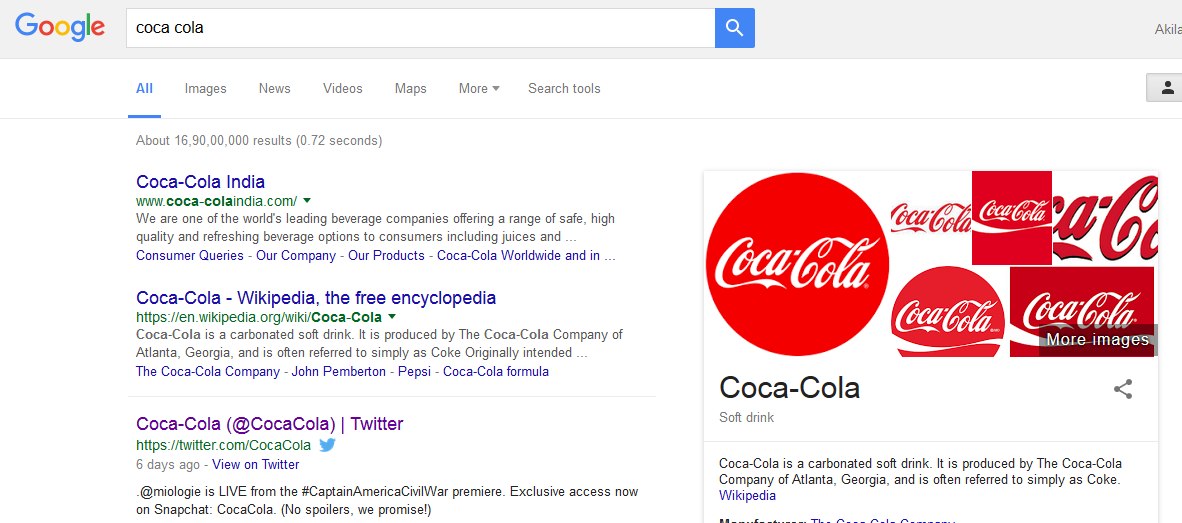
Google crawls through social media pages too for the content posted. Google claims that every Tweet/Facebook share/comments are content for them rather than features and hence they are able to crawl. Similarly if a Facebook or Twitter page appears in search results then it means that it is solely for the content in that particular page. Hence companies with optimised high quality social media pages are found to earn greater benefits from social media accounts in Google SERPs. For example when you type Coca Cola in the google search, you can find the links to social media pages in the search results. This is a clear indication that social media pages too matter in Google search.
What does research and experts say?
“Social media and SEO are somewhat integrated” – Quick sprout
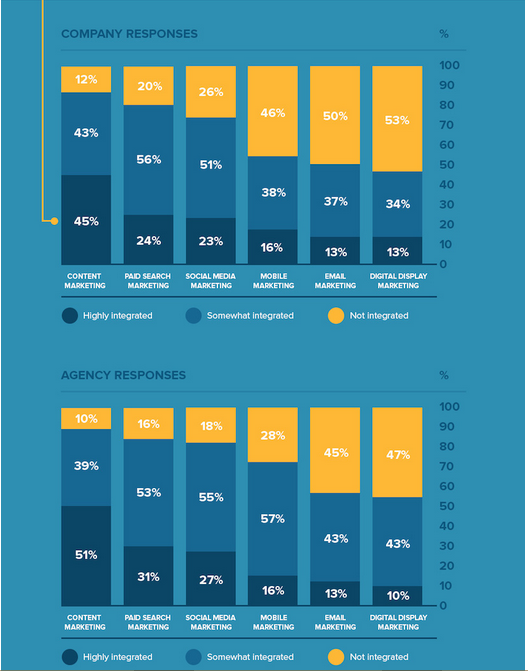
Very recently an infographic released by quick sprout caught the attention of many digital marketers. The survey report clearly reveals that social media marketing is definitely one of the factors for the new SEO strategy with 50% of the companies saying that social media marketing and SEO are somewhat integrated.
“Social media as a SEO strategy is still a weak factor” – Moz report
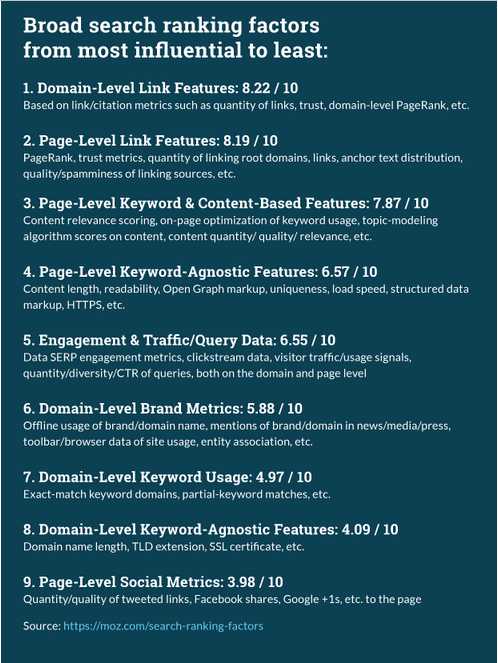
However,Moz released a report on Search Engine Ranking factors 2015 which says otherwise. According to the report,social media is still less influential from SEO point of view. However engagement rate and content still being in one of the top factors can be indirectly related to social media. Hence we can expect that high quality content and engagement rate in social media will continue to give signals to Google.
How each platform impacts the search ranking?
Let us now check out how each social signal affects the search engine ranking based on the research reports of search metrics on “Search ranking factors for 2016”
Facebook:
The research by search metrics shows that signals from Facebook are high for the brands in Top 10 ranks of Google search and maintains a positive correlation. From the below graph we can see that there is a distinct difference between top 5 and the rest. We can also see that there is a drastic fall after rank 1, which means that top rank guy is distinct in the way he handles Facebook as a medium to drive traffic as compared to the one in second place and hence he continues to dominate.
Twitter:
The number of tweets and retweets too has a positive correlation with SEO strategy.However in 2016, the percentage has decreased and hence the down arrow. But twitter signals do matter in determining Google search rank positions.
Pinterest:
Compared to other social media platforms, Pinterest has increased across all rank positions in the year 2016 and is expected to increase even in the years to come. This tells us that almost all the rank positions are having more or less similar strategies using Pinterest and the one who is going to come up with a different way of using Pinterest will have high chances in sending dominating signal to Google.
So how do we leverage social media signals effectively for search?
From the above observations, we can see that social media does send signals to Google, although it is not a direct SEO strategy just like a Television. In television, good quality interesting program high attention, number of viewers increases with the buzz and finally gets high rating and people mark these channels as most viewed. Similarly quality contents and videos in social media send signals to Google with increasing views and Google ranks in their search engine accordingly. Thus we can call social media as a broadcasting platform.
Here are 5 essentials you must definitely do to leverage various social mediachannels.
1. Create a blog for your website
2. Post regular content
3. Share the articles in different social media platforms
4. Optimise the post with catchy taglines, infographics and videos
5. Update latest events happening in the company to get local attention and increase local searches for brand awareness, which may ultimately be a signal to SEO.
The metrics which matters the most for Social media as SEO strategy:
For businesses, results are the major area of concern. The number of likes and followers can no longer be shown as KPI by social media managers. Hence from SEO point of view, there are lot of metrics and analytics behind to prove that social media is indeed helping in SEO and ultimately increasing the profitability of the business. Let us now see the various metrics used to measure the ROI on a particular campaign:
Conversion rate:
This tells us the number of replies or comments, which we get from the audience for a particular post.
Amplification rate:
Amplification rate is the rate at which your content is shared regularly on different social media platforms. For twitter it is calculated by number of retweets, on Facebook or Google+it is the number of shares. On YouTube, the number of share clicks per video gives us the amplification rate.
Appreciation rate or applause rate:
As the word indicates, it gives us the extent of appreciation for our post.It is nothing but the number of likes on Facebook/Twitter/Youtube and +1s in Google+.
Number of leads for the cost spent:
Tools such as Facebook business manager, Google analytics and Twitter analytics have inbuilt analytics to find out the number of leads from a particular campaign.It also gives the total cost spent for the selected time period so that you can calculate the cost per lead from a particular campaign and compensate the price accordingly in the upcoming sales.
If all the above metrics are good, then search engine rank is also found to be higher for a particular page.
Tools that help you track and measure the metrics:
1. Using Google analytics to track business results:
Google analytics is the most powerful tool to determine who has visited your website, which platform works for converting leads for you and for day to day tracking of your marketing campaign. The top 5 things one should definitely analyse using analytics tool include:
2. Use Google Webmaster Tools to determine top destination pages :
Using Google Webmaster tools, one can determine the top pages under a particular search category and can plan out new content campaigns accordingly. You can also get an insight on which content gets more visibility and search engine conversions by viewing the destination pages displayed in the SERPs.
3. Use smart link managers to determine the quality links:
There are various link manager tools like raven link manager, which guide you to build possible referral links in your social media posts for building more traffic. Not only that, they automatically send you a report on the links, which get converted for smarter traffic building and better SEO.
4. Use BuzzSumo to find out the top shared articles and top influencers:
Buzz sumo is one of the most important content marketing tools that has the ability to identify what content is doing well in your field of interest. Also this application gives you details of top bloggers and influencers who you can leverage for making social media campaigns effective.
5. Moz research tools to determine the traffic and page ranks:
Moz is a tool that gives you details such as page rank, number of active visitors and the traffic to your website. Moz rank of 41 or above is considered to be good as per industrial standards.
On the whole, although social media is considered as a weak strategy by experts like Moz and there is no direct mention by Google, it is always an important area from SEO perspective. We recommend marketers who have not yet realised the importance of an active presence in social media platforms to pull up their socks, keeping in mind the above mentioned facts.
Not so long ago, Facebook took a plunge into uncharted territories by launching Carousel Ads. Though this ad type was initially meant to showcase multiple products in one ad, Facebook crafted a strategy for the Carousel Ads to tease e-commerce clients and make them buy more ads on the platform. But the Carousel Ads slowly moved across verticals, towards becoming one of the advanced Facebook Advertising techniques that is extremely engaging in promoting businesses.
According to a recent survey conducted by Kinetic Social, Carousel Ads can render up to 10 times more traffic to a business’ website, than static sponsored posts on Facebook. LOVOO found that they got a 72% higher click-through rate versus single image mobile app ads. Mirroring the effectiveness of interactive cover pictures on Facebook Pages, it appears quite clearly that these ads can be extremely effective, but how can you maximize their potential? Here are 3 simple ways to use carousel ads that can nail your targets with a bull’s-eye!
1). Showcase products in detail
Carousel Ads allow you to place up to 5 cards with images that can communicate messages effectively. If it’s a single product that you are highlighting, it would be prudent to describe its features in detail, keeping the CTR on an inclined angle. A ballet shoe manufacturer made effective use of showcasing a product, where each card of the ad focused on one distinct feature. They also used the headline copy to provide defined context to each image.
2). Tour your product
It always sums up to be a perfect formula when you try to deliver a good idea of what customers can expect from your offering. This will improve the quality of enquiries/leads, thereby increasing the probability of sales through Facebook. An automobile giant promoted one of its newly launched Coupé by creating an expressive Carousel Ad campaign that displayed features that made the car stand out from its competitors. The cards highlighted the key specs and of model and attracted genuine customers to engage with the carousel ad.
3). Tell a story
Stories are an incredibly effective way for branding, talking to customers, and engaging with them. A popular western airline company created an effective carousal ad campaign to market their vacation packages to The Grand Canyon. They infused a panorama of the location to tell a story that triggered people to book their air tickets to visit the location.
The Monetary Game
Can Carousel Ads be used as a solution to drive clicks to the website? We conducted a small experiment to test the hypothesis on the Clicks to Website Ads, for a glass manufacturing giant. Here’s how the results panned out:
In our view, with a little bit of testing and optimization to avoid common mistakes, the effectiveness of the Carousel Ads in driving clicks to URL destinations, is very cost effective. Have you experimented with Carousel Ads as a way to drive clicks to your business? We love to hear your thoughts and experiences in the comments below this post.
Building a successful marketing strategy for your business depends on choosing the right marketing mix and implementing plans that drive results. According to a recent study, marketers are expected to further increase their marketing spends this year, of which digital might consume up to 35% of their overall budgets. With digital marketing gaining more importance, it becomes inevitable for brands to think beyond Facebook & Twitter and explore new opportunities.
Pinterest is one of the fastest growing digital platforms with more than hundred million monthly active users, currently. This popular social bookmarking or photo sharing website allows users to create, discover and save media content related to their favorite topics, interests or hobbies. Thus giving brands, the perfect platform to curate relevant content and amplify it to reach the desired audience. Pinterest along with platforms like Instagram, Snapchat & Periscope are going to be growth drivers in 2016 so try them out to stay ahead of the curve.
How Pinterest works
Have you ever enjoyed window shopping at a mall or maintained a scrapbook with clippings and articles you love or find useful? Pinterest works on a similar model where users can find, share and pin (read as ‘save’) visual content pertaining to a wide range of topics and interests. It allows users to create 'pinboards', organized based on themes / topics where the pinned items get saved.
Launched in 2010, Pinterest was summarized to be a 'catalogue of ideas' for people looking for inspiration. Be it a DIY project, a chocolate cake recipe or a wedding gown inspiration - wide range of visually appealing content is sourced or uploaded by users all over the web. They have also recently launched their advertising platform, which can enable promoted pins & boards.
How to use Pinterest for your brand
Big or small, businesses can use this highly visual medium to showcase expertise and disseminate content to reach a wider audience. In order to build a strong customer base and eventually some loyalty, brands can market their products and drive traffic to their website.
Pinterest is not only the second biggest online network to drive referral traffic, but also the one with a higher shelf life. Even pins that are two months old can drive significant amount of traffic, with visually appealing images and keyword rich descriptions. In order to effectively use Pinterest to build your brand and achieve marketing goals, please find below some tips:
1. Set up your account
With the growing user base and average time spent on this platform, Pinterest seems to have become the new favorite for marketers around the world. In order to get started on this platform, sign-up for the business account that provides exclusive features to help you grow and monitor results.
Business name, category, website and bio are all you need to create your presence on Pinterest. It provides analytics, rich pins and advertising in terms of promoted pins which are not available otherwise. In case you already have a personal account for your business with good fan-following and referral traffic, Pinterest allows you to convert it into a business account without losing any data.
2. Plan your approach
Visuals are the most powerful medium for brands to capture the attention of its target audience and communicate better. Good and compelling visual elements tend to perform better for brands and result in higher engagement.
Retail brands should showcase relevant, high quality and vertical images of their products for users to like, repin or follow your account for more. Even brands with intangible products or services can benefit from Pinterest with the right content and strategy in place. Businesses that belong to healthcare, finance, education and other sectors can creatively modify their existing content into visual elements or share new content that is relevant to their business and target audience.
3. Create boards and pins
It is ideal to start with 8-10 boards with content categories that are relevant to your audience and business. Instead of just promoting your own products and speaking the brand language, look for relevant keywords or topics that are most searched by your target audience. Curate content based on user interests and create boards for broad themes & categories.
With Pinterest being the second largest social network to drive referral traffic, make sure you pin images, videos or infographics with links to your website. These backlinks can be included in the descriptive copy or photo caption for higher click through rates. You can see the profile of one our clients, Gehna over here.
4. Engage with your audience
In order to be easily discoverable as a brand and engage with your audience, repin relevant content across Pinterest and create group boards. This enables brands to invite bloggers or influencers to contribute to different themes and ideas. It also helps in building a community and interacting through contests, theme boards or by liking / commenting on their repins & personal collections. As Jeff Bullas mentions in his article, Shopify users referred by Pinterest, spend an average of $80 compared to Facebook referral of $40.
5. Boost your SEO efforts
Use the right keywords & hashtags in your descriptions & image titles to get noticed and gain more traction. In order to create quality backlinks and visits to your social media handles, add these links to your profile and individual pins that will drive traffic. Much like other platforms, local businesses can tag their location to pins and profiles to reach relevant audience on Pinterest. You can also see some of our other link building techniques tips here.
6. Make your website or blog Pinterest-ready
Pinterest is a great platform to discover new products, as it caters to a wide range of categories such as fashion, home décor, art, food, gadgets, travel, etc. Marketers can add a 'Pin' button to their products on the site to make it easier for visitors to share it across. For e-commerce players or businesses that sell online – these pin buttons can help in generating more sales and traffic.
Is Pinterest soon to be a part of your digital marketing mix?
Or stepping up your existing Pinterest marketing game?
Let us know about your experience so far in the ‘Comments’ section.
Got good content up on your website but not sure how to promote it? You’ve landed on the right page to find out the answers.
What are Social Bookmarking Websites?
Websites that help internet users to search, store or manage content they are interested in and share it across networks. These social bookmarks are created using tags, categories or custom keywords and are usually public, allowing all members of the site to access it.
How do they help brands?
Brands and content marketers can leverage on social bookmarking websites to build brand awareness and promote their content. These sites help brands or users share articles, blogs, images or videos, in order to drive relevant traffic into their site.
Here are some of the popular social bookmarking websites and how they work:
Delicious is the world's largest social bookmarking service that lets users to save, organise and discover links on the web. The interface is quite simple and lets users build a collection of links, thereby creating their own personal search engine. One can also browse for interesting content shared by their friends or trending topics around the web. Getting listed on Delicious can certainly improve the page ranking & drive more traffic, provided the content is great.
A popular micro-blogging platform and a social network with huge traffic volumes globally. It that allows users to create any content in the form of short-blogs with relevant tags, enabling other users interested in similar topics to easily find it.
A photo sharing website with more than 100 million active users. It allows users to create theme-based picture collections called 'boards' and helps discover, save or find what interests them. This site is best known for its referral traffic and image categories such as infographics, guides, tutorials and DIYs have a higher click-through-rate.
A discovery engine that finds and recommends web content to its users. Majority of StumbeUpon users are there to look for unique or creative content personalized based on their interests or peer group recommendations. With over 30 million registered users, this site provides high quality backlinks and lets users like, rate or share web pages.
A well-known social bookmarking website where users can submit links to blogs, images or videos and its position on the Reddit page will be determined by votes from other users. A text heavy website that covers a wide range of popular topics and organised by areas of interest called 'subreddits'.
With over 1 million registered users, Scoop.it is a popular social bookmarking tool that caters to professionals, businesses and corporations. One can publish or curate unique content based on interests, keywords and share it with others in a visually appealing way.
This user-friendly social bookmarking service lets its signed-up users bookmark web pages for a later use, annotate files as they browse and share it with friends or colleagues. It helps in easy indexing of shared content on Google and drives good amount of traffic into the site.
An open source, social news service that allows users to create content, seed links to external content and participate in discussions. Most-voted content pieces appear in the home page and usually belong to popular topics like news, politics, business, art and technology. The site has over 40 million unique visitors a month, a Google page rank of 7 and high quality PR backlinks from related sites.
HubPages is a social content community where users share content, pictures, videos or pose questions to find answers. It is also a revenue-sharing website where authors can create original, quality content about various topics & earn via Google AdSense or other commission-based vehicles. Creating unique content articles or 'hubs' regularly can help brands in indexing pages more quickly and generating targeted traffic into the site.
Visual.ly is a community platform exclusively for data visualization and infographics. It is also a marketplace for publishers and researchers looking for images using keywords and category tags. Brands can create a profile and publish interesting insights & infographics that will drive relevant traffic into their site. It not only allows the users to share it across social media platforms, but also provides an analytics tool to measure the overall content reach.
Typepad is one of the oldest blogging platforms with built-in tools for customization and additional features like mobile blogging, multiple author support & photo album creation. This online publishing tool is a paid service that comes in four different subscription levels. One can also promote their content within the site and measure performance through their comprehensive stats tracking.
A bookmarking website that lets users to store all their favourite links at one place, which can be accessed from anywhere. These bookmarks are created using labels or tags and can be shared with anyone.
This world's largest social networking site also serves as a content sharing platform with large numbers of referral traffic every single day. Facebook also captures latest trends, news articles and topics of discussions using keyword searches. Thus, brands can take timely measures on generating relevant content on Facebook, which might bring in more shares or page impressions.
Yet another social sharing site with millions of active users worldwide, generating 500 million tweets every day. Fresh and interesting content can help brands gain followers on profiles, lists and also monitor user interaction levels in terms of retweets, replies and likes.
Owned by Google, this social networking site allows users to share content, images or videos across circles, communities or interest-based groups called 'collections'. Social bookmarking sites allow users to easily find content around topics they are interested in, store or share it with like-minded individuals. Thus, brands should capitalise on websites such as these, to amplify content and drive more targeted traffic into their site.
Do you currently use any of the above-mentioned websites for your brand? Or have more sites to add to this list? Share it with us in the ‘Comment’s section below. For more tips and insights on SEO / content marketing techniques, watch this space.