If you’re trying to successfully drive traffic to your website’s blog page, getting to the top of Google’s search results is your biggest task. However, if you thought ranking at the number one position was the ultimate goal, you now have a new contender – the Google Answer Box or Featured Snippet.
Google introduced its new Answer Box feature in 2015. Referred to as the Google Answer Box or Rank 0 or Featured Snippet, this feature is a box you see above all search queries on Google. The Answer Box provides users with quick and easy answers or “snippets” of information. These answers are selected from content that ranks on page one, but not necessarily Position One.
Google Answer Boxes are not only convenient for users who are looking for answers, but it is also an excellent opportunity for brands to gain more page visitors, as Google Answer Boxes get a 2x higher click-through rate and steal most of the organic traffic on the internet.
Before we dive into a few more details, here’s a quick video on the benefits of Google Answer Boxes and how you can rank for them.
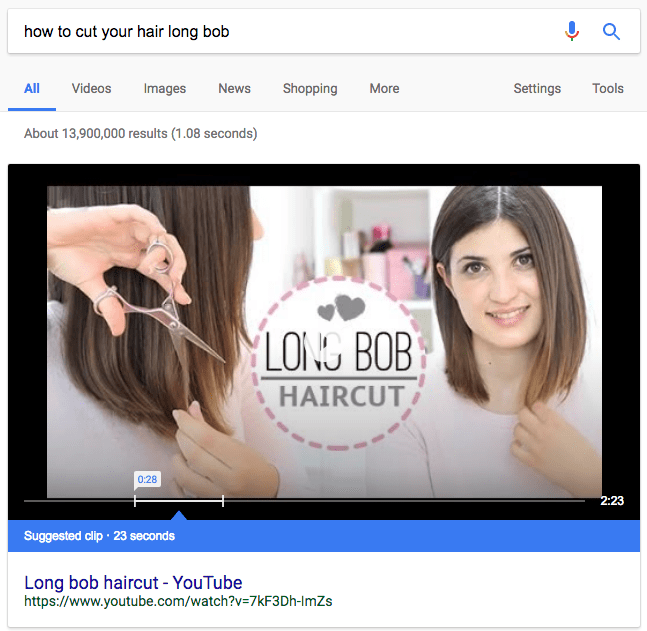
Before we get into how you can optimise your content to get a Google Answer Box, let’s take a look at the four different kinds of Featured Snippets.
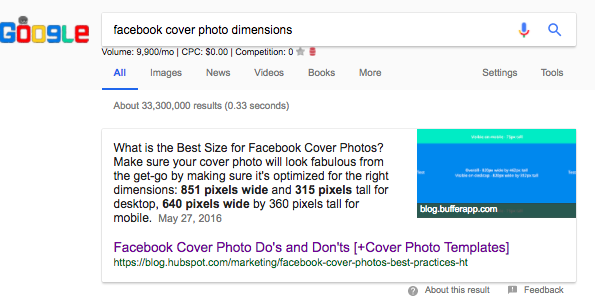
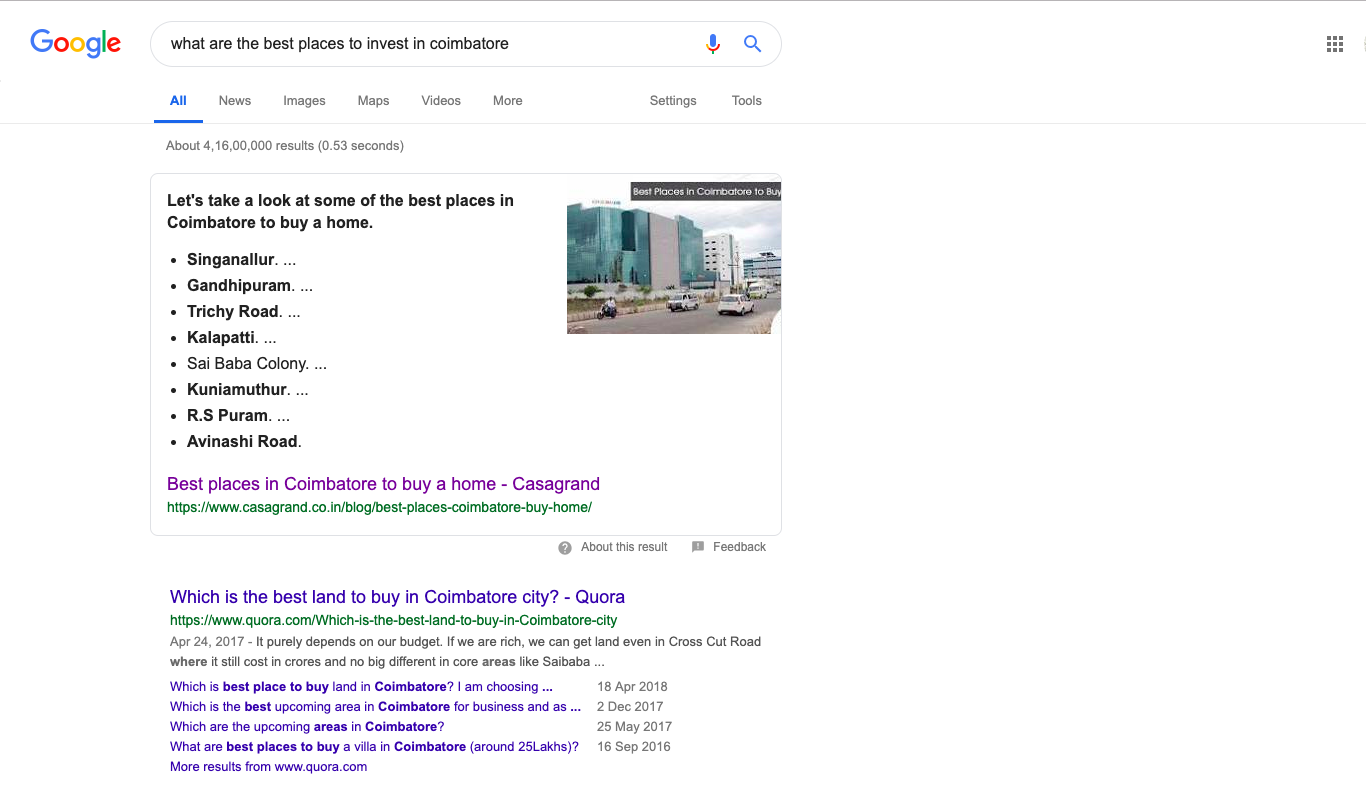
Paragraph Featured Snippets will only include a short section of your content – around 40 to 50 words, so be sure to provide your answer within that limit. To maximise your chances of getting a Paragraph Featured Snippet, use the query as the title and then answer the query directly below, as seen in the example.
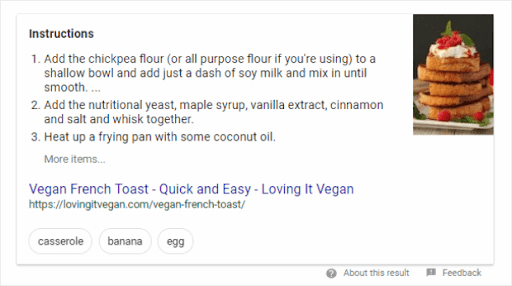
Numbered Featured Snippets appear for content that explains a step-by-step process. For example, a recipe or DIY project.
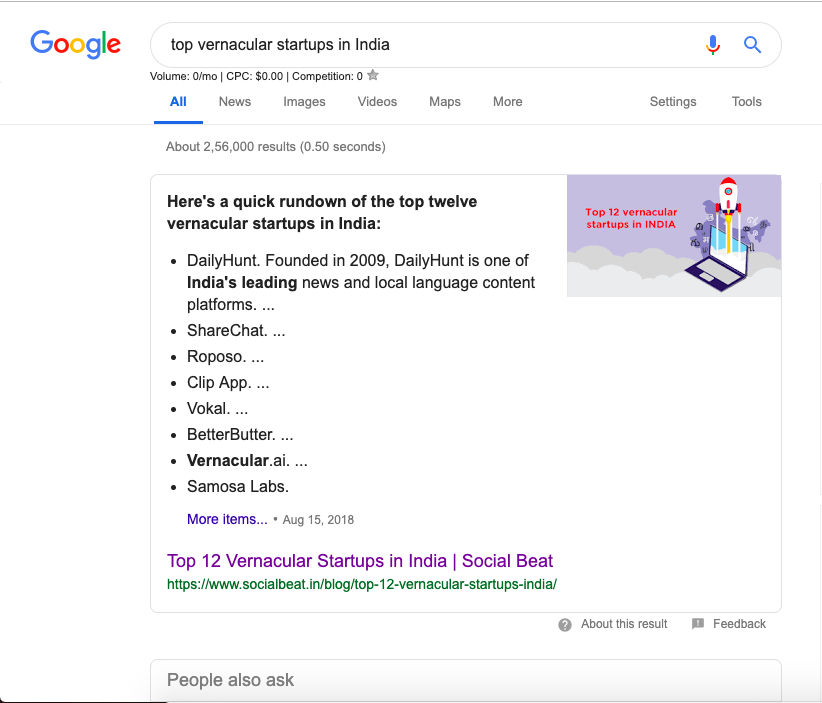
Bulleted Featured Snippets, on the other hand, will display content in a bulleted list where the order of the information doesn’t matter.
To optimise your content for a Numbered or Bulleted List Featured Snippet, you need to ensure that your content is formatted in the form of bullet points. Like in the case of a Paragraph Featured Snippet, you can maximise your chances of getting picked up by having the query as your main title and answering it directly below, this time as a list. Another way to optimise your content is by outlining steps in your blog post, and using each step as a heading.
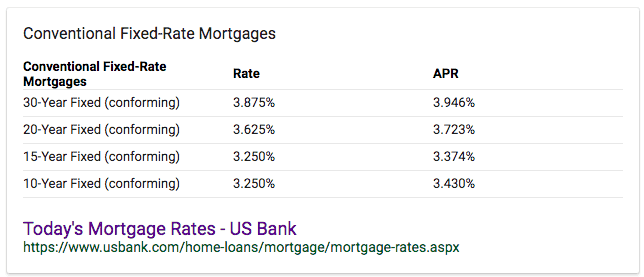
Start by doing the work for Google – put your information in a table. Not only will this make your website’s visitors happy to get all the information they need at a glance, but it also makes it easier for Google to find your content. Finally, start with an appropriate heading followed by your table of data.
For further information on how to get your videos to rank, head over to our in-depth article on YouTube SEO Tips: The Secret Sauce to Ranking Videos in 2019.
Now that you know the basics of optimising your content for the different types of Featured Snippets, let’s delve a little deeper into a few more best practices you can adopt for your content to get its own Google Answer Box.
The first rule of getting a Featured Snippet is ensuring your content answers specific queries. More often than not, when a user types in a query, it is in the form of implicit or explicit questions and long phrases. Structuring your content to answer these questions and phrases effectively is how to rank in Position 0.
For example, if the query you wish to get a Google Answer Box for is “Best residential localities in Coimbatore” try and match it as closely as possible to that keyword so that you have the chance to appear as a Featured Snippet. Additionally, make sure your answer is precise and that you stay within the prescribed word limit of 40 to 50 words (a maximum of 100 words) or 3 to 4 sentences. If you’re looking for more information to rank higher in the search results, take a look at our blog on must know Google Search tips and tricks.
Efficient and effective keyword research is the cornerstone to any great piece of content. Creating content without adequate keyword research is like shooting an arrow in the dark – you stand very little chance of ranking in Google’s SERPs.
Before you begin writing content for a Google Answer Box, start your keyword research by looking for question-type queries – those that begin with what, why or how, as well as long-tail queries with no question words. The aim here is to include a seed keyword with as many long-tail keywords as you can in your article. This way, you can create well-written long-form content that answers multiple related questions in a clear and cohesive manner.
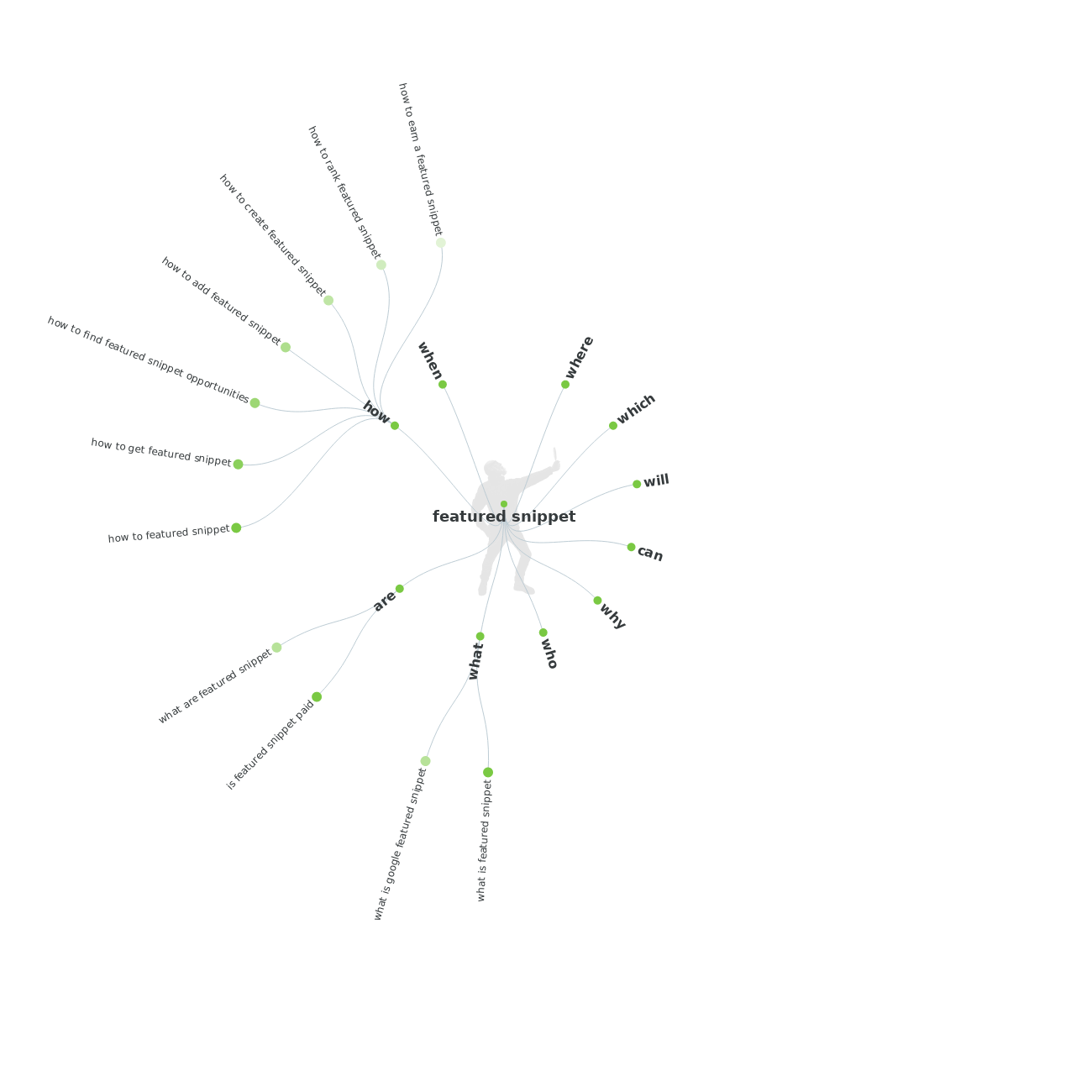
To intensify your keyword research, there are a number of tools at your disposal, namely Moz’ Keyword Explorer, Answer The Public or Ahrefs. These tools will be able to throw up more results related to your search query helping your broaden your search for keywords that trigger a Google Answer Box.
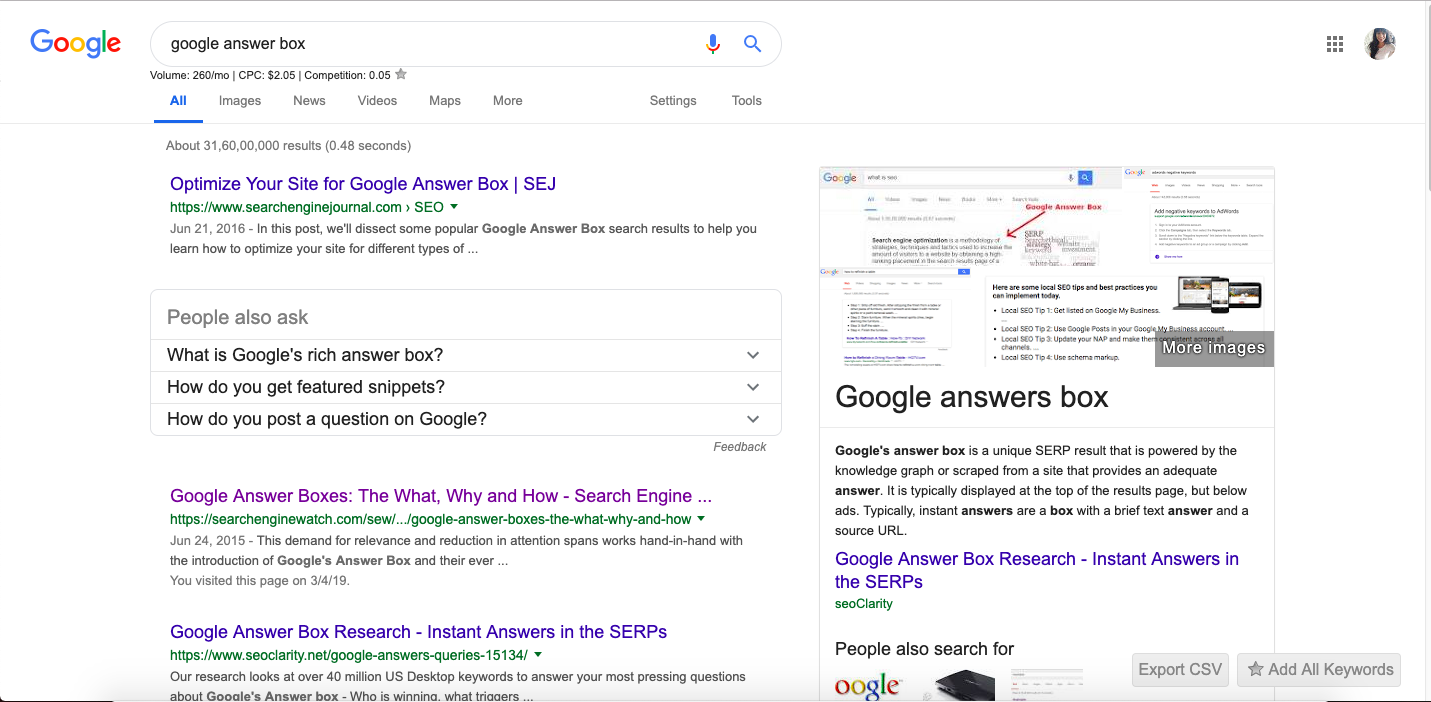
You can also browse through Google's own "People also ask" section to further research your topic or selected keyword. These related questions can offer massive insights into what Google considers related topics to your own. You can also check out our blog on On-page and Off-page SEO Tips for 2019 for more information.
Very often, many of Google’s Answer Boxes are filled with content that doesn’t fully answer user queries. Target such examples and ensure your content is better aligned to what users are looking for. If your competition has a Google Answer Box for a particular keyword, read through the content and analyse if you can create similar content or can modify your own existing content to better respond to the search query. This increases your chances of getting your own Answer Box and staying in Position 0 for much longer.
Getting a Featured Snippet isn’t just about the quality of your content. You can also improve the design and experience you provide your visitors. Not only do phenomenal UI and UX play critical roles signal Google to rank your website higher, but also heighten your chances of holding on to your Featured Snippet.
Once you’ve achieved your Featured Snippet, work does not end. Answer Box results can change in mere seconds, so the onus is on you to constantly track your progress – for how long you have managed to sustain your Position 0 or if you have slipped down the rankings. Try different things like opting for a table or a list instead of giving information in the form of a paragraph, or answering queries that appear in Google’s related search queries. Including high-resolution images with the right captions and tags and structuring your content with appropriate headings and sub-headings in H2 and H3 tags are also a few ways to help you improve your content and the user experience you provide.
The final point to keep in mind is optimising your content for voice search. India is seeing a 270% year-on-year growth in voice searches, as revealed in the 2017 Google India ‘Year in Search’ Report. As marketers, it becomes imperative for you to action change and leverage the power of Voice Search marketing to tap into India’s next billion users. A vast majority of them will be accessing the internet from Tier II and Tier III cities and Voice Search is a more convenient option than typed queries, particularly because they will be engaging in vernacular languages.
Additionally, Voice Search queries are very often picked up from Featured Snippets, particularly by smart speakers like Alexa and Google Home. Brands will need to constantly update and optimise their content to stay in Position Zero to feature prominently for Voice Search queries. You can also check out our detailed video on Voice Search Marketing for more information.
With these tips in hand, you’re now ready to win your own Google Answer Box! Remember to implement all of these strategies as Google’s Answer Box feature is in a constant state of flux, with rankings and results changing overnight. Keeping yourself up-to-date with the latest trends in digital marketing, will enable you to rank higher, achieve a Featured snippet and sustain it for an extended period of time. Before you go, take a look at our informative video that further explains how to optimise your content for a Google Answer Box.
Getting recognition and accolades always brings along a warm feeling of privilege and gratitude. We are proud to announce that our co-founder, Vikas Chawla, has been listed as one of the top leaders in content marketing in Linkedin’s Content 50. LinkedIn is the world’s largest network of professionals so being hand-picked as one of the top 50 content marketers in this platform is sure a feather in our cap.
Content 50 is powered by Paul Writer – a marketing advisory firm that connects businesses around the globe. Through Content 50, LinkedIn recognises marketers in India who lead a team of digital wizards and create online strategies to enhance the journey of their customers. Each candidate is assessed on a wide range of parameters such as creativity, execution, targeting, innovation, effectiveness and accolades.
At Social Beat, we offer a 360-degree digital marketing approach to our clients. From social media marketing and web development to SEO and content marketing, we leave no stone unturned in making sure your brand stands out in the digital hemisphere. With upcoming digital trends like the growth of regional content online and lightning fast AMP-implemented pages, we helped our clients leverage the power of vernacular content and produce 33% lower CPL with landing pages that load faster. Getting recognised as one of the achievers in LinkedIn’s Content 50 has contributed to the wind beneath our wings.
The striking personalities sitting on the esteemed jury chair include Ms Virginia Sharma – Director, Marketing Solutions, LinkedIn India – and Mr Ashish Bhasin – Chairman CEO, Dentsu Aegis Network South Asia.
Few of the other jury members are:
The list was unveiled at the Futurist Business Conclave 2018 held at The Leela Ambience, Gurgaon, on 24th of August, 2018. This was the 6th edition of the conclave that hosted panel discussions on the impact of AI on today’s digital front. The event also included a MasterClass that offered one-on-one discussions for invitees only.
Whether you are a real estate giant, a leading financial firm or an FMCG brand trying to grow your business by going digital, reach out to us at Social Beat and engage with India’s next billion Internet users.
At first glance, Quora doesn’t seem like it would be an important tool for a marketer. However, underestimating the value of Quora can be one of the worst mistakes you can make for your brand. Quora has 1.5 million visitors every month. That’s 1.5 million visitors who have the potential to discover your brand and become prospective leads. This is why one of the biggest digital marketing trends of recent times has been the growing focus on Quora. Quora has a distinct edge over other question and answer forums because of its highly monitored content. User profiles are strictly verified and content is routinely checked for quality. Building your brand’s presence on Quora can help increase awareness of your brand, increase traffic to your site and even generate leads. Here are seven crucial reasons why your brand needs to make use of Quora in its overall marketing strategy.
The biggest advantage Quora offers is that it is made up of a large community built on trust and whose members rely on each other for information. When you provide informative answers to questions users pose, you’re automatically increasing the credibility of your brand. Quora allows you to engage in meaningful conversations with your target audience and establish your brand as an expert in your field.
However, it’s important that you never attempt to oversell your brand on Quora. The community on Quora is distrustful of marketers and hates self-promotional material. When you’re marketing your brand on Quora, ‘less is more’ is a strategy that always works. Instead of speaking about your brand in great detail, focus instead on providing informative answers to the questions being asked. This will gradually build your brand credibility and bring users organically to your site.
Google search results often include Quora posts among its highest ranking sites. This makes Quora a powerful SEO tool to drive organic traffic to your site. You could even increase your chances of showing up in the top results by strategically using important keywords with the help of keyword research tools. However, you need to make sure your content is relevant. Dropping keywords with abandon and speaking extensively about your brand with little to no connection to the actual question will decrease your chances of showing up in search results.
One of the biggest digital marketing trends this year has been the growing importance of influencer marketing. If you’re struggling to find key influencers for your brand, Quora could be a great resource. There are many users who are identified as key contributors by Quora because of their highly informative answers. Users rely the most on these key contributors because they have repeatedly established their credibility. You can engage with these contributors by answering their questions or by providing comments to their answers. You can even directly reach out to them and ask if they would be interested in helping you promote your brand.
If you have excellent content and blog posts on your brand’s website, then Quora is one of the best ways to amplify your content. Again, the key here is to be subtle about promoting your website. Instead of replying to a question with, ‘Visit my website for information about this’, introduce it slowly within your answer. Your answer needs to cultivate interest that will actually make users curious enough to visit your blog. Provide key information within your answers and link your content to it by saying that you’ve written about it in more detail on your blog.
You can also use Quora to crowdsource information for your article. You can mention that you’re writing a blog on ‘How to Improve SEO Rankings’ and ask users for their tips on the subject. When users feel like they have actively contributed to a blog post, they will even be more likely to share it themselves.
You don’t need to conduct expensive, complicated surveys when you have a simple resource like Quora at your disposal. Instead of guessing what your target audience needs, why not let them tell you directly? The questions on Quora are an invaluable source of information about what type of content your target audience will find engaging. If a number of people are asking questions about the same problem, can your brand be the solution to it? Questions (and their answers) are great ways to learn more about your customers, the way they think, what they use and what they need. By actively catering to their problems, your brand can continue to stay relevant.
If you’re stumped for new content ideas, trawling through Quora can help you ideate. A good blog post needs to provide answers to relevant questions anyway so what better place to find these questions that Quora? For example, if a number of people are asking, ‘How do I increase my Instagram engagement?’ then you immediately have an idea for a relevant blog post. Using questions on Quora to ideate for your blog also serves up another advantage. You can link the blog post you’ve written along with your answer to the question and amplify it further.
Thought leadership is a coveted badge every marketer wants for their brand. Establishing thought leadership makes your brand an authority in its field and increases trust in it. Building thought leadership can take some time, but the payoff makes it all worth it. One of the best ways to establish thought leadership is through Quora. By providing meaningful, informative answers to your consumer’s questions, you’re demonstrating the extensive knowledge you have on the subject. Many brands struggle with building thought leadership because they don’t know how to steer a conversation in the direction of their brand’s offerings. Quora saves you the trouble because the conversation already exists; you just need to contribute to it.
Clearly, no marketer can afford to ignore Quora if they want to successfully build their brand’s digital presence. Quora is even more essential when it comes to marketing for a start-up because it helps new consumers come across your brand. So take full advantage of this site for a well-rounded digital marketing strategy.
This article was previously published as Quora: A must-have in your digital marketing playbook on Business Line on Campus.
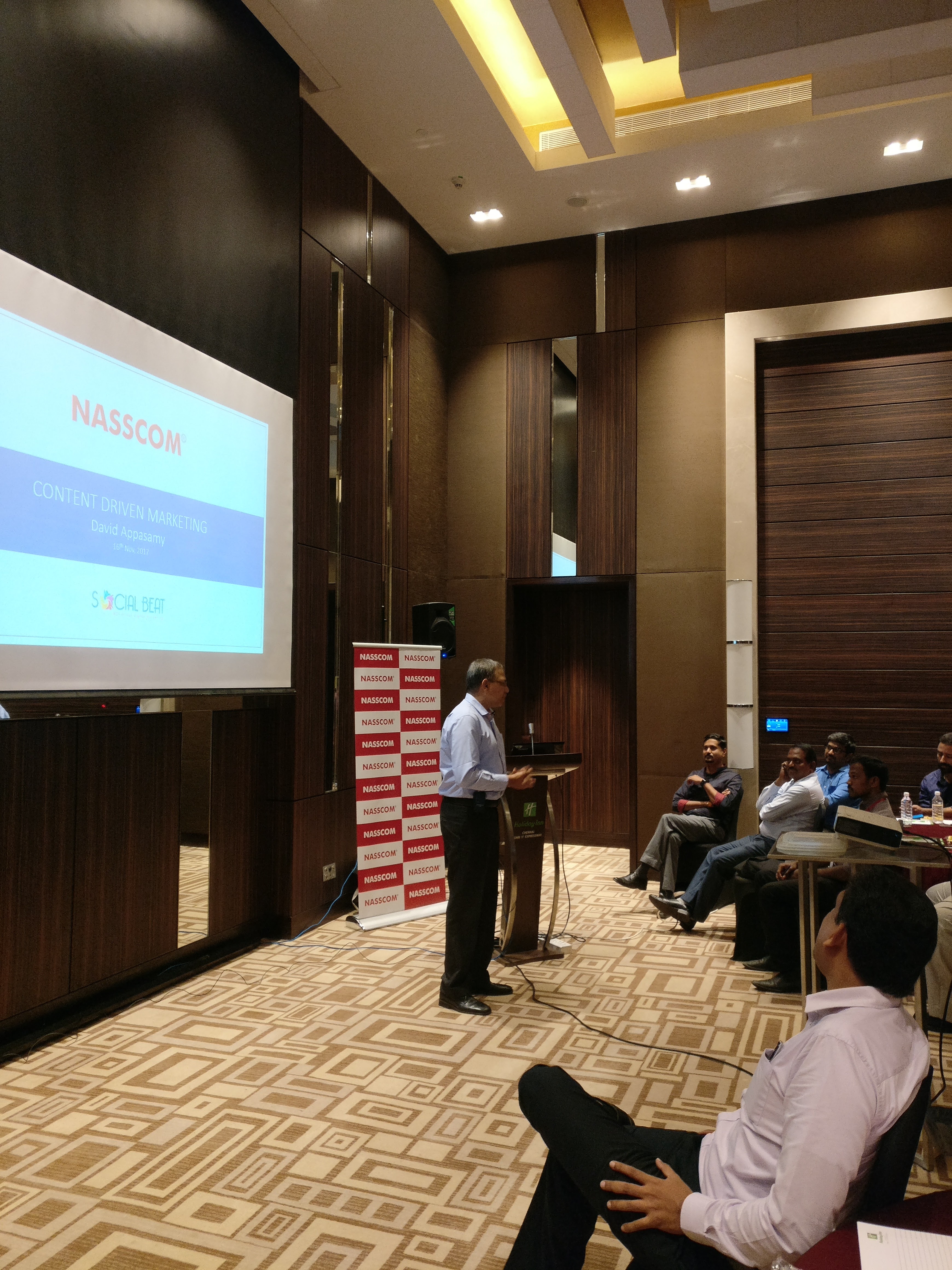
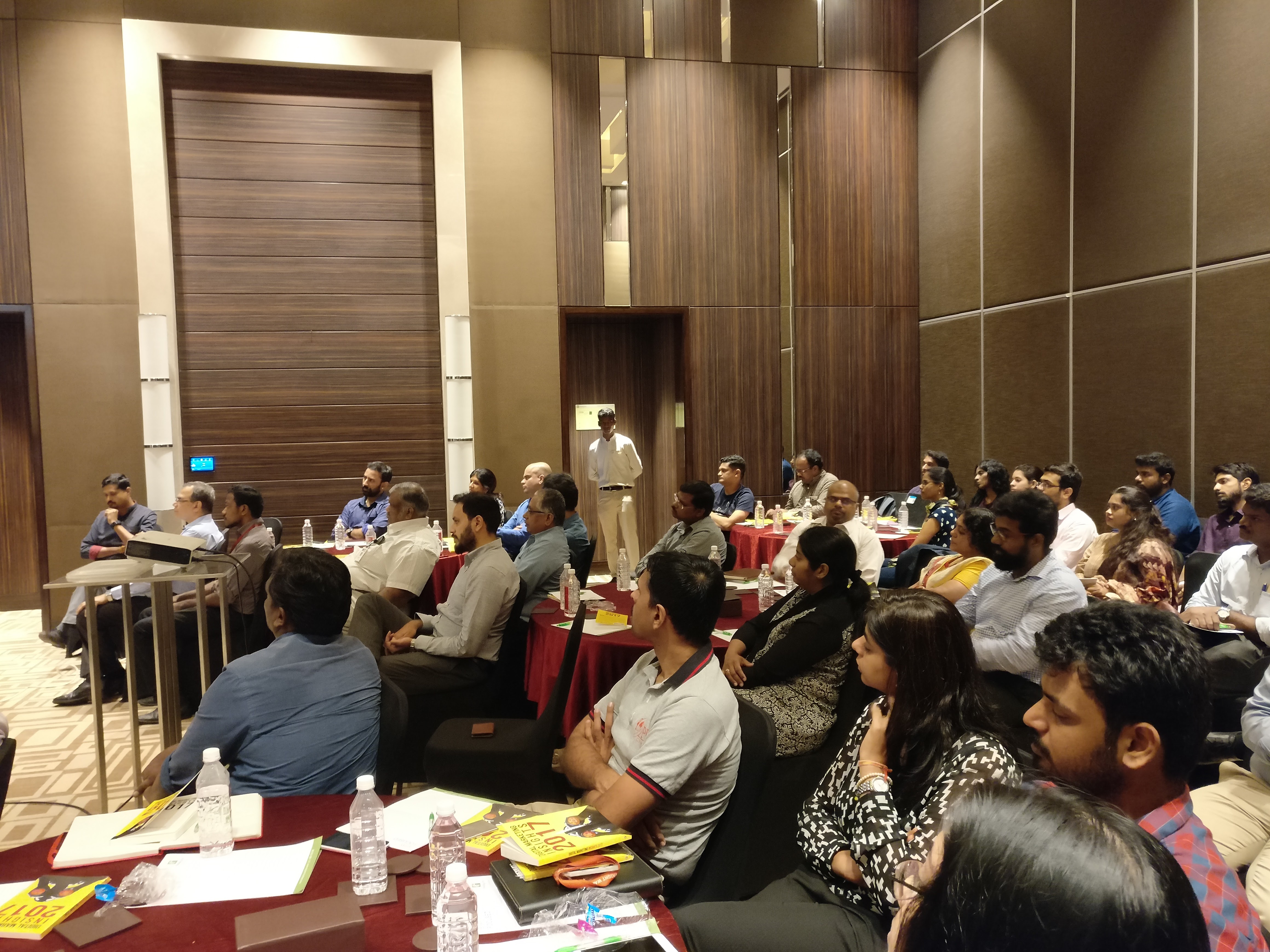
Social Beat was proud to be part of the NASSCOM Content Marketing Masterclass which took place at Holiday Inn, OMR, on the 16th of November, 2017. The session was led by David Appasamy, head of Branding and Strategy at Social Beat and provided insight on how content marketing can be effective for lead generation in the B2B sector. The session introduced the attendees to the strategic imperative of marketing and highlighted the importance of content marketing in the digital space.
The insightful session threw light on how content marketing builds credibility, confidence, and preference by establishing thought leadership and helps win attention, engage with and convert prospects into customers. It also focused on the ways in which this marketing strategy enhances and amplifies other marketing initiatives such as Social Media Marketing, digital advertising, and lead generation.
The Masterclass included a workshop to provide insights into:
You can view the presentation from the workshop below:
As the old saying goes, “Content is King” and the dynamic industry of digital marketing is not an exception to this universal notion. In today’s digital world, content marketing is the go-to marketing strategy to make your brand trend by targeting your audience and engaging them with your brand. However, it is a common theory to only associate blogs to content. Our minds have been tuned to the fact that good content can only be written in the form of chunks of text. But, in reality, there are many types of content, from catchy videos and hilarious gifs to stunning pictures and gripping podcasts. The plan is to engage your target audience through a means of information which they find interesting and which also promotes your brand in a subtle way.
Nevertheless, with the plethora of information available online at the mere click of a button, making your content rank in the first page of search engines with a strong SEO strategy is quite a herculean task. The key lies in creating content that your target group relates to and religiously promoting it in social media to reach out to your potential consumers. Good targeting will lead to higher engagement on the post, which will lead to a domino effect of it ultimately being flagged off as viral content.
That being said, brands have begun adding heaps and loads of content to their marketing plans. From expansive blogs to informative videos, they are leaving no stone unturned in making sure their brand is out there. But is that enough? Sure this will make the brand get out there but is it really “out there”?
The secret, to making content truly stand out of the oodles of information flooding the Internet, is to post limited information which is 10X better than what is already out there and is packed with the potential to go viral. However, the only way you can truly reach your audience is by vigorously promoting it. Splashing your content on various digital platforms through paid promotions and ads will boost your reach and also give it the push it needs to go viral. A viral post creates a lot of buzz in the target group and ultimately helps in generating leads for the business.
At Social Beat, we religiously follow the “Less is more” content marketing strategy in which we focus on producing high-quality content to amplify on digital media rather than expansive quantities of average content. The idea is to create original and relatable content that also uplifts your brand name and gives it the recognition it deserves. The strategy involves the following approaches:
As per Buzzsumo, Brian Dean of Backlinko has executed this content strategy to great effect. Brian has published just 53 posts over the last five years, less than one a month. These posts have driven nearly 4m visitors to his site. The average shares and links per post are what most of us can only dream of: an average of 2,490 shares, and 275 links from unique domains, for each post.
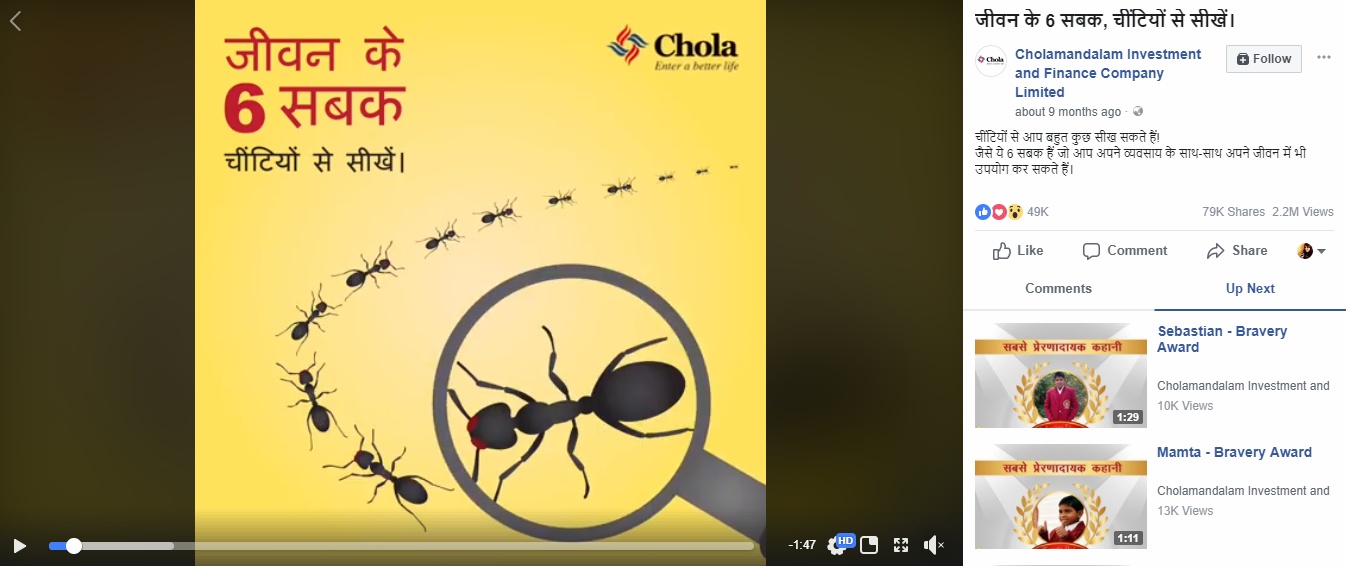
One such post that went viral with a paid reach of 3,51,565 and an organic reach of 64,79,859 is an informative video for one of our clients from the finance sector. Since our client provides financial services, we engaged their target audience with an explanatory video on the money-saving lessons we can learn from an ant. With total ad spends of Rs. 5000, we reached a total of 68,31,424 people, with 21,65,549 video views and 93,241 shares on Facebook. Additionally, we also customized the ad by using a regional language to make it more relatable and simple for the target audience. This way, we struck gold by amplifying content through both content marketing and native advertising.
To sum it up, it is all about quality instead of quantity in the powerful world of content marketing. Creating engaging content and pushing it to go viral with vigorous promotions and effective ads can not only help in branding your company but also boosts your reputation and authority.
Brands usually are under the misconception that the more content you create, the more visibility you’ll achieve. However, this is not true. Keeping the “Less is More” content strategy in mind, let’s take at a look at the current ad spends model of a company and the ways we can improvise on spending the same amount for a wider reach.
As per the current model, if Rs. 50,000 is allotted for content marketing, Rs. 40,000 of it is used for generating content, and Rs, 10,000 is used to promote posts on social media. Following is a rough estimate of the reach and total number of clicks tracked on a monthly basis:
| Ad spends (FB Promotions) | Rs 10,000 |
| Content creation by Influencers | Rs 40,000 |
|
Total |
Rs 50000 |
| Total no. of people reached | 1,50,000 |
| Total clicks | 10,000 |
By applying the “Less is More” content marketing strategy, the brand will focus on reaching a wider set of audience and generating more leads with the same amount spent on promotions. The plan is to generate content of premium quality and authenticity and promote it on social media for a higher number of link clicks and prolonged engagement in the same budget.
| Ad spends (FB Promotions) | Rs 30,000 |
| Content creation by Influencers | Rs 20,000 |
| Total | Rs 50000 |
| Total no. of people reached | 4,50,000 |
| Total clicks | 30,000 |
With all the statistics mentioned above, it is safe to say that though creating gripping content will help you achieve your content marketing goals, the key lies in promoting it effectively. Creating a handful of relatable posts every month and promoting it vigorously on networking channels is the foolproof way of grabbing the attention of a visitor and converting them into a loyal customer.
Having a blog has become mandatory for all organisations. However, with so many blogs out there, how do you ensure your blog is search engine friendly? The best way to do that is through SEO and content. If you are using a WordPress blog, here are 10 plugins that you should use.
1. Yoast SEO
Yoast SEO is one of the most popular plugins for WordPress. It can handle almost all on page elements except markup data and schema tags.
Notable features included in this plug-ins are:
If you are looking to install this plugin, read this step by step tutorial to set up this free SEO plugin.
2. Accelerated mobile pages (AMP)
AMP is a project designed by Google and Twitter to make mobile pages to load quickly. AMP is a kind of Facebook Instant Articles. There are many plugins available to implement AMP in Wordpress sites. The best plugin for AMP in WordPress is "AMP for WP - Accelerated Mobile Pages." Once it is implemented, the page loads quickly, especially on mobile devices.
Increasing the website speed is one of the key factors in ensuring your website ranks on Google. It increases the speed by serving static pages rather than dynamic content. The plugin optimises HTML, CSS, and JavaScript resources by compressing them and thereby ensuring the page loads fast.
4. All In One Schema.org Rich Snippets
All in one rich snippet is a free plugin, which currently has 79 5-star reviews from the WordPress community. This plugin is used basically to provide a summary of the page in the search results on Google, Yahoo, Bing and even in Facebook news feeds. It does so by using an interactive format with star ratings, author photo, image, etc. Many webmasters use this plugin to get higher rankings in search results.
ShortPixel Image Optimizer has over 50,000 Installs and the main motive of this plugin is to compress JPG, PNG, GIF and even PDF document. By doing so, it reduces the load time of the website and increases rankings of your website in search results. It also has the option to bulk optimize through media library. This plugin supports both HTTP and Https version of the website.
6. BJ Lazy Load
This plugin allows us to load your website quickly which is good for SEO. It replaces web site's post images, thumbnails, gravatar images and iframes with a placeholder & loads content as it gets close to enter the browser window when the visitor scrolls the page.
Using outbound and inbound links are extremely important for a blog post. However, when you use outbound links, it is important to make sure it is a nofollow link. The Rel Nofollow check box does exactly that. When you install this plugin, it gives you a checkbox in the insert/edit link popup for adding nofollow attributes.
8. Redirection
Redirection is a plugin for WordPress to manage 301 redirections, keep track of 404 errors, full log report of 301 redirections. All URLs can be redirected with this plugin except the URL, which doesn't exist.
9. All In One WP Security & Firewall
Although Wordpress is secure on its own, it is a good idea to have a security plugin on your blog page. The plugin has numerous account security features such as password strengthening tool and has the ability to check if any of the accounts have an identical username of passwords. It also provides a security score, which will tell you how secure your website it is.
10. Yet Another Related Posts Plugin (YARPP)
Keeping people for as long as you can on your website is a great sign for better SEO. A low bounce rate is a hint that your users are finding value in your site and spending more time. One of the best ways to improve this area is to install Yet Another Related Posts Plugin. This plugin displays relevant post related to the current content. This will ensure the users are given interesting content to read and makes sure they spend more time on your site.
We hope this article helped you to get some ideas about must have SEO WordPress plugins every website should have.
Surprising? These figures might sound counter-intuitive with so much focus on English given in digital media today. But it’s a fact that there has been a profound growth of regional content online. Consequently, this holds a massive implication for brands which are not leveraging regional languages for marketing their brand. With an anticipated CAGR of 41% over the next few years, the opportunity will only grow bigger. Taking that into account we have launched 22 languages. This website provides organizations with access to an audience of more than 50 million users nationwide. Companies can use a multilingual marketing strategy to showcase their products and services in over 22 languages through this medium. To understand this concept better, here are a few interesting insights from the latest study done by KPMG India and Google on the growth of vernacular languages in India on the digital front. Check out this video to understand why your brand must adopt a multilingual strategy:
Digital news has caught up easily because of its simplicity. Data is usually accessible through an app or a website with mobile compatibility. Big names have realized the importance of digital media due to the silent downfall in newspaper and magazine sales. Currently, there are 106 million users viewing digital news in local Indian languages. This figure is anticipated to add up to 180 million users by 2021. However, Hindi, Marathi, Bengali and Tamil make up 80% of the current users. The major categories of type of news viewed are general, sports and politics. This only means that there is a dire need of more companies to enter this segment, to keep India more informed and updated.
Digital Classifieds are a very big sector. This sector has the potential to cause a ripple effect as people interact with each other in the same area and subsequently belong to the same target group. This would cause information to travel to a larger audience. Furthermore, Indian language usage would provide an extra boost by causing the information to reach nooks and corners of rural India. The top categories, which are looked up the most in classifieds, are matrimony, recruitment and real estate. Nevertheless, the only obstruction in digital classifieds is the lack of availability. This sector is anticipated to grow to an astonishing 100 million user base in the coming five years with individuals fluent in Hindi, Tamil and Kannada forming 70% of the total users by then.
The sector of digital payments is estimated to grow at 30% CAGR and a humongous 175 million consumers are expected to use it with Indian language interface by 2021. These gates are mostly used for mobile recharge and utility bill payments. Tamil, Telugu and Kannada are heading the charts in the languages open to quick adaption and will form half of the users on the digital payment platform.
According to statistics, Indian language users prefer buying electronics online rather than apparels or other accessories. As for the sellers, it has become much more convenient for local sellers to reach e-commerce giants like Amazon. One can sell their products on Amazon in five easy steps - the steps being creating an account, listing, taking products live and handing over the product to Amazon for delivery. It is quite convenient and hassle-free. The user base for e-commerce in local languages is growing at a high rate. It has a CAGR of 32% and is expected to add 120 million users in the upcoming five years. This popularity can be attributed to two major factors as voted highest by consumers: Firstly, the availability of better promotional offers and secondly, the huge variety of products available online which may not be present in the smaller cities or towns of India. The main obstruction users experience is the lack of end-to-end compatibility in Indian languages. However, as these obstructions show signs of quick recovery, e-tailing in local languages apart from e-commerce in English, will be a lucrative segment for the e-giants.
It is no surprise that impressive progress has already been made in this segment. Currently, a mass population of 162 million exists as the user base. Keeping in mind that the predicted user base by 2021 is 392 million Indians, there is much more that can be done in the digital entertainment arena. The content has the space to be comparatively more experimental and creative than other platforms as the adoption rate is 90% for this sector. The viewer’s quickly adapt to the kind of material available to them. These users consume both audio and video mediums.
To tap into this huge market, we used local languages for our informative videos like the Chola Finance video which was very well received by the Hindi speaking locals. The video got a whopping 1,751,355 Views and more than 64,000 shares.
The challenge remains in picking the right medium like Facebook, Hotstar, Youtube, tvfPlay or other regional channels.
If you are looking to create videos, read our blog on how to create low cost videos.
There are currently 41 million users under the segment of online government services. It is increasing at a CAGR of 33% and is expected to land at a massive 172 million in the next five years. Some of the applications that constitute online government services are tax filling, applying for government jobs and knowing about new rules and regulations. The Indian Government can use this platform to increase transparency and cut down corruption. However, limited local language enablement combined with lack of interest and awareness poses a huge obstruction which needs to be addressed immediately.
Chat applications currently have a 170 million user base and are anticipated to reach a 400 million user base by 2021. Hindi is topping at a huge margin of 50% as of now. Kannada is expected to grow to a far second with a whopping 20% in the coming years. The major challenge in this is the upgrade needed in voice to text, language keyboard and transliteration.
Social media platforms have a total of 115 million local language users as of now. This figure is expected to grow to 300 million by 2021.The South is anticipated to dominate this area due to its better adoption skills.
Digital write ups are a very interesting scope for Indian languages on the digital platform. It will provide visibility for the users who want to put their content online. It will also provide job opportunities for local people by companies looking to improve their SEO options by generating more local language content online. Additionally, mobile friendly blogs are preferred by users. 54% of Indians would adopt reading write ups if they are optimized for mobile screens.
This ongoing shift in India’s internet scenario has not gone past unseen by the Indian Government. Taking into account the increase in smart phone availability due to cheaper prices, a 176 million increment is expected till 2021. A striking 90% of these consumers are anticipated to be Indian language users. The government has taken this into account and made it mandatory for mobile phones sold in India to be Indian language friendly. Additionally, the government has also taken an initiative to make 60 million rural households digitally literate.
There are approximately 500 million Indian language users online. This figure will significantly have a huge impact on the nature of content presented on digital platforms. Additionally, this audience will be more inclusive of the elderly and the rural population. Also, as long as the type of sectors is concerned, Digital Classifieds, digital news and financial solutions will see a major boost.
Due to the local reach, many B2C users might exploit the Indian language user base on various channels. Digital marketing in Indian local languages will get them untapped markets in India. The companies which will be involved could be news sites, e-commerce players, insurance companies and m-wallets to name a few. In tier 2 and tier 3 cities, this can be encashed at a higher level. Since 90% of the new mobile buyers are local language users, a whole new customer base can be reached through this medium. Here's an interesting video that tells you why you need to have a multilingual strategy if you want to create a strong digital presence among your regional audience.
Indian language based websites and application will see a rise. Digital advertisements in local languages could also be used by B2C companies to increase reach. Additionally, Google display ads could be customized to the regional language of the state where they are being viewed.
This progress would result in new data generation for companies. The database, through structured investments, can be analyzed for specific language behaviors. This will help digital marketers in ad planning and targeting.
We need to move to a language agnostic ecosystem. This is required to give a platform to the Indian language content creators. Voice recognition will be of major help to the users who find using search and navigation through text a challenge.
It is affirmative that the preference given to regional languages will play an active role in internet consumption. It will also help explore a huge new market for brands. Brands that miss this bandwagon are sure to lose out on quite a few million potential customers. Furthermore, Indian language in digital will lead to the spreading of knowledge in rural parts of India. Tier 2 and tier 3 cities will also be of prime targeting in this arena. With such profound reach, it is safe to say that marketing through your regional language is the next step in digitizing India.
Effective Keyword ranking is a never-ending mystery and one that every SEO professional thrives on exploring. The technique of scratching through SERP evolves every year with Google’s ever-changing algorithms. Success over this depends on a rinse and repeat the formula that is slow, to begin with but pays off well in the long run. Stay strong on the fundamentals of SEO and focus on the changing scenarios and latest features that fetch you benefits on SERP results. Here is a list of on-page elements that every SEO professional would need to know in 2017 to leverage most out of SERP.
Speed is crucial for a website; better loading websites tend to have better engagement. Google also considers speed as a ranking signal and gives fast-loading websites high priority in ranking order. Apart from having a small ranking advantage over slower loading websites, speed also gives your user a pleasing experience that will lead to better conversion probabilities since every single factor is interrelated to each other. Fixing speed on your website is going to help you make your website more SEO friendly.
Google has introduced an “Accelerated Mobile Pages” feature which enables mobile optimized content load at lightning speeds. Google has not officially declared that AMP as a ranking factor but it clearly has an aesthetic advantage in ranking over pages which are not enabled with AMP.
The historic ranking data shows that content which is long tends to rank better on Google SERP. At an average, content which ranks on the first page have 1890 words. This correlation may be because long content tends to have greater user engagement and gets a lot of social shares as well. Another fact that supports the statement is that longer content has greater topical relevancy and enables Google to understand the content better. Here is an excellent article on ways to create content that is 10 times better than the rest, what is popularly known as 10x content.
Building trust with Google helps you achieve your goal of ranking higher on SERP. Enabling SSL certification on your website and shifting to HTTPS makes Google understand that your website is safe for transactions and highly secured. Thus, enabling SSL for your e-commerce site gives a slight advantage in ranking as Google always prefers to give its users a trustable and credible user-experience.
The traditional SEO formulae “Content is King” suggests Google still loves to rank good quality content that is very relevant. Creating highly relevant content to your topic is going to give you a slight advantage in rankings. Descriptive longer content with images gives you better user experience. Keeping strong focus on informative, quality content generation is going to give you the upper hand in Google's rankings.
Schema is a set of semantic codes that you put on your website enabling Google to fetch relevant information related to your content based on the user query.
This query has been put into a debate and is yet to arrive with a clear-cut conclusion. But data suggests that websites that have implemented Schema have ranked four positions better than ones without Schema. We cannot conclude that this advantage in ranking is just because of Schema, but there is a correlation found.
Research also suggests that websites that have implemented structured data using Schema have better click-through rates than ones without Schema. It is found that on only one-third of Google’s searches has been using Schema. Snow is going to be the right time to fetch benefits of Schema on your website even if it’s negligible.
Google loves fresh content and places trending topics on the top of its search. Your queries need to be fresh and concentrate on News, Blogs and Trending stories. For example, when there something happening in Chennai, the first news appears in 15 minutes, and the first query occurs in an average of 2 seconds. To yield the benefits of a query your SEO needs to focus on building content around trending topics and news. The faster you are, with more relevant, high-quality content, the faster you website gets.
With trends revolving around voice search in the US majorly and spreading across the rest of the world, Google has given preference to content that answers queries on SERP. Thus, building content based on questions that your user may ask also helps you get more website traction.
Heading tags are the basics of SEO, and it still has great priority in Googles list of ranking factors. Heading tags is assumed as the key for the content on your webpage, and it should have your target keyword for the particular URL. The heading tags are intended to distinguish headings and subheadings on your content and tags H1 to H6 go in the order of priority. Search Engines normally show H1 to H3 on your content.
Google’s Statistics reveal that 85% of total searches happen on mobile, so having a mobile responsive web design has become inevitable. When you don’t have a mobile responsive web design, you risk losing traffic. Google’s Ranking Algorithm has given high priority to website designs on SERP.
Google’s focus has also been on Accelerated Mobile Pages, which enables web pages to be super-fast on mobile devices. It’s a must for mobile first approach on search; the strategy is going to work for both the present and the near future of searches.
Optimizing the title on the Meta tags has been another factor around the fundamentals of SEO. Focusing your exact match keyword in the title gives you a moderate advantage in rankings on SERP. Thus having a clear cut hierarchy for your website content, and focusing on unique keywords for every relevant landing page, is going to help search algorithms identify the content they need to rank for a particular keyword.
The concept of interlinking is a strong tool to tell Google which content is critical. It also helps you to bridge the gap between your most authoritative content and your most valuable content. The key for interlinking is content; the more content you have the probability to interlink is more. Interlinking is going to give your user additional relevant information on a site and ultimately going to boost your engagement rate. Google also identifies the hierarchy of your content based on how it is interlinked; making it a ranking factor you need to add to your On Page Checklist for 2017.
The tools and trends of SEO will evolve and get better every year. 2017 holds promise for more refined SEO techniques, so sharpen up your skills and give your website a big ranking boost for the years to come. Do you know any other important on-page SEO element? Feel free to share in the comments below.
Content is King; a statement that has held true since the age of advertising. Like all great things, content marketing has evolved and improved over time. Gone are the days when brands would simply pin-up posters of their products in any given location to try and entice consumers.
Take the above ad for example; published in 1958 by David Ogilvy’s company, the ad created a sensation among Americans of that era, and greatly pushed the sales of Rolls-Royce. Reading it today, you may find it hard to skim past the long content, but Ogilvy utilised one of the most powerful elements in advertising that still holds high regard today: Audience Engagement.
He did so by using a powerful Headline that was able to connect well with the emotions that the Target Audience felt at that time (the posh society of post-war America). Flash forward 6 ½ decades, Ogilvy's methods of engagement are still applicable but have been morphed to fit into the current scenario of an internet and technology savvy world.
Content marketing is an advertiser’s new best friend; 71 percent of consumers today feel bombarded with ads on social media. Instead, they want more than just a flashy product commercial; they want an experience, a little taste of what to expect. Content Marketing can achieve that by creating and distributing valuable, relevant and consistent content. The method also adds a layer of trust in Target Audience, Creating what brands crave the most: Loyalty towards their products. Since this is an extensive article we’ve split it into sections to make it easier for you to navigate and read through.
The fact that content marketing gives you an open playing field to mix and match with various content forms over a multitude of platforms, there is a big chance for your brand to generate leads, improve sales conversion and ultimately get closer to your Target Audience on a more personal level.
Everyone hates a pop-up ad; they're annoying, disorient you from an online experience and are generally considered as spam. Content marketing provides a more genuine, trustworthy advertising approach, one that actively induces consumer interaction.
Without SEO, anything you publish online will be lost forever in the massive sea of stars that is the World Wide Web. Content marketing has proven to be an SEO friendly marketing method, and provides credibility with boosting organic traffic.
Imagine seeing the same ad over and over again as you scroll through your Facebook feed. It can get annoying to the point where consumers lose interest in what the ad is trying to communicate. With content marketing, marketers can keep the essence of the ad fresh while varying the way the ad is presented.
Pretty much self-explanatory in its naming, Infographics is a presentation of data in a visual way. The concept is widely popular among readers, and gives license to creative freedom in graphical presentation, adding loads of value to the written content. Being a more comfortable way to consume information from, Infographics are likely to be shared three times more on Social Media than general content posts.
Short and sweet, Memes are one of the easiest content forms you can make. But bear in mind that they are not used for information, rather for entertainment. If done right, memes have a high chance of going viral, as consumers love nothing more than to share something outright hilarious.
If a picture is worth a thousand words, then videos are worth a million. No matter what you are promoting, there are always ways to present in on the screen. Videos have proven to be one of the most searched forms of information or entertainment, so to give your SEO a big boost, consider making one that is relevant to your brand, product or service.
Guides are a detailed form of content and specifically meant for sharing information. Guides work well for SEO purpose as Google's crawlers are now paying more attention to long-form content that mixes and matches other content forms.
There is a book for everything today, and your target audience is bound to pick up one. Avid readers will love to know how good a book is before they have a read, plus it gives off the impression that you are well versed in your subject matter, adding a layer of credibility to your brand. You can induce some consumer reaction by asking personal reviews.
Like books, product reviews will boost your brand’s credibility, and if you engage professionally with services providers and manufacturers that are relevant to your industry, that credibility increases tenfold. Collaborate with influencers who can review your product and add a trust factor among consumers.
The age old 5Ws & 1H concept is still effective to date, and a "How to" post is something that is frequently searched. If you are SEO hungry, "How to" posts will help generate the same, as the format takes advantage long tail keyword searches, ultimately bumping up your site ranking.
Humans are hardwired to be obsessed with lists. If you make one relevant to your product or service, chances of it being read are very high. Lists are everywhere and can comprise of anything, and Google analytics have revealed that a numbered list (odd numbers count) are the most popular.
Nothing spells professionalism better than a good old case study. Need to explain what your product or service is and its impact on consumers? Perform a case study with all those intricate details. Ultimately, you’ll get a healthy dose of credibility and if promoted well, a strong consumer following.
The radio may have lost its charm among general audience today, but audio files still hold high regard among commuters who like a good plug and play of useful information. If your Target Audience falls under such a category, podcasts could be a useful medium for some knowledge sharing.
Remember, there is no hard and fast rule that you must try every form of content marketing. Instead, focus on adapting and implementing an idea into a select content type. When that idea morphs into a quality piece of content, your Target Audience will evolve from one-time consumers to a dedicated and loyal fan following.
No matter what type of content you choose to work with, you'll need a base, a platform on which you're content becomes viewable. In the online world, content representation into three types.
Media that is bought and sold for; online advertisements like Google AdWords, Facebook ads, YouTube ads and sponsored content, have shown a very high percentage regarding reach towards the Target Audience, and is also reliant on ROI. Strong reach may increase the chance of a targeted user getting convinced to purchase, yet may not provide a longer, more sustainable impact that permanently etches your brand into the consumer’s memory.
Owned media refers to platforms through which your content is promoted. Your Website, Facebook Page, YouTube profile, LinkedIn, Twitter and Instagram accounts are types of owned media. Think of owned media as your virtual office, space for you to actively promote everything your brand represents and connect to your Target Audience in the online world. Since owned media is just a platform, you are free to use it in any way you like for your content marketing needs. How effectively you use it, with your chosen content strategy, will determine the overall reach and interaction with potential consumers.
Even if your brand is marketed well online, consumers need to be certain and feel a sense of trust with your product. You can achieve that trust factor through earned media; sharing of social media content, Twitter mentions, blog mentions, product reviews and influencer marketing. Of course, to gain such high level of trust among consumers, it takes time, but also pays off handsomely, in the long run, immensely boosting your brand loyalty.
Content marketing isn’t something you could just cook up out of an empty pot. The process requires careful planning and meticulous detailing with a whole host of ingredients blending to make fantastic pieces of share-worthy content on various platforms.
Content Marketing = Ideation + Creation + Publishing + Promotion
Everything begins with an idea. It is from this seed that your entire content marketing plan branches out. To come up with a path-breaking idea you need to do research and lots of it. You achieve great content marketing when you bridge the gap.
This is the first and most critical step towards creating your content plan. When you can understand who our audience is and what their expectations are, you will be able to create more relevant content. Analyse these aspects:
When you narrow down the points mentioned above, your next step is to hunt for relevant topics that are trending, valuable and share worthy and in some way link to your brand, product or service.
Question yourself as to why you are about to create a piece of content. What is your end goal with the content you are about to create? To make this easier and more understandable, create a content strategy. Your strategy must be able to answer one or all of these goals:
Remember, strategies could change even after your content is created and published. Be open to a trial and error method before you push for massive promotions.
With your strategy set and your ideas in full flow. It's time for the actual creation of your content. Again, depending on your Target Audience, your type of content will have to vary in, but make sure you stick to a content formula that is valuable, relevant and has great visual appeal. Based on current market trends and audience expectation, keep your content fresh by mixing and matching its various forms like GIFs, Blog posts, Infographics, Videos, etc. Ultimately, your content creation must sync well with your strategy and be able to:
Much like creating content for that relates to your Target Audience, publishing your content must also have a timed approach. Google Search algorithms and Facebook’s targeted post boosting have made it easier for marketers to preselect a publishing time and date, resulting in better and more accurate reach to the consumers. It is important to optimise content that is share-worthy on mobile devices as well, with a majority of consumers now spending more time on smartphones.
Promotion:
With over 27 million pieces of content being shared every day, your content is just a small grain of sand in a huge desert. To make that little grain noticeable among the rest, you need to make the most out of the promotional options available. So how do you amplify your content?
Remember, none of these techniques will work wonders unless you connect them with the golden catalyst of content marketing- Search Engine Optimisation. SEO is a broad topic, so we've saved it for another detailed post.
Since content marketing is an ever-evolving subject matter based on shifting trends and change in consumer behaviour, there is no surefire successful approach to choosing an approach to your strategy. But, some content strategies work well over others depending on your brand, product or service. Let's look at a few successful strategies.
When it comes to B2B content marketing, ultra-professionalism is important. Your task as a marketer will be to convince other business of working with you or using your services. Make sure your content is concise, to-the-point and expresses heavily on your services and the benefits it could offer to another business.
Facebook, Twitter, LinkedIn, WordPress Blog/Website, YouTube, Google AdWords
Emailers, Helpful blog posts (Tips/How-to), Product Reviews, Product/Service specific social media posts
For FMCG brands, the content strategy must heavily revolve around consumer interaction. This means marketers are free to explore all sorts of content and modify them in a way that involves consumers intrigued and curious to know more about the brand’s products.
Facebook, YouTube, Instagram, Guest blogging
GIFs, Memes, Influencer promotions, Product specific social media posts, Guide based blog posts
With a recent influx of the real estate market in India, developers are making a move into the online space to boost their project promotions further. As always, the competition is fierce, so the best reach towards consumers decides the big winner. Considering how huge the real estate industry is, having an online presence for developer and broker, while also complementing each other’s presence, is vital for the success of a real estate brand in the online space.
Facebook, Google AdWords, WordPress Blog, Twitter
Emailers, Helpful blog posts (Tips/How-to), Influencer promotions, Product specific social media posts, Landing pages
Lifestyle brands, especially those in the fashion industry, have a mainstay in the digital marketing space. To get better online presence, lifestyle brands must be appealing both to targeted consumers and businesses.
Facebook, Instagram, Google AdWords, WordPress Blog/Landing Page, Twitter, YouTube
Emailers, Helpful blog posts (Tips/How-to/Lists/Guides), Influencer promotions, Product specific social media posts, Video Promotions
We end by quoting a famous line by David Ogilvy, “Never write an advertisement which you wouldn't want your family to read. You wouldn't tell lies to your own wife. Don't tell them to mine”. Content marketing is the most trusted and honest form of marketing and one that is sure to go a long way in establishing a healthy relationship with your Target Audience.
Are there any innovative content strategies you've cooked up? Feel free to share the in the comments below.
Optimising your website Google search results is probably one of the most important things a brand can do. This is usually called SEO (Search Engine Optimisation) and is one of the least understood concepts in the marketing world. While SEO has changed over the last 10 years, its fundamentals remain the same and I have highlighted what are the key things to keep in mind when getting started.
The first step is to understand what kind of content your customers or users want. You could use the free Google Keyword research tool or a paid tool like Moz Explorer to get a sense of it. We also use interesting tools like Answer the Public, which groups search terms together to give you a better understanding. It might be also useful to use Buzzsumo to understand what kind of content consumers are viewing and sharing via social media channels.
It’s important to understand that content here doesn’t mean only written content – it could be in the form of infographics, videos, interactive graphs, tools/calculators etc. So do the research to understand what consumers are searching for or intuitively would want.
Virtually everyone in the digital marketing space has finally boarded the content marketing bandwagon. We know now that creating good content for a brand is the best way to get a good ranking in Google search results. So just writing ‘Good and Unique Content’ should do the trick right? Not any more.
Content marketing and blogging has risen by leaps and bounds in the last five to six years. The rules have changed and writing ‘Good and Unique Content’ is just not enough. Writing content that covers only the basic of any topic is very easy. A user may probably visit your blog and feel that they now know something about this topic and choose not spend more than a few minutes on it. Chances of such blogs, making into the top ten positions of the Google search results are very slim. The modern SEO’s demand are much higher and you need to have the best content in your category to make it into the top results organically. Take your regular content, make it 10X bigger and better. In fact, user experience also plays a big role in the ranking algorithm making it even more important for the need to move from ‘Good And Unique Content’ to a ‘10X Content’. Only then can you hope to try and rank for those keywords
Here is a detailed guide on 10 ways to ensure that your content is 10X times better than anyone else. You could also exploring creating content in multiple languages if you feel your users would engage with such content.
The content is only as good as the number of people its able to reach. If you create 10X content you are likely to start showing up in search results in a few weeks (8-10 weeks for sites that have been around). Till then its key to amplify the content via social media, paid advertising, social bookmarking as well as link building requests.
Social media and SEO are two interlinked strategies as both are organic driven and is dependent on fresh content appealing to the viewers. There is no direct mention by Google that increase in social media followers will directly improve the rankings for a specific set of reason. However, Google always insists on quality links and content rather than the quantity of shares and links. Read this blog on why social media matters to SEO to get a better idea of how to leverage channels like Facebook and Twitter to amplify your content.
Social Bookmarking is another way to ensure you not only get backlinks but improve the chance of being found. Quora is also an interesting platform to do that.
Lastly, its important to build backlinks as this is one of the corner stones on which rankings improve. Backlink is essentially any link pointing from an external site to yours. Though the number of backlinks is important but poor quality or spammy backlinks should be avoided. It can result in a negative penalty for your website by Google. Influencer marketing can also be an effective tool to get relevant backlinks.
One common mistake we see brands and websites doing is ignoring the speed of the website, which accordingly to google is one of the most critical aspects in ranking. They even have new features like AMP (Accelerated Mobile Pages) to help websites overcome this issue.
Having a website which is mobile and tablet responsive is again a given today. Users consume content across devices and the websites need to be user friendly across devices too. Brands need to leverage every mobile micro moment of consumers and for that you need an amazing mobile website.
This involves some help from your digital team as it requires SEO knowledge as well as technology/development expertise to execute. This includes elements like headings, tags (to allow Google to understand what content/images that you have on your site), structured data (to tell Google what kind of content it is – e.g. whether it’s a receipe or a product review or just a blog article), implementing speed elements including AMP and redirecting old urls to new urls.
It’s important to track your return on investment for such SEO activities and we usually do that by tracking not only the rank of your keyword (which is less important these days) but by tracking the growth of traffic from Google over a period of time. It takes about 4-6 months to see any substantive results. Regular creation of 10X content is key to growth in traffic from Google and that should be the focus area on an ongoing basis.
The article was originally published at Business Line on Campus, where I write a column called Going Digital.