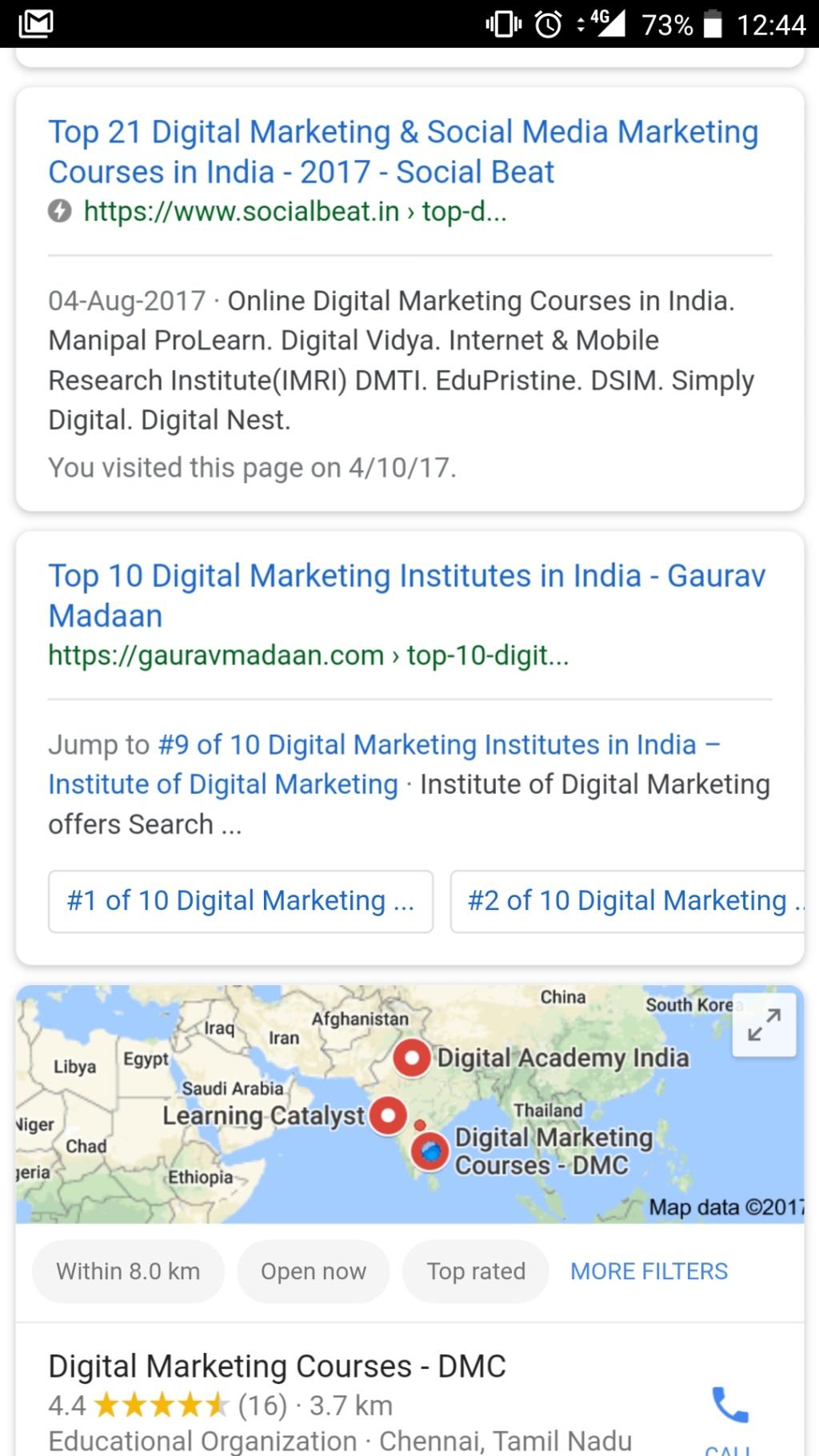
Following the success of lead forms across multiple platforms, Google has decided to introduce Lead form extension for search ads (see the full Google for India video for more info). This form extension, which is still in beta, gives an option of a form directly on the search ad itself, similar to the lead ads on Facebook and LinkedIn. The new initiative will appear in the mobile search results page and will be a game changer for both marketers and consumers. According to Google search report, 80% of traffic comes from mobile devices, which means this update will help brands reach the next billion internet users.
You can also check out our all you need to know video on lead forms on Google.
Marketers can get the following fields filled by potential consumers:
Form ads also provide the time stamp of lead submission. In the initial phase, the leads will be sent to a Google spreadsheet which can be created during the setup process.
This update from Google is still in the beta stage but with the list of benefits it provides, there is no doubt that it going to stay! We are excited to try it out for our clients. Watch this space for more.
We at Social Beat are proud to announce that, for the second consecutive year, we are a finalist in the Google Premier Partner awards in three categories – Search Innovation, Mobile Innovation and Display Innovation. A Google Partner since 2014, we have continually forged ahead in our endeavours to deliver the best ROI for our clients. Following are a few case studies exemplifying the quality of our work and dedication to our clients.
KLAY is one of India’s top pre-school and daycare chains. They approached us with the goal of closing admissions for their schools and day care centres. To help KLAY achieve their goal, we decided to use a comprehensive Google Search Advertising campaign. Our strategy included using RLSA to bid higher for those who visited the KLAY website earlier, CPA bidding, Dynamic Search Ads, etc. We also invested heavily in Call-Only Ads by understanding consumer behaviour in this industry rather than just focusing on landing page conversions. We also utilised AMP pages (these load faster than regular landing pages) and finally, In-Market Audiences in Search.
Our extensive strategy and approach helped achieve the following results:
Our client, India Home Health Care (IHHC) is a leading healthcare service company came to us with the objective of increasing quality leads while maintaining a low cost per lead. Since the competition in the healthcare space in India is extremely high, we conducted extensive research to understand their target group before scaling up the campaign. Since a majority of the leads for IHHC came through mobile, enabling AMP would have a strong impact. As this would significantly reduce the load-time of these pages, we predicted that it could generate higher leads for IHHC.
Apart from this, we also created smart remarketing lists and using them for RLSA to get better conversions and results, improving the Landing Page UX, focussing on Call Only Ads and Device Bid Adjustments.
Our comprehensive campaign strategy helped IHHC achieve:
Here’s a detailed account of how an AMP Landing Page produced 33% lower CPL for IHHC.
Shriram Properties is one of South India’s leading real estate developers. They came to us hoping to achieve the objective of driving sales to their properties through Google Display advertising. Employing a creative and innovative approach, we used Custom Affinity 2.0 by developing audiences profile of those who visit competitor thank you page URLs, channel partners and In App targeting. We also utilised AMPs, Multilingual Ads and Landing Pages along with Google Optimise to enhance UX.
Our strategy has resulted in the following outcomes for Shriram Properties:
Here’s an in-depth look at how we helped Shriram Properties achieve these numbers.
Social Beat is part of a select group of digital specialists that Google celebrates as Premier Partners. To qualify as a Premier Partner, digital marketing agencies and professionals must prove their expertise in using and applying Google's advertising products. As a young digital marketing agency, we thrive on creativity and innovation. We are constantly pushing the envelope in terms of marketing with an ROI-driven focus to meet, achieve and exceed our clients’ goals and expectations. Whether you are a Real Estate Giant, a leading Financial Firm or An FMCG Brand trying to grow your business by going digital, reach out to us at Social Beat and Engage With India’s Next Billion Internet Users.
Interactive ads allow users to engage with them or explore them in new ways. The average digitally-active user is exposed to hundreds of ads every single day! With so many ads bombarding them, people automatically turn on their filters and are able to ignore a majority of these. While this coping mechanism might help a user wade through an ads-saturated world, it can also be a source of great concern for brands. With brands spending huge amounts on advertising, they can’t afford to have their audience simply ignore their ads. So how do you prevent a user from scrolling past, turning off or forgetting about your ad? The answer might lie in the new format of advertising: interactive ads.
Interactive ads create immersive experiences for audiences that capture their attention completely. The rich technology that has fuelled interactive ads allows users to experiment and engage with your ads. This helps create a lasting impression on your audience, as a result of which ads perform better. While these ads work on desktop and tablet too, mobile is the platform showing greatest results. As more users spend most of their screen time on mobile phones, this is another reason why brands should start experimenting with interactive ads. Modern-day audiences, millennials, in particular, don’t want to be passive spectators. While digital advertising as a whole offers users a personalised two-way form of communication, interactive ads go one step further.
Interactive ads have delivered clear results for brands using them. If you start using the magic of interactive ads in your strategy, be prepared to see these four results:
You might have a beautifully designed landing page, but how do you get users to actually click on it and submit their details? Most interactive ads also come with a call-to-action which takes a user to the brand’s landing page or product page. Since interactive ads are more engaging than other formats, users are more likely to actually click on the button. Interactive ads are also more fun than most other forms of advertising. Interactive campaigns in the past have witnessed a 300 per cent higher CTR, positive brand perception and higher recall than other forms of advertising.
For most brands, the metric they’re chasing after isn’t just lead generation, but actual conversions of those leads. Interactive ads have an average of 3x conversion rates than other formats like video ads, with this number going up to 7x for some campaigns. On the face of it, interactive ads might appear to have a higher CPL than other forms of advertising like display. However, users who engage with the ad can be retargeted via display campaigns, leading to higher conversions and improved quality of leads generated via digital.
Data is the foundation of every marketing strategy and is immensely valuable to marketers everywhere. Interactive ads offer a huge goldmine of data that can go deeper than other kinds of ads. You can gain granular information on how long people viewed your ad, what they clicked on, if they answered any questions, whether they replayed it and if they shared it with others. This data can help you formulate a more refined approach, improving the performance of future campaigns as well.
Like other forms of advertising, the platform you choose for an interactive ad will also depend upon your target audience and your defined metrics for success. Here are the top-performing interactive ad formats that brands need to sit up and take notice of.
mCanvas is a rich media ad format that helps brands communicate their story in an experiential way. It is designed exclusively for mobile, a platform that is becoming popular in India.
Ads designed for mCanvas are beautiful and visually appealing, which plays a large role in attracting higher CTRs and user engagement. After clicking on an ad, mCanvas is able to detect smartphone sensors, allowing users to interact with the ad by shaking, tilting or speakig a command. mCanvas also allows brands to reach out to their consumers in a more focused way through a number of targeting options.
For Piramal Mahalaxmi, we decided to look beyond the commonly used digital marketing strategies for real estate in India. We used captivating images of the view from the property to create interactive experiences through mCanvas. Through mCanvas ads on premium placement sites, we were able to direct a number of high-quality leads to our landing page. We retargeted them through Google Display Network, which fetched us a sizeable number of conversions. In this way, mCanvas was an innovative strategy for digital marketing for real estate that helped us push leads through the conversion funnel.
A rich media ad includes interactive features like videos, audio, gifs and other elements that make it stand out from a static display ad. Google's programmatic advertising solution in India, Google Marketing Platform (GMP), has multiple formats too. With rich media, there is no limit to the creativity brands can use to captivate their audience. These ads are created through HTML5 technology, allowing multiple content formats to be placed in the same ad. An ad, for example, can play a video and conduct a poll simultaneously. Rich media ads can help brands achieve the twin objectives of higher CTR and greater brand awareness.
One of the best examples of how rich media lets brand push creative boundaries is Nissan’s 2016 World T20 tournament campaign. Nissan detected an opportunity in the fact that many Indians weren’t able to watch television and keep track of live scores. They developed a series of rich media banner ads that also kept track of live scores. The ads were also interactive because they asked users to vote for their favourite teams before a match started. Nissan’s innovative approach helped them stand out from the numerous other brands advertising during cricket season. Their rich media interactive ads delivered a 4x increase in website visits and 10x higher interaction rates compared to industry standards.
A commonly used form of rich media ads is Lightbox.
Lightbox
Lightbox is a format of interactive ads developed by Google. When you click or hover over a Lightbox ad, it responds by expanding. A Lightbox ad can expand to fill your entire screen, play a video or take you through a carousel of images. The ads also generally end with a link to your website. Since these ads are more engaging than traditional formats, it increases the likelihood that a user will actually click on your website link. Lightbox ads automatically adapt themselves to fit your screen size, so they work perfectly on mobile, tablets and desktops. The same display targeting options are also available for Lightbox ads, helping brands ensure they reach the right audience.
Video ads are one of the best-performing advertising mediums with 64 per cent of viewers buying the product after watching branded videos. When combined with interactive features, they become even more effective. Interactive videos transform what is usually a passive viewing experience into one that actively engages with them. Viewers can answer questions during a video, influence sequences of the storyline and even play games. Interactive videos capture your audience’s attention completely and can be a powerful way to generate leads or send viewers to your website.
At Social Beat, for example, we used an interactive format for our Team video to make it more fun and engaging. Questions popped up at regular intervals and viewers could click on them for answers. This held their attention for a longer time and even helped them learn more about our brand in the process.
Interactive ads have delivered proven results across the board for FMCG, BFSI and B2B brands. With audiences today looking for greater value from advertisements, interactive formats certainly have the upper hand.
India Home Health Care (IHHC) is a leading provider of home nursing and other Healthcare services. They work in partnership with BAYADA Home Health Care to provide patients with registered nurses, visiting doctors, physical therapists and more from the comfort of their home.
Mobile devices account for 90 per cent of total traffic to IHHC’s website, with most users accessing the landing page through 3G and 4G connections. However, the landing page loaded much more slowly than other pages on the site, negatively impacting lead generation. To maintain their foothold in the extremely competitive healthcare space, the IHHC team set out to increase their mobile leads by improving the landing page load time. They also hoped to increase conversion rates and reduce cost per conversion.
Goal: India Home Health Care (IHHC) wanted to generate a higher number and quality of leads at a lower cost-per-lead (CPL).
To make the most of high mobile traffic to the landing page, the IHHC team wanted a faster, more seamless experience for potential clients using their smartphones and tablets. Their digital marketing partner Social Beat (a Premier Google Partner) recommended Accelerated Mobile Pages (AMP), an open-source library that helps developers easily create fast-loading, mobile optimized web pages that scroll smoothly and look great on both mobile devices and desktops. Working with Social Beat, IHHC began to develop AMP landing pages for their Google ads to improve campaign performance. Implementing AMP was very straightforward, with each page taking only a day or two to build. Soon after the January 2018 launch, IHHC modified their AMP code to more easily monitor the pages’ effectiveness and track leads from their Google Ads campaigns. First, they added the <amp-call-tracking> tag, which automatically replaces static phone numbers with dynamically- generated numbers used for call tracking. Next, because some people prefer to submit a contact form, IHHC used the amp-analytics component to automatically sync form submissions with their Google Analytics account. Whether potential customers contact IHHC by phone or through the website, each new lead is automatically incorporated into the company’s CRM system. This enables them to accurately measure the impact of their AMP landing pages and Google Ads campaigns on final sales.
Within three months of launching their AMP landing pages, IHHC had reduced their average cost per lead by 33 per cent, while total conversions grew by 20 per cent. Meanwhile, the bounce rate was cut nearly in half for potential customers who reach an AMP page compared to those who visit the regular website. IHHC attributes these significant improvements to faster load times that help visitors get the information they need so they don’t grow frustrated and leave. AMP’s call-tracking support has proven particularly valuable, spotlighting ad messaging strategies that resonate with prospects.
“Our AMP pages load nearly instantly, which means that customers get a better user experience and they can focus entirely on learning about the high-quality services that IHHC and BAYADA provide.” —Revathy Sankaran, IT Manager, India Home Healthcare.
Since using AMP to optimize their ad landing pages for mobile, IHHC has generated more high-quality leads at a lower cost. Next, the team intends to create an AMP version of the entire website for mobile visitors who don’t find the company through a Google ad. They also plan to experiment with AMP HTML, which allows advertisers to build ads that load just as quickly as an AMP page on mobile, and Progressive Web Apps, which work with AMP to create immersive, full-screen experiences that don’t require installation.
We are also happy to inform that the case study has been published by Google.
Download the full case study for more details.
As the number of mobile internet users in India and around the world continues to grow, making pages more mobile-friendly will become one of the biggest objectives for brands to reach the next billion users. Implementing AMP could be one of the most effective ways for brands to become more discoverable and ultimately, gain higher conversions, whether you are a Real Estate Giant or a leading FMCG Company. So do try it out and let us know the results you get!
Mahindra Lifespaces is one among India’s most reputed real estate developers and a pioneer in sustainable urbanisation in a number of cities across India. A part of the Mahindra Group conglomerate, Mahindra Lifespace’s residential footprint spans 23 million sq.ft. of completed, on-going and forthcoming projects.
We are delighted to announce that Facebook has recently published a case study on Mahindra Lifespsaces’ breakthrough success using Facebook marketing solutions. The article stands testimony to the power of social media and how brands must leverage it in today’s digital landscape.
Between December 2016 and December 2017, Mahindra Lifespaces achieved:
Find out about how we helped our real estate client grow with real estate digital marketing for Facebook Marketing Solutions.
Mahindra Lifespaces approached us with the intention of generating quality leads that would subsequently transform into sales for their various properties across North and South India. To achieve this, we came up with a comprehensive campaign that would follow customers right from brand awareness, through the consideration phase and finally making a purchase. We focussed on building a strong brand presence for Mahindra Lifespaces to attract and nurture leads.
To help our client achieve their goals, we focused on pushing top-of-mind awareness to generate high-converting leads for their various projects. To create this awareness, the first thing we did was use video ads, particularly walkthrough videos to show what was unique about a particular project. As video is one of the key trends in social media, we also experimented with a special Mother’s Day video that resonated with our clients’ audience and helped stand out from other real estate players.
Another idea we implemented was incorporating movement in all our ads – we used still images to create slideshow ads and carousel ads to showcase the interior of several projects, within a single ad unit. Lead ads complemented this initiative – it became easier for people to submit their details for more information and this resulted in better quality leads.
To appropriately and effectively target Mahindra Lifespaces audience, we built Custom Audiences of people who engaged with our clients’ Facebook Page, website, landing pages and those who opened lead forms but did not complete and submit them. Additionally, the real estate developer also created lookalike audiences based on everyone who completed the lead forms and engaged with the video ads.
Mahindra Lifespaces also used Facebook’s automatic placement option so that the ads would appear across the Facebook family of apps.
Thus, by building a vigorous campaign of video ads to raise awareness, and using Facebook’s marketing solutions, Mahindra Lifespaces was able to generate quality leads and boost conversions.
Click here to read the full case study. Do also check out our digital marketing guide for the real estate industry.
From downloading low-quality music videos on Napster to watching the latest shows in HD on Hotstar, the data consumption pattern of online users has come a long way since the advent of the Internet. Today, the personal-is-the-new-premium approach presented by YouTube has pushed brands to allocate their marketing budgets to the second most-used search engine in the world and rethink the immeasurable mass reach offered by traditional TV ads. The truth remains that, the screen doesn’t matter as long as consumers have the power to choose what they want to watch. With 100 million Indian users every day and 225 million average Indian users every month, YouTube is the new game-changing element in every marketer's agenda.
Do you reach out to your mobile phone when your favourite TV show breaks for a commercial? You are not alone! According to a recent survey, 87% of TV viewers have another screen in front of them while watching TV. It is also estimated that by 2025, nearly half of the current TV viewers will unsubscribe to paid television services. This only proves that the days of watching irrelevant commercials on the idiot box are over as consumers have shifted to video platforms like YouTube where they have the power to exhibit a fluid behaviour.
YouTube is where primetime entertainment lies! This platform has the most-engaged database of a whopping 1.3 billion users who are watching 5 billion videos every single day. It is time brands adapted their media plans to where their consumers are engaged the most, making Youtube ads a clear winner to where your marketing dollars need to go.
Brands showcase TV ads based on the Gross Rating Point (GRP). This measure determines the frequency at which you want your ads to be played and the reach of the ad depending on the time when it is played. But the biggest question of the hour is that who are the people you are playing your ads to? Did the ad influence their consumer patterns? By marketing your brand through YouTube Ads, you have better control over the advertising process.
Let’s take a look at the reasons why brands should leverage the power of YouTube ads and adapt to the fast-changing viewing habits of consumers.
By optimizing AdWords for video ads, you can easily track the results of your YouTube ads. With simple steps in place before launching your video ad campaign, you can make the most of your marketing budget and generate higher ROI. You can track the number of views your YouTube ads have generated and the amount of engagement caused in the form of likes and shares, to begin with. You can also measure the performance of your YouTube ads with the View-Through-Rate (VTR). This metric reflects the rate at which consumers have viewed your ad and will be high if your ad is doing well. You can also track the number of leads your ad has generated depending on the goals you have set based on your brand.
Unlike TV ads, you can hand-pick the audience you wish to target with your YouTube ads. There are a plethora of factors you can use to screen your target group. Few of them are discussed below.
Demographics: You can filter your audience based on their location, age, gender, income, relationship status and much more.
Interests: Targeting people who are interested in what you offer is a great way to advertise your brand. Reach out to a niche audience who already has your attention to improve the quality of your leads.
Keywords: Make your ads play only to the viewers who have typed in the keywords related to a popular video on YouTube.
Behaviour: The targeting provided by YouTube ads is so extensive that you can also play your ads to the viewers who have visited your website, as a re-targeting technique.
For more tips on how to rank your videos to reach the right audience, read our in-depth article: YouTube SEO Tips: The Secret Sauce to Ranking Your Videos in 2019.
There are a number of options to choose from when it comes to YouTube advertising, catering to different target segments. From 6 second ads to longer versions, which are skippable, YouTube has it all making it a more powerful tool than traditional forms of advertising.
YouTube ads are divided into three broad categories.
TrueView ads are the most common type of YouTube ads that play before a particular video. Marketers can choose from skippable TrueView ads that can be anywhere between 12 seconds to 6 minutes and non-skippable ads that cannot cross more than 20 seconds.
TrueView ads are charged only when viewers watched them for more than 30 seconds, until the end of the ad if the video is shorter, or if they click on a call-to-action. These ads are further classified into the following:
In-Display Ads: In-Display ads show up on your YouTube home screen and also in search results, just like the ads that appear in a Google search. They also appear in the related videos section while watching a particular YouTube video.
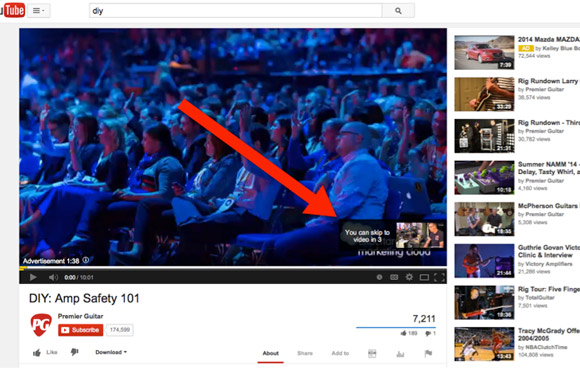
In-Stream Ads: In-stream ads appear before the video of your choice begins to play. They have the option to be skipped after 5 seconds and can also display overlaying text as a call-to-action based on the brand being advertised on YouTube.
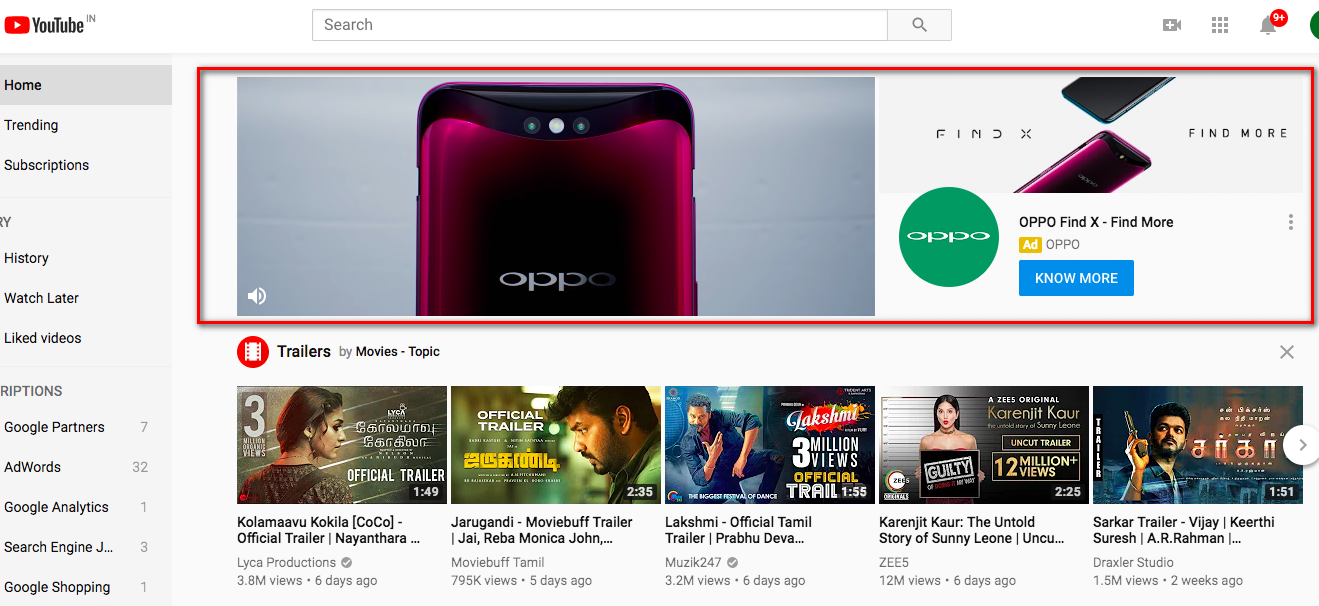
Masthead ads provide high reach and awareness as they are displayed as the main banner on the YouTube homepage. This type of YouTube ads is charged on a day-to-day basis and come with a variety of key benefits. They are primarily used to create a buzz about your brand by reaching out to consumers in a wide range of demographics.
A masthead ad is much more cost-effective than a TV ad as it helps brands reach an approximate of 350 to 400 billion consumers at Rs. 70 lakhs – which is still lesser than how much brands pay for a primetime slot on the TV. Additionally, the frequency with which the ads will be displayed to the viewers is much higher, and the brands can also use the database to re-target the people who have viewed their ad.
Bumper ads are the shortest form of ads available at slots of just 6 seconds. They play before the YouTube video chosen by the viewer and are an excellent way to complement a larger video ad campaign. Since these ads are shorter, advertisers need to focus only on the primary aspect of the brand they want their audience to recall.
Asta Properties – one of the leading real estate developers in Chennai – used a media mix of print ads and YouTube ads to advertise the launch of their premium new property, Asta AVM. Instead of opting for the traditional approach of TV and print, they marketed their new development through YouTube ads and the results were outstanding.
We helped them run ads in both Tamil and English to tap into the potential of regional content online and engage with India’s next billion Internet users. We were able to reach 17,52,661 users through YouTube with 3954 clicks on the whole. We targeted an audience within the age group of 35 to 54 years of age who are looking to buy properties and can afford an investment of Rs. 1.5 crores and above.
The biggest benefit with YouTube ads is the cost-effective approach they provide. A TV ad for the same campaign would cost a whopping Rs. 2000 per second on leading Tamil channels like Star Vijay with no means to track the performance of the ad or target the people who have seen your ad. A bumper ad, on the other hand, costs just around Rs. 1.20 for 1000 impressions, based on the sector of the brand.
We used the detailed targeting methods of YouTube ads to reach out to potential customers for Specsmakers – a leading eyewear company in the southern states of India. We implemented the onion peel strategy to understand the buying pattern of potential consumers and leveraged those results in their marketing campaigns for enhanced lead generation. This survey-oriented strategy included reaching out to the target audience and asking them a set of questions that threw light on their online consumer behaviour. The audience was then categorised into primary and secondary circles and targeted better through YouTube ads.
The ads helped us increase the number of footfalls to their stores by a whopping 400 customers during the campaign period which was less than 20 days. The ad showcased an irresistible offer provided by the brand and was in the form of a bumper ad, creating the exact amount of excitement and hype.
The same ad on TV will cost around Rs. 6000 on prime channels like Colors during the peak hours of viewership, which is a strikingly high budget compared to the average Rs. 1.50 for 1000 impressions offered by YouTube ads. Furthermore, you can leverage a wide range of performance metrics to track the performance of your ad.
YouTube is the most underrated advertising platform, primarily because TV is the go-to medium when it comes to video marketing. However, times are changing now. The annual viewership of YouTube is growing by 40 to 50% every year, so if the traditional medium of television is still on your marketing agenda, it is time to revisit your strategy.
Whether you are from the finance industry, FMCG market or the real estate sector, switch to YouTube ads to bring out the true potential of your brand and attract potential consumers like a moth to a flame.
A recent study by Nielsen and BCG revealed that India has a $100 billion opportunity for brands as the amount of time consumers spend on mobile and the number of digital transactions conducted increases. As 81% of users research their options on a mobile phone before actually making a purchase, reaching them through mobile platforms is becoming increasingly important. This is why, for digital marketers, in-app marketing has become one of the most important channels to drive customer awareness and generate leads.
Mahindra Lifespaces took advantage of this trend in their lead generation strategy. The phenomenal results they achieved proved that a mobile-centric approach might be the future of advertising for brands.
Mahindra Lifespaces is one of India’s leading real estate developers with multiple projects spread across the country. They are the pioneer in developing environmentally sustainable projects and deliver premium living spaces to their customers. To match the company’s novel approach, they also needed an innovative digital advertising strategy to help them stay ahead of competing brands and expand their customer base.
For this campaign, the objective was to leverage in-app ads to drive more leads for Mahindra Lifespaces at a significantly lower cost per lead as compared to other targeting strategies previously used.
For the Mahindra Windchimes project in Bengaluru, we made extensive use of in-app ads to tap into a huge potential consumer base. In-app ads are placed strategically within selected apps, so customers are exposed to it while spending time on the app. With consumers today spending more time on essential mobile apps, reaching them through this medium has proved to be one of the most effective strategies. In-app marketing will also prove to be one of the biggest ways digital marketing will transform the real estate sector.
To do this, we implemented a three-step approach to developing an effective in-app marketing strategy.
The demographic targeted for this campaign was the 35+ age group as this would be the segment who were advancing their careers and looking to buy a home. All marital statuses and both genders were also targeted, however, males performed better.
After setting the target audience, we then needed to research into what kind of apps this segment would be most active on. Based on their interests, we targeted apps that belonged to the following categories:
These apps would be the most effective ways to maximise reach among our target audience.
As in-app advertising is a largely visual medium, the display creatives used needed to be catchy, informative and entice customers to visit the page. A mix of high-performing standard display creatives was successfully used to capture the target audience’s attention.
With this advanced targeting strategy, we were able to generate unprecedented results for Mahindra Lifespaces. Utilising in-app ads helped us not only generate more leads but also led to higher conversion rates. These ads helped us accomplish two major outcomes:
In a nutshell, in-app advertising helped us gain higher conversions at a lower cost. This proves just how effective platform apps can be for brands looking to boost their lead generation and conversion strategy.
With the Digital Marketing Industry Report 2018 stating that 40% of brands are looking for lead generation through digital marketing, implementing in-app ads could be one of the most important methods for them to achieve this goal. The faster brands adapt to this advertising strategy, the better equipped they will be to reach larger customer bases.
In this age of new media marketing, digital marketing has proved to be a game-changer. While any proponent of an effective marketing mix model would suggest a healthy mix of conventional as well as unconventional modes, digital media certainly leads by a margin when you bring the ROI perspective into play for real estate industry. The advent of digital media has paved way for a marketing approach that now wants to track penny-to-penny spend on each marketing effort and the returns derived from it.
Digital marketing is predominantly being used by every firm out there and is proving to be an extremely successful means of spreading awareness and creating a brand value. The same is true for the real estate businesses.
The biggest challenge for real estate companies is that in this highly competitive space, the brands are looking forward to boosting their digital presence and generating leads. In order to enable the real estate companies to establish a digital identity and leverage upon it, they need foolproof innovative digital marketing strategies with lead generation at the centre-stage.
There are a couple of things to be kept in mind while designing a website and implementing digital marketing strategies for real estate companies. First and foremost, it is the website that needs attention. The purpose of the website could vary from capturing leads to brand-building. A website must be user-friendly and must ensure “call-to-action”. Great content always helps in increasing visibility on the digital platform.
On social media platforms like Facebook, Twitter, Pinterest, Google Plus, what matters is how creative your contents or posts are. The frequency is not an issue as long as your posts are able to garner enough audience engagement. Real estate companies need to project their unique strengths in the most creative manner possible on the digital space. A lot of online tools and applications are available nowadays that help in automated updates on the social media sites.
Social media follows SEO (Search engine optimization). Earlier, the pre-conceived notion was that just having a website is enough. But actually just having a website takes us nowhere. Search engine optimization and search engine marketing play a key role in the integrated approach towards getting traffic on the website and generating leads. SEO results give an imperative method of ranking on the digital space and the higher the company is ranked, the better chances of gaining leads from their websites.
While SEO is usually only associated with Google search, brands should not ignore YouTube, the second largest search engine in the world. For tips on how to rank your videos, read our in-depth article: YouTube SEO Tips: The Secret Sauce to Ranking Your Videos in 2019.
Traditionally, the real estate companies invest highly in print ads, but the returns they get on their investments is comparatively lower when compared to the Google ads. Our research in the space throws up a couple of interesting facts. The research results clearly show that on investing the same amount of money in digital marketing and the print media, the real estate companies are able to realize results which are at approximately 2.5 times better. The detailed statistics are as shown below in the table:
A 1/4thpage advertisement in a newspaper costs about Rs. 7 lakhs, which is bound to target one million or more audience. However, the conversion rate is surprisingly low. One print ad worth Rs. 7 lakhs results in about 400 website visits, out of which about 130 leads are generated. In the end, the company gets only 3 to 4 buyers for the properties at an average. In comparison, Google ads, with the similar investment of Rs. 7 lakhs results in about 400 leads which convert into more than 10 buyers.
If pictures speak a thousand words, it is safe to say that videos speak a million. Videos are the new bannermen of content marketing and advertising on video platforms like YouTube can be a tipping point for your brand. You can tailor-make your video campaigns for YouTube by displaying your ad when a potential home-buyer performs a search with relevant keywords. This will help you reach out to a hand-picked audience that is genuinely interested in buying a property – a feature which is still foreign in traditional modes of advertising like television, radio and print.
According to YouTube Brandcast 2018, seven out of ten viewers watch ads on YouTube with the sound on. This only proves that apart from detailed targeting, YouTube ads offer a plethora of other benefits, pushing brands to switch to YouTube ads from traditional media. Few of the key advantages are discussed below:
You can easily link the video ads to your AdWords account and track the results of your campaign. From the number of views generated and the reach of the ad to the amount of engagement caused, you can track every level of the marketing funnel and make most of your allocated budgets.
Unlike traditional media, YouTube ads give you the power to pick your audience for higher conversion rates. You can create a customised target group based on a wide range of factors like the demographics, interests, content consumption behaviour and the keywords used to search, to name a few.
There are numerous YouTube ad formats to choose from, based on where you want your ad to be displayed, how long your ad is and the objective of your campaign. For instance, TrueView ads are the ads that play before a particular YouTube video. You can opt for skippable ads that can be up to 6 minutes in length or non-skippable ads that have a limit of 20 seconds.
The other common type of ads is the bumper ad which plays before the YouTube video but are only 6 seconds long. These ads are great to showcase the launch of a new property or an irresistible offer. Featured below is the bumper ad created for Asta Properties for the launch of their premium project – Asta AVM.
The best aspect of Youtube ads is the cost-effective approach they provide. A TV ad, during the main time slot, costs around Rs. 2000 per second, with no targeting options or tracking benefits. The same ad played in the form of a bumper ad on YouTube will cost just Rs. 1.20 for 1000 impressions. To add to that, you can also retarget the people who have viewed your ad or visited your website for a higher rate of conversion.
Advertising your property through regional content is a great way to break into the tier 2 and tier 3 cities of the nation and engage with the next billion Internet users in India. The free data plans launched by Reliance Jio and the drop in the prices of smartphones have sparked the growth of regional content in the nation. It is time real estate developers took this to their advantage and re-designed their campaigns in vernacular languages to widen their reach.
Casagrand – one of the leading real estate developers in Chennai – leveraged the reach of regional ads to showcase their new project. The ad helped in increasing brand awareness and generating high-quality leads, creating a win-win situation for the developer.
Most of the real estate companies currently, do not have a commendable social media presence but it’s never too late. There is immense potential in the digital media to leverage for the real estate companies. The efficiency & optimization control should be at the forefront of any decision by an organization. And when that decision has the potential to catapult the number of leads by 250%, then there is no reason why the real estate companies should not go digital.
If you have feedback or any comments, feel free to reply to this blog post. You can also read our complete guide for digital marketing for real estate.
As the saying goes, the only competition that matters is the competition you have with yourself – and Google is the best illustrative example of this quote. The world’s favourite search engine has crossed yet another milestone by outgrowing their primitive advertising and publishing platforms. Google AdWords, DoubleClick and Google Analytics 360 Suite will now be available in an all-new avatar to showcase the full potential of their services with upgraded solutions that make advertising and publishing much simpler for online marketers. This, in turn, will help in improving the quality of leads and increasing sales. Let’s take a look at what Google’s rebranding strategy has in store for us and how brands can benefit from it.
The integrated platform of Google AdWords has now been transformed to Google Ads with a new identity and an extensive list of digital advertising services. As the name suggests, Google Ads supports all the prevailing ad formats, from text and display ads to video and app installs. These ads can be showcased on a variety of platforms including YouTube, Search, Gmail and Maps, to name a few.
Google AdWords was launched 18 years ago as a platform to generate text ads on Search. Over the years, the tool has grown multifold with extensive types of ads available on various platforms. This paved the way for Google AdWords to be rebranded as Google Ads, with advanced features to create a flexible program for advertisers based on their marketing goals.
According to Sridhar Ramaswamy, Google’s head of Ads and Commerce, “With Google Ads as opposed to Google AdWords, it is moving the imperceptible default opinion that you get as an advertiser when you hear ‘Google AdWords’ … you think, ‘Oh, Words. Search.’ It’s basically a slight cognitive dissonance to all the other great things that we are doing in terms of both the format and surfaces these ads can show. And so, Google Ads, in our opinion, is a much more straightforward representation of what Google advertising can provide. It’s that simplicity and alignment of the core message from the first instant you hear the name, which is the goal.”
The second tool launched by Google in their rebranding efforts is the Google Marketing Platform which is an integration of DoubleClick advertiser products and Analytics 360. This tool will help online marketers analyse the performance of their pages and optimise the digital media spends on one single platform.
Google noticed the pattern in which marketers used both DoubleClick and Analytics 360 in their advertising strategies by consecutively using the two platforms. The advertisers who integrated both the platforms on their own witnessed better results with optimum usage. With the Google Marketing Platform, advertisers can now directly reap the benefits of both the tools to plan, analyse and optimize their media spends.
The Google Marketing Platform also introduced a brand new Display & Video 360 feature that combines a range of Google’s display advertising solutions. The products under this feature include DoubleClick Bid Manager (BDM), DoubleClick Campaign Manager, DoubleClick Studio and Google Audience Center 360.
Additionally, DoubleClick Search, which is used as a search management platform by enterprises, has been rebranded as Search Ads 360. The comprehensive platform also features an integration center for marketers to hand-pick the tools of their preference and integrate them, providing a tailor-made program for every advertising strategy.
The third consolidated platform launched in the rebranding series is the Google Ad Manager. This platform acts as an umbrella tool which integrates DoubleClick for Publishers (DFP) and DoubleClick Ad Exchange (AdX). Through Google Ad Manager, advertisers can leverage the ad-serving solution of DoubleClick for Publishers and sell advertising inventory through the solutions provided by DoubleClick Ad Exchange. This will lead to “AdX buyers” being referred to as “Authorised buyers” in the near future.
Whether you come from real estate, BFSI, FMCG or any other industry, the new integrated tools launched by Google will be a game-changer for digital marketers. These platforms are scheduled to be rolled out by the end of July with the common objective of simplifying the advertising process for marketers to maintain the pace, energy and enthusiasm with which digital marketing is skyrocketing in today’s world.
With almost 80% of search queries coming from mobile platforms, Google has been implementing new ways to make the mobile search experience more streamlined and convenient for its users. One of the most drastic moves to facilitate this was the introduction of Accelerated Mobile Pages (AMP).
On an average, pages take longer to load on mobile than they do on the desktop. This is especially significant in the Indian context as Indians have the highest amount of data consumption in the world and access the internet primarily through their phones. If brands want to engage India’s next billion internet users, implementation of AMP will become one of the most crucial differentiators.
Unlike its direct competitor (Facebook Instant Articles), AMP is an open-source framework which is very easy to access. A page can be AMP-enabled by modifying the website’s HTML code with certain specified tags or by implementing a specialised JavaScript framework. But even if you don’t have any experience with coding, you can still implement AMP if you use a CMS platform like WordPress. Just by installing a Google AMP WordPress plugin which is easily available, you can make your page AMP-optimised and help it load faster.
Google initially launched AMP for static content-heavy sites such as blogs. Since an AMP page is a stripped down version of the original version, it improves readability for the user. Implementing AMP on blog pages can have several benefits for the reader and the site owner.
According to a study by Kissmetrics on How Loading Time Affects Your Bottom Line, loading time is one of the biggest factors contributing to bounce rate. Over 40% of those surveyed said they would leave a page if it took longer than 3 seconds to load. A study by Tractus looked into the effects just a 1-second delay in page load time can have on several key metrics. They found that bounce rates increased by 8.3% and page views decreased by 9.4%. This clearly shows that for a successful blog, you need more than just great content. You need an optimised page that improver a reader’s overall experience.
Implementing AMP on blog pages can be one of the most important ways to help your website perform better. When a page loads almost immediately, users are less likely to abandon the page. They are also more likely to explore your site further and click on other links within it. Below is a quick glimpse of one of our blogs, where you can see significant improvement in terms of time on site – just because of the AMP blog page.
When a website implements AMP, they are very likely to see an increase in page speed, page visits, dwell time and a reduction in overall bounce rates. Incidentally, these are also some of the main factors Google takes into consideration when ranking a page. In addition, ever since Google’s algorithm started prioritising mobile-optimised pages, the implementation of AMP could further help improve your website’s SEO.
Implementing AMP will also help your website gain more visibility. AMP-enabled pages have a lightning icon next to them which helps them stand out from the other results displayed. Users are also likely to seek out pages with this icon, knowing that it will load faster. All of these factors can help a website rank high on a search results page.
For content marketers, analytics is one of the best tools to understand user behaviour, what kind of content is working and where traffic is coming from. Tracking AMP pages is very easy as there are analytical tools available to help you track page visits, link clicks, conversions and more on AMP versions of your pages.
Page load speed is a critical factor in improving a user’s experience, especially when you are trying to drive conversions. Understanding the importance of this, Google launched AMP for landing pages. Brands can significantly improve the performance of their landing pages by implementing AMP.
If you run an e-commerce site or any other online business, leads or sales are most likely your number one priority. But if your website doesn’t load quickly, then you could be losing out on valuable customers. The same study by Tractus found that 30% of shoppers who have a bad experience with an online shopping website say that they will never visit that site again and that they will not wait more than 2 seconds for a website to load. So if you want to improve the quality of leads generated via digital, optimising your page speed is crucial.
Implementing AMP could be one of the best measures to create a landing page that converts. There has been shown to be a direct correlation between page load time and the number of conversions. If a page loads quickly and the customer is satisfied with their experience on it, they are much more likely to purchase a product or complete any other call to action.
If one of the main goals of your website is to monetise through ads, then implementing AMP could help you achieve this. This is primarily due to the difference in the way ads are showcased on an AMP-enabled page as compared to a regular page. Since implementing AMP trims all the unnecessary elements of your page and streamlines it, ads are displayed more prominently and with fewer distractions. This can increase the number of clicks on an ad displayed.
Background: India Home Health Care (IHHC) is a leading provider of home nursing and other healthcare services. They work in partnership with BAYADA Home Health Care to provide patients with registered nurses, visiting doctors, physical therapists and more from the comfort of their home.
Goal: India Home Health Care (IHHC) wanted to generate a higher number and quality of leads at a lower cost-per-lead (CPL).
Strategy: In order to achieve higher leads for IHHC, we decided to implement AMP for their landing pages. Since a majority of the leads for IHHC came through mobile, enabling AMP would have a strong impact. Google ads targeted towards potential clients redirected them towards an AMP-implemented landing page. As this would significantly reduce the load-time of these pages, we predicted that it could generate higher leads for IHHC.
Results: The implementation of AMP led to a higher number of leads generated as compared to any other pages on the site. The two most important results from this were:
As the number of mobile internet users in India and around the world continues to grow, making pages more mobile-friendly will become one of the biggest objectives for brands. Implementing AMP could be one of the most effective ways for brands to become more discoverable and ultimately, gain higher conversions, whether you are a real estate giant or a leading FMCG company. So do try it out and let us know the results you get!