If your brand has visually appealing products or a unique story to tell, there cannot be a better stage than Instagram. From luxury brands to media houses to automotives, each have carved a niche of their own and are leveraging Instagram for their businesses. In fact, automotive brands are the most engaged and well-represented. Lot of marketers contemplate whether Instagram can be an effective social media platform for their brand? Even if many marketers want to leverage Instagram for their business, they lack a quick guide that has the tips to build a successful presence on Instagram.
According to a recent study,
A quick look at the above stats convey the fact that more than 50% of the sales funnel can be readily delivered to potential customers even before they step into your store. This raises an important question: does the might of premium luxury brand correlate to the might on digital platforms like Instagram?
About the client
Malabar Gold and Diamonds is an iconic Indian jewellery brand. Each piece from their extensive collection displays intricate craftsmanship and a unique blend of traditional and contemporary aesthetics.
Challenge
While the brand already had a large presence offline, they wanted to build awareness among newer and younger audiences online. Transitioning from a brand that has largely used traditional forms of advertising to one that was digital-ready was the need of the hour.
Strategy
With Instagram being one of the biggest social media platforms today, we decided to leverage it to boost the brand’s image and reach out to new audiences.
We displayed a wide range of stunning designs using the carousel image option, wherein about ten images were added in a single post, which proved to be very successful. Users were able to look at and compare various styles of jewellery from a single post. Moreover, with Instagram, we were able to create a scrapbook of designs and exhibited these designs using the magazine layout option on Instagram. A plethora of jewellery collections were displayed for the gorgeous brides of India.
Results
We saw an overwhelming result of 24 percent growth in the number of followers over the period of three months during the campaign. Leveraging Instagram and other digital platforms helped us connect with our prospective customers because of which we saw a significant increase in the number of leads and improved foot traffic to the stores.
Including hashtags, the average caption length on Instagram is 135-140 characters which marks a significant focus from brands to avoid long captions. But there is no apparent proof of lower engagement rates for posts with lengthier captions as long as it adds to the visual story of the post.
Hashtags allow access to specific interest groups and they are a great way to mark content that are discoverable organically. Instagram allows up to 30 hashtags to be used, and studies show that posts with at least one hashtag get ~12% more engagement. Then, there’s no reason to shy away from using them.
@mentions generally results in more engagement underlying the fact that though the caption length may be immaterial, caption content definitely matters.
The posts tagged with location gets ~79% more engagement when compared to their orphan counterparts because there are multiple apps and 3rd party discovery tools that allows location-based searches and content discovery.
There is no doubt that videos are the fastest forms of content consumption on the internet today. However, images have still not lost their charm. So, it is best to boost the growth trajectory of your brand with photos and videos together and make a significant impact on the audience. On its own, videos are a great form of content but cannot replace photos on Instagram. Hence, it’s suggested to focus on photos as the central pillar of your Instagram strategy.
A simple CTA like "select the design you like most" or "Tag your friend who would like this" would be ideal to help boost the number of comments and tags your post gets. The virality of your post has an exponential relationship with the number of comments and tags you get.
With Instagram tweaking their algorithm to prolong user time on their app, the concept of ‘Popular Box’ has shifted its interest to ‘Explore Tab’. The Explore Tab is a big hit! It is the best strategy to keep your brand in the purview of your users even if they do not follow your account. Instagram tracks user activity and understands every individual user’s interests. The Explore Tab feed is then customized to fit users liking.
Featuring your brand in the Explore Tab could be a direct method to create brand awareness and thereby increasing your number of followers.
Instagram has updated their app features to become a one-stop shopping platform. From product tags to product stickers in the feed and stories, it enables shopping enthusiasts to interact with the product. Moreover, the save option empowers buyers to revisit the same product without any hassle. The Checkout option has enabled payment of products in the same platform eliminating the difficulties in navigating to a new page for initiating the payment. This is a boon for retail brands since they can further push consumers down the marketing funnel to ultimately convert to their brand - all at the tap of a button!
Nothing works better than understanding your audience yourself. Instagram has opened up the gates to polls and questions in your story that users can respond to. This way, you can get insights on what your viewers like, how they react to a new product and their opinions on your brand. The results of this interaction is the main factor to redefine your strategy to reach to more number of audience.
With the introduction of GIFs and stickers last year, it has enabled business accounts to answer queries and questions quickly, which are also engaging and creative.
With TikTok and other video platforms creating waves in the digital market, it is safe to say that videos have their own charm in attracting users. IGTV has boosted a new interest in viewers and is making its way as a powerful tool to be featured on Instagram feeds. Now that Instagram has come up with the horizontal video facility, it overcomes the trailing challenges of vertical IGTV videos. Brands need to leverage this and leave no stone unturned in reaching their audience.
Does this quote have any resemblance to your boardroom discussions on your marketing strategy? The apprehensions are misplaced.
If your brand doesn’t have glamorous models to endorse your product or a Louis Vuitton bag to display, then does your brand have a place on Instagram? The answer is YES. There are ample examples of brands who lack stunning images but have succeeded in creating an engaged audience on sheer basis of their creative prowess and evoking original content.
From Google to conglomerates like GE to tractor manufacturers like John Deere, most brands are fast coming on Instagram and have many have quickly built an engaging community around their brand. In fact, General Electric is one of the biggest B2B companies on Instagram with ~412000 followers.
Intel definitely needs a mention considering the impressive posts that showcase their products and common problems to solve using technology. This gains good traction as it’s not just hard-selling Intel’s products. In recent times, Instagram has emerged as an effective platform for the hospitality industry with players like Raintree Hotels leveraging geo-location tracking to get walk-ins & bookings.
Whether your brand is new on Instagram or have built a strong presence, measurement is an essential part of the strategy to optimize the efforts and extract maximum returns on your investment. Some of the metrics that can help you in this direction are:
1. Total Engagement
The total engagement is the sum of likes and comments garnered by your posts. This gives basic insights on how well your strategy has worked to keep your audience active.
2. Engagement per Post
When some posts get impressive engagement while others fall flat, this metric can work as a good measure to optimize the content being pushed on the basis of what is working well with your audience.
3. Interaction Density
In a given time period, the total engagement gained divided by the total followers shows engagement as a %age of followers; which can be used to study the period-on-period impact of your strategy.
4. Hashtag Volume
This is only applicable in case of unique hashtag campaigns with affinity to our brand. In such cases, it’s a fair measure of how ‘viral’ your campaign has been.
5. Total followers
This is an important metric to track the popularity of your Instagram account. The higher the number of followers, the better the chances are of gaining engagements on your post, thus boosting the other metrics discussed here.
6. Follower Sensitivity
It’s the rate of growth of followers, period-on-period; that can act as an essential measure to track the best performing campaigns and content types.
To know more about Instagram for your Business, check out this video:
In case you would like any other information to be included that can be helpful for marketing businesses by leverage Instagram, please do let us know your thoughts as a comment to the post. We shall be more than happy to explore your feedback.
Digital media is changing the landscape for marketers everywhere, especially in the FMCG sector. Traditionally, campaigns for every FMCG product would depend upon determining the right marketing mix of the 4 P’s (Product, Price, Place and Promotion) that would best influence the target audience’s purchase decisions. Today, however, consumers are making buying-decisions differently and with this, strategies aimed at impacting this process need to evolve as well. Covid 19 only accelerated this trend even further with purchases via market places, apps and direct to consumer brands has increased.
Consumers now are exposed to their phone and laptop screens more than they are to traditional media like television, newspapers and billboards. There are also a growing number of consumers who prefer to shop online for FMCG products rather than visit a physical store. According to a report by Google and Bain and Co. $11 billion, or two-thirds, of the total sales in beauty and hygiene products will be influenced through online marketing. In today’s digital era, a strong full-funnel digital marketing strategy is indispensable for FMCG brands
Digital marketing for FMCG companies doesn’t mean retiring the tried and tested 4 P’s which formed the holy grail of marketing for years. Instead, it involves tweaking the marketing mix for FMCG products to bring them into the current era. Digital marketing trends in FMCG allow marketers to not just capture the consumer at the final buying stage, but also to establish a relationship with them from the start, something that was not possible before. This requires marketers to formulate a holistic FMCG digital strategy to not just influence their consumers, but also to personally engage with them.
Quick Tip: We recently published a book on wading through digital marketing, grab a copy of Decoding the Digital Jungle
Incorporating a strong digital marketing strategy in the overall marketing mix offers many clear advantages to brands.
The FMCG sector is marked by a large variety of similar products, which offer consumers a wide range to choose from. One of the biggest advantages of having an effective digital marketing strategy in place is that it helps brands create a unique brand identity. This helps consumers form a strong opinion of the brand, which will ultimately influence their purchase decision.
In traditional marketing for FMCG, the product display was considered one of the most important factors which influenced purchase decisions. Consumers are visual creatures, so the more attractive your packaging, the higher the chance of it being noticed by them. In much the same way, digital marketing for FMCG companies can be approached as a virtual shelf display. It is even more effective than a physical display because it helps you reach your specific target audience, making your overall marketing strategy more cost-effective. This enables top-of-mind awareness, which can influence purchase decisions. Like physical shelves, digital marketing also allows you to position your products contextually. Through tools like AdWords Smart Display, you can showcase your products while consumers browse through similar categories. For example, if you are a skincare brand, you can display your ads next to beauty blogs your consumers are browsing through.
Often, your product's own website is one of the best ways to showcase your brand because you have complete control of a user's experience on it. Anmol, a household name in the northern and eastern regions of India, wanted to upgrade their website. We completely did away with the old, lifeless website and gave it a fresh new look that was as vibrant as their products. Our UX, content and design teams adopted an out-of-the-box approach that had a generation-wide appeal, complete with interactive elements, engaging language and quirky designs.
Read about the full journey here: A Young and Vibrant Website for One of India's Most Loved Biscuit and Cake Brands
One of the biggest advantages digital marketing has over traditional marketing is that it helps you track every facet of your marketing efforts. FMCG brands spend large sums on hoardings, TV commercials, print ads, radio ads and more. However, the results of these campaigns are very difficult to measure effectively. While speculative figures can be produced, there is no way to arrive at a definite conclusion.
Digital marketing, on the other hand, helps you track and measure every aspect of your campaign. With the help of analytic tools, brands can recover information about number of impressions, clicks, conversions and more. It also lets them find out exactly which ad prompted the consumer to make the purchase. Advanced analytics can even let you gain deep consumer insights. This can help you create campaigns and content that your target audience will actually find engaging. With the ease of tracking digital marketing offers, FMCG brands can refine their strategies and make it more cost-effective.
Offline purchases might still form the bulk of FMCG sales but the future belongs to mobile phones. Mobile phones and high speed, affordable internet have penetrated almost every section of the Indian audience. A significant portion of Indian consumers are shopping for FMCG products online through various apps and this number is only going to grow. Digital marketing trends in FMCG need to keep up with the increasing volume of customers who prefer to shop online.
Via seosolutionsindia.com
One of the biggest areas of growth in mobile usage will be in tier 2 cities and small towns in India. FMCG brands need to stay up-to-date on the constantly evolving digital marketing trends in these tier 2 and tier 3 cities. Unless brands solidify their FMCG digital strategy now, they are going to witness severe drawbacks in the future.
Digital media offers a number of streams for FMCG brands to market themselves. These various platforms also help brands meet a number of marketing objectives, right from creating awareness and brand building to driving conversions and cultivating brand loyalty.
For a long time, the focus of marketing strategies for FMCG brands revolved around a one-way promotion of their products. Today, however, digital marketing trends in FMCG are shifting the focus to creating user-centric content that brings actual value to consumers’ lives. By creating informative content, you can drive conversation among your consumers and build strong communities. Having a solid community is crucial to developing a loyal consumer base. Digital marketing can help strengthen your brand’s community through a number of innovative content marketing strategies that work.
Clever use of content marketing is essential because it helps establish your authority in the space. For example, Johnson & Johnson created BabyCenter.com, a website for moms to share information and engage through helpful forums. While not overtly a part of Johnson & Johnson, all ads displayed on BabyCenter.com were for the brand. This allowed Johnson & Johnson to build a strong community of moms they could tap into to sell their products. This kind of user-focused marketing is unique to digital marketing and helps brands promote their products more effectively than ever before.
Another facet of content marketing that is essential for FMCG brands is creating SEO-friendly content. Incorporating a strong SEO plan as well as including strategies for content amplification is crucial because it drives consumers to your website, enabling them to become more aware of your brand. Keyword-optimized content also helps consumers find you when they have a query, which goes a long way in establishing your brand’s credibility in that domain.
Facebook is undeniably one of the biggest avenues for digital marketing. Through advanced tools for social media analytics, you can find your target audience, refine your marketing strategy and even drive conversions. The Facebook custom audience tool can help you widen your target audience and reach them through your campaigns. FMCG brands can also use Facebook to get deeper insights into consumer behaviour. For example, Raaga Professionals innovatively used an audience poll on Facebook to simultaneously understand the needs of their consumers as well as advertise their products.
However, your consumers aren’t using only Facebook and as a brand, neither should you. Digital marketing for FMCG brands needs to be integrated over various channels to have the maximum impact. This includes ads which play before a Youtube video, promotions through Twitter, Instagram posts and much more. Effective digital marketing for FMCG even includes SEO-friendly content, so your brand shows up when consumers search for a related need. With an increase in the number of FMCG products showing up online, Google Ads are also another important avenue for FMCG marketing.
Videos have emerged as one of the most consumed forms of content. The massive growth of platforms like YouTube and TikTok are testament to this renewed interest in video content. Because of this, any successful digital strategy for an FMCG brand should include a strong video strategy. One of the main advantages of using videos for your product is the unlimited room for creativity it offers.
For our video campaign for Wonderchef, we broke away from the stereotypical product-centric video formats and instead tried to explore video concepts that could spark a conversation among our audience. One insight that came out was that the kitchen was traditionally considered a 'woman's domain' and a lot of men were unaware of even the basics of cooking. In order to highlight this inequality and to encourage men to take up more responsibilities in the kitchen, we created the 'Dear Man Hold the Pan' campaign. In this video, we asked a number of men in Mumbai basic questions about cooking. Expectedly, most were unable to answer and many gave downright hilariously wrong answers. This video put forth a strong social message in a humorous way and quickly went viral on social media.
Traditionally, FMCG advertisements were a one-way interaction, with brands informing consumers about their products over TV commercials, radio spots and print ads. Advertising was done mostly when there was a new product or service to promote. Buying space in traditional media is expensive and only allows for a one-way communication. This is why brands were unable to consistently engage with their consumers.
Digital media is changing all of that permanently. Digital marketing has a clear edge over traditional marketing when it comes to generating user engagement. Digital marketing trends in FMCG products are aimed towards establishing your brand as a constant presence in your consumers’ lives. Through shareable content, helpful information and meaningful interaction, brands can continue to stay relevant at all times. This helps consumers recall your brand at the time of making a purchase decision. Whole Foods, for example, utilised chatbots in their digital marketing strategy to engage consumers and direct them towards completing a purchase.
Influencer marketing is proving to be one of the most important digital marketing trends in FMCG. Through the use of influencers, your brand can tap into their huge number of followers and increase consumer awareness of your products. Influencer marketing is also very useful for FMCG brands because consumers are more likely to believe in the credibility of your brand when an influencer whom they trust recommends it to them.
A one-size-fits-all marketing campaign is no longer effective for FMCG products. While email marketing in general keeps your consumers updated on latest products and promotions, drip emails in particular are a groundbreaking way to personalize your marketing tactics. Drip emails, also known as automated emails, are a set of emails that are sent to consumers based on a specific set of parameters. For example, there will be one email that is sent to consumers when they first sign up, one that will be sent if consumers add products to their cart but leave without completing the purchase, one that will be sent after a purchase is made and so on.
Via chasenewmedia.com
Drip email campaigns are one of the most effective lead nurturing strategies. These automated mails can target consumers at a number of different stages, ultimately guiding them towards making a purchase. This technique can prove a very effective step in digital marketing for FMCG companies by helping influence the consumer decision making process. Automated emails which are sent when consumers abandon their shopping carts are particularly effective, because it pushes the consumer to complete the purchase. Drip emails also help you retarget consumers who have already purchased your products. Research show that consumers who have purchased your products in the past are more likely to do so again in the future.
While this may sound self-evident, not many FMCG products actually sell their products online. To this day, even if FMCG advertisements are being displayed on digital media, their marketing efforts are aimed at influencing the consumer’s in-store purchase decision. But with the launch of many websites that let you purchase FMCG products online, an increasing number of consumers are beginning to shop online. In this case, even if a consumer has every intention of purchasing your product, they will choose a competitor’s product if yours is unavailable online. FMCG brands can choose to sell products through Amazon and Facebook or similar sites to increase sales.
Selling products online also gives you the advantage of being able to reach consumers beyond a limited geographical location. For example, a local makeup brand can start selling their products nationally by making it available online. This ultimately increases the consumer base for FMCG products, a key factor in eventually increasing sales. With a few simple steps, selling online through Amazon and other sites is a very easy way for FMCG brands to increase their online presence. For example, Raaga Professionals, a personal care brand, sells their products through Nykaa. In this way, their content marketing through blogs can direct consumers to a clear point of purchase.
For most FMCG brands, tier 2 and tier 3 cities offer the next big avenue for growth. At the same time, most consumers in these areas are becoming more digitally connected. While the number of English-speaking users online has more or less peaked, regional language users are only going to grow from here. This has been facilitated in a huge part by the dual penetration of mobile phones and internet connectivity in India’s smaller towns. A study conducted by Google and KPMG estimates that the number of non-English speakers using the internet will grow by around 18 percent annually. Additionally, 99 percent of these users will access the internet primarily through their mobile phone. For FMCG brands, this offers a huge opportunity to leverage digital marketing to attract this new wave of consumers. The growth of regional content online will be one of the key factors that can influence FMCG sales in tier 2 and tier 3 cities.
Cavin’s Milkshake is one of the top-selling dairy-based drinks sold by the parent company CavinKare. These milkshakes are sold in single-serving sized tetra paks, and are known for their delicious flavour variants and high adherence to quality standards. Cavin’s is also one of the best examples for a well-thought out digital marketing strategy. Through the use of creative and engaging posts over social platforms like Instagram and Facebook, Cavin’s was able to successfully utilize social media for their brand building efforts.
Cavin’s Milkshake maintains an active Facebook profile, with funny, creative posts that attract a large number of comments and shares. They also have a very large, vibrant community on Facebook who actively engage with the brand by writing positive reviews on their page and interacting with their posts.
Cavin’s Milkshake is a staple in most school canteens and the product brings back a flood of nostalgic school memories. The #JustHighSchoolThings campaign for Cavin’s stuck to the same theme, by associating the brand with school memories most people have in common. The campaign showcased the most common characters most of us were familiar with in school such as ‘The Geek’ and ‘Cutest Couple’ through Cavin’s Milkshakes. These posts were very popular throughout social media, garnering a high reach and number of audience reactions. What is most noteworthy about these posts is that they have performed well organically, proving that excellent content is the most important aspect of digital marketing for FMCG companies
Cavin’s Milkshake utilized Instagram extensively for brand-building. Through the use of striking visuals, their posts on Instagram were able to generate high levels of engagement from their followers. Their Instagram posts involved the clever use of popular memes, special events and engaging artwork tied in with their products. In this way, digital marketing for FMCG companies can help keep brands relevant by immediately cashing in on the latest trending topics.
Instagram was also an important channel for Cavin’s to rope in their followers and build a strong community. With the hashtag #Cavin’sSuperstar, each month, Cavin’s Milkshake showcased one of their followers and asked them a few fun questions about their love affair with Cavin’s. This was an excellent social engagement technique to foster brand loyalty and encourage participation.
Cavin’s Milkshake was able to successfully utilize influencer marketing to reach moms who would ultimately purchase the product for their children. One of the key influencers roped in for Cavin’swas RichaChoudhary who runs the blog All That’s Mom. As part of the influencer marketing campaign, RichaChoudhary wrote a blog post on Cavin’s Milkshake, along with 2 social media posts on Facebook, Instagram and Twitter, plus a short video for Cavin’s. These posts performed extremely well on the blog as well as on social media. Through the innovative use of Cavin’s Milkshake in recipes as well as her posts on how much her child loved Cavin’s Milkshake, the product developed a positive brand perception from her huge follower base.
Apart from macro-influencers, Cavin’ Milkshake also worked with a number of micro-influencers on Instagram. These micro-influencers put up a number of posts where they talked about their positive experiences with the brand, used it in recipes and recommended it to their followers.
Through the innovative use of various social media platforms, Cavin’s Milkshake was able to build their brand identity and reach out to their consumers.
The perfect marketing mix for FMCG advertisements involves a customized combination of digital and traditional media. Developing this unique mix requires a deep understanding of your consumers. Consumers often use their phones and laptops in tandem with other forms of media. For example, they might be browsing on their laptop while watching TV or checking their phone while listening to the radio in their car. This is why digital marketing for FMCG companies also need to develop strategies that effectively blend both these channels. With campaigns and FMCG advertisements that are spread over multiple platforms, brands can develop consumer awareness and influence purchase decisions.
If you are looking for the best digital marketing agency in Mumbai and best digital marketing agency in Bangalore and Chennai, reach out to us and grow your business.
Digital marketing for doctors can be tricky. This is particularly because medical professionals need to go the extra mile to build a sense of trust and assurance with potential patients in the online space. Whether you are a practitioner or looking for ways to improve the visibility of your clinic, it is important to incorporate a digital-first marketing strategy to widen your clientele. Here are a few digital marketing tips for doctors to stay relevant and patient-centric.
The most important platform that serves as the first point of contact between you and a potential patient is your website or landing page. The user experience provided by your website will lay the foundation for the first impression created on visitors. To provide the best user experience, it is important to create a website or landing page that is extremely navigable and user-friendly. Furthermore, you must ensure it contains all the adequate information patients look for while searching for medical help. Important details such as doctors profile, consultation timings, health departments, courses of treatment and procedure to fix an appointment are extremely vital. Additionally, you can implement AMP-enabled pages for lightning-fast loading speed, to ensure visitors stay on your website and do not bounce off.
Featured below is a website developed for Dr Mohan’s Diabetes Centre – the nation’s leading diabetes clinic. From services to locations of clinics, the homepage covers all the aspects that patients are looking for, making it highly efficient and discoverable.
To add to that, featured below is a video on how AMP landing pages produced 33% lower CPL for India Home Health Care – a leading healthcare provider. When IHHC approached us to generate high-quality leads at lower cost-per-lead (CPL), we incorporated AMP-enabled landing pages that load faster, are mobile responsive and look great on both desktop and mobile. Within three months of launching, the total conversions increased by 20% with a 33% reduction in CPL.
After creating a user-friendly website, the next area of focus is to build strong informational blogs that resonant with your medical practice. According to statistics, there are about 3.5 million medical searches on Google on a day-to-day basis. As a first step, you need to understand those subjects which are being constantly searched on the Internet. From informational content on symptoms and treatment options and FAQs to home remedies and simple tricks, you can use your blog as a platform to give simple advice to your customers. Additionally, there is no better place than blogs to feature the success stories of your patients. Customer testimonials can greatly influence your website traffic and readership. To stay relevant, it is important to plan an effective content strategy by identifying the important dates and months in the world of health.
Email marketing is yet another effective approach when it comes to digital marketing for doctors. Resourceful emailers help practitioners connect with their audience at a more personal level. Your patients will find it extremely useful as the information is right there in the inbox before even they plan to search for it.
Featured below is the blog page of Neuberg Diagnostics. Neuberg Diagnostics addresses a diverse range of healthcare concerns for its customers through an innovative content strategy. Their blogs are relevant, informative and highly engaging.
Recent statistics show that there are 5 million videos that are watched on YouTube every single day. Engaging videos generate 1200% more shares than images and texts combined. Videos are a great digital marketing strategy for building credibility and authenticity for your brand. There is nothing more engaging than watching a medical professional provide deep insights on a particular disease or treatment. It helps your patients feel at ease and assures them that they are in the hands of an experienced practitioner. Videos are also an appropriate place to feature your customer testimonials. The greatest advantage of videos is its ability to invoke a wide range of emotions like hope, passion and courage which pushes them further down the marketing funnel.
For example, here is a case study on how Dr. Mohan's Generated over 40,000 leads through digital marketing.
Imagine you have a great website, blogs, emailer and videos. But, your patients can’t find you on Google. The best way to solve this problem is to adopt effective methods of search engine optimisation with a detailed on-page and off-page checklist. SEO is important when it comes to digital marketing for doctors since it helps in developing a content strategy based on specific keywords used by your patients for their searches. The first task that you need to implement before developing your content is to do a keyword research using tools like Google keyword research tool and LSI Keyword generator tool. It is always ideal to choose keywords that have a lower difficulty score and higher search volume. Although you need higher search volume for better ranking of your website, quality content is always the king.
Here is a case study on our client Mfine, who leveraged content marketing to gain better leads and engage their audience
As per a recent survey, 39% of patients choose their practitioner from a Google search. These statistics prove that listing your clinic or medical practice on Google My Business Listings plays a huge role in increasing your visibility and footfalls. Ensure you provide ready information with updated phone numbers, complete address, services, working hours and a link to your website. GMB listings also offer reviews shared by older patients and visitors that add credibility to your practice. Additionally, you can also feature relevant blog posts in your listings, providing viewers with a detailed glance of what you have to offer.
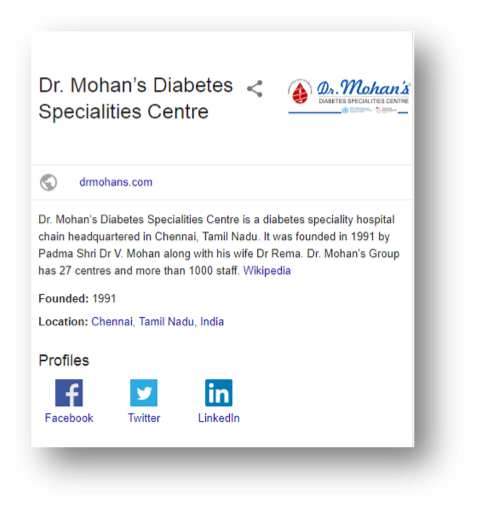
For example, below is the GMB listing for Dr. Mohans with a link to their website, social media profiles and Wikipedia page.
Digital marketing for doctors is incomplete without a strong social media marketing strategy. The most important factor that medical practitioners must keep in mind is the fact that every social media platform has a unique audience. The demographics and preferences of Facebook and Instagram are quite different than that of LinkedIn. So, it is always ideal to strategise your social media campaign based on the nature of the platform. There is no better tool than social media to address the complaints and concerns of your customers.
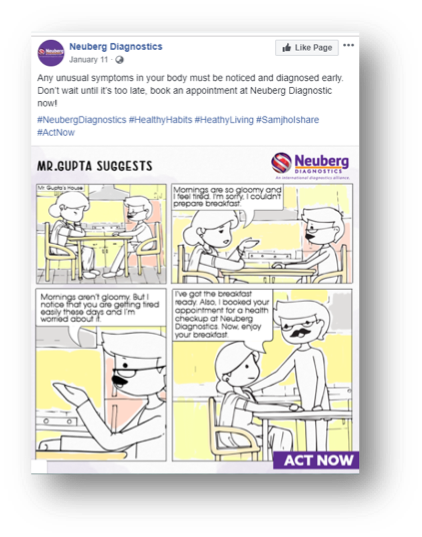
For instance, online communities and discussion forums are great tools to handle customer complaints. Hashtag campaigns, infographics, quizzes, memes, hangout interactions and live chats are other ways to effectively engage your audience through social media. Featured below is an innovative Facebook campaign done for Neuberg Diagnostics with the hashtag #Samjhoishare. The posts play around the concept of healthy living with a comic touch, covering all the aspects of a successful social media strategy.
Multilingual marketing is a great way to genuinely connect with your audience in a language they are comfortable in. By 2020, 9 out of every 10 Internet users will be consuming content in regional languages. Adopting a multilingual marketing strategy will give medical practitioners an early mover’s advantage to connect with their audience and stay ahead of their competitors. However, it is vital to take up an end-to-end multilingual strategy, from vernacular videos to regional ads, in order to create an impact and increase the credibility of your practice.
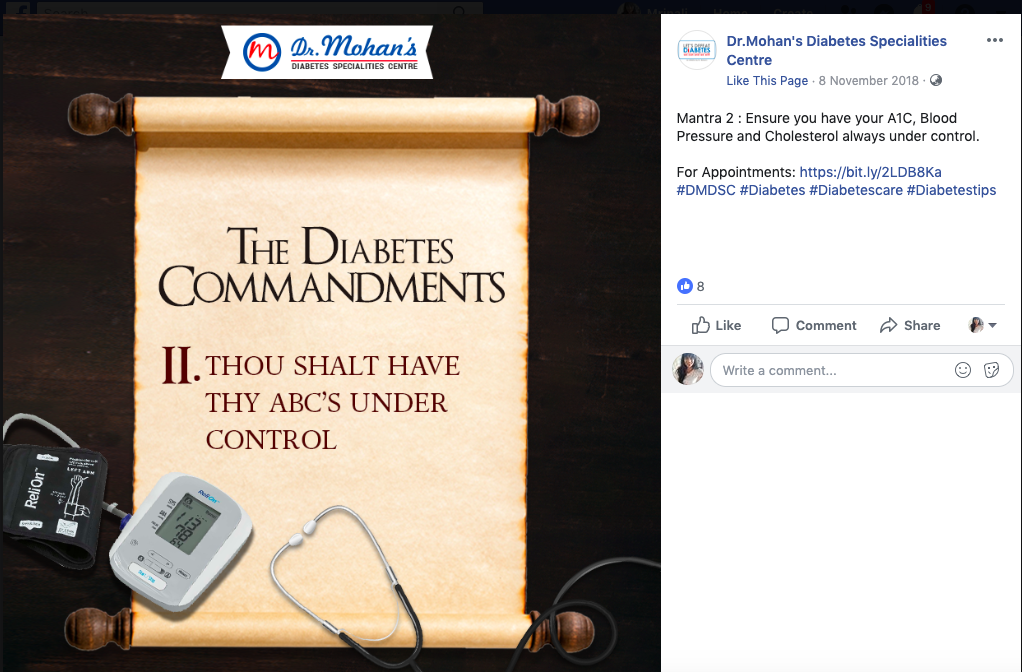
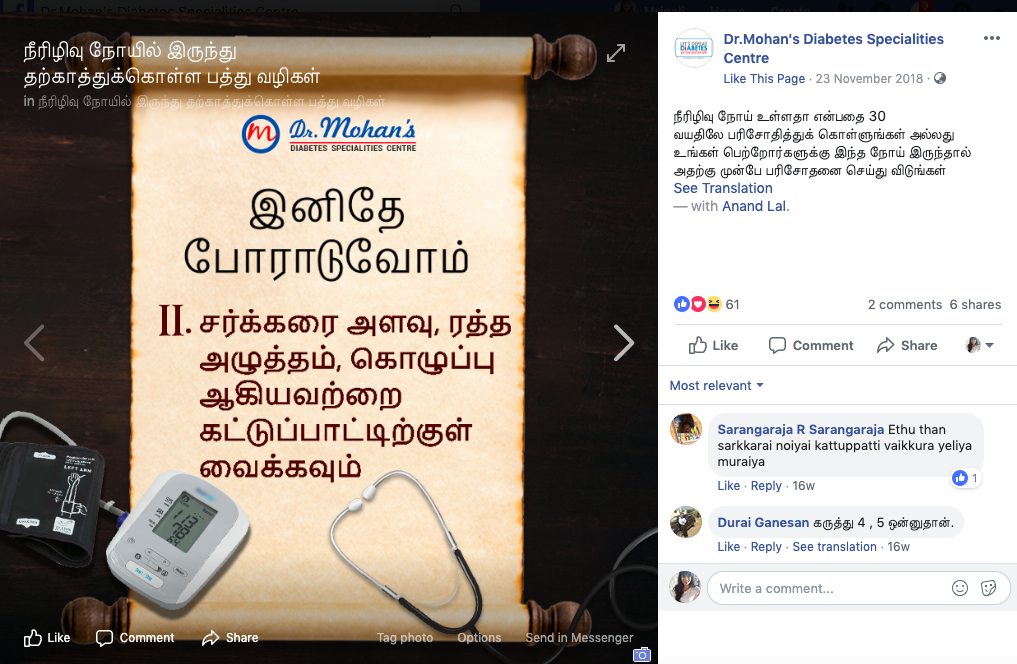
For example, featured below is a Facebook campaign on the Ten Commandments of Diabetes. While the English posts got an engagement of 8 likes, the same campaign in Tamil generated 6 shares and 2 comments, proving to be a much effective approach to reach your target audience.
Whether you’re a full-time doctor in a hospital or consult online, implementing an effective digital marketing strategy, is always an important step to ensure that all your digital tools are streamlined and are in sync with each other. Doctors must also focus on building a content management platform to track the performance of your digital assets and identify key areas that require updation and improvement. You can also check out our blog on digital marketing tips for Pharma for more insights.
A good digital marketing strategy is one that empowers your brand, but a great digital marketing strategy is one that empowers your consumer. This saying is particularly true if you belong to the jewellery industry – where the customer is queen! Today, digital marketing for jewellery brands is no longer an option – it is a necessity to drive store visits, increase brand awareness and elevate the image of your brand. Read on for fool-proof digital marketing tips to mark your territory in the online space.
Building a household brand name is every marketer’s prime objective and the first step to that is by creating a strong online presence. Jewellery brands need to focus on the following digital marketing techniques that double up as a powerful foundation for future digital strategies:
Whether you have an online store or a showroom, a great website is key to attract more customers and significantly increase your revenue. Opt for a crisp and clean design that helps tell your brand story. Apart from being aesthetically appealing, great design also provides unmatched user experience, creating a seamless transition from an inquisitive lead to a loyal consumer. However, a remarkable design needs to be backed up with great content that keeps your audience engaged. You also need multiple web pages on the homepage that provide in-depth information about your brand and landing pages that behave as e-commerce portals that highlight a particular line of products.
Featured below is the landing page design incorporated for Gehna – an online boutique that specializes in authentic hand-crafted jewellery. The page has a clean layout and enticing images for a pleasant user experience. As you can see, the product is described in a clear-cut manner with no distractions and a relevant CTA.
In today’s digital age, almost every process – right from buying a bracelet that matches your attire to deciding which type of jewellery should be worn for various occasions – begins with a simple Google search. Ensure your brand appears on the first page of the World’s most-used search engine by creating an ultimate SEO checklist accompanied by various link-building techniques and SEO plugins for WordPress. A detailed keyword research and competitor analysis to know what your target audience is searching for is a good way to understand what type of content works.
The one thing that the Internet is known for is tons of valuable information that helps you make an informed decision – and blogging is one of the most effective digital marketing techniques to deliver that. Websites that feature a blog page have 434% more indexed pages on Google which means they are recognised and ranked easily, increasing the probability of appearing on the first page. Jewellery brands need to leverage the reach of informative blogs and go the extra mile with creative infographics, embedded videos and intriguing images that keep viewers hooked. The blogs can cover all aspects of buying jewellery – from tips to keep in mind while choosing a diamond to bridal jewellery looks for the contemporary bride.
Everyone who is anyone is on social media! Reach the very palm of your target audience with a strong social media presence that draws them towards your brand. Facebook, Instagram, YouTube and Pinterest are great digital marketing platforms to increase the exposure of your jewellery brand. Opt for innovative social media campaigns to create awareness about your brand, promote your products and engage with your followers.
Featured below is a Valentine’s Day campaign we ran for Malabar Gold and Diamonds. We created a series of grid posts on Instagram that utilise the entire screen space on the feed. This drove a lot of engagement on the page that led to a whopping 1500 new followers!
Videos are a great way to tell a million stories in each frame. Connect with your audience and push them further down the marketing funnel with compelling videos that convert. Begin by creating a YouTube channel and attract subscribers through optimised videos that show up on the user’s feed based on the keywords entered. Digital marketing for jewellery brands through videos comes with a lot of creative freedom due to the luxurious and fun aspect of the product. Keeping your target audience in mind, you can create thought-provoking snippets through video campaigns that are guaranteed to draw in more subscribers and build your brand image online.
Nothing is more powerful than an influential source suggesting your brand to a potential consumer. Leverage the power of word-of-mouth marketing through social influencers who have a strong following. Keeping the creative space of the jewellery sector in mind, marketers have a huge potential to tap through bloggers and lifestyle influencers. You can also collaborate with influencer marketing platforms, like influencer.in, to hand-pick influencers who resonate with your brand and reach your target audience in a seamless and hassle-free manner.
Featured below is an influencer marketing campaign implemented by leading online designer jewellery brand Voylla. The brand collaborated with top beauty and fashion influencers including Jhanvi Bhatt, Mrinali Das and Anusha, to name a few. Each influencer shared posts on Instagram wearing exquisite pieces of jewellery from Voylla and connected with their followers in the language and tone that reflected the image of the brand. The campaign greatly contributed to increasing the reach and visibility of Voylla with higher conversions.
Digital marketing for jewellery brands does not necessarily cater to online stores alone! You can drive visits to your brick-and-mortar store by posting your store on Google My Business Listings. Not only will your store show up on a Google Search and drive traffic to your website, but users can also get directions to your showroom and read reviews to get a genuine understanding of your business. As per a MOZ report on factors that help a page rank, GMB listings contribute to 14.7% of the overall influential factors, making it a vital aspect in digital marketing for jewellery brands. Read our blog on the 13 ways to leverage local SEO and Google Maps for your business for more insights.
Since most numbers of searches today are local in nature, an informative GMB listing, like the one featured below for Gehna, will drive more store visits and higher revenue. As you can see, the GMB listing showcases the address, working hours, contact details, directions to the store and images to make it more convenient than ever for consumers to pay a visit. They can also visit the website directly and place an order!
Digital ads play a huge role in helping you reach your target audience and drive more business for your brand. From Facebook ads and Google ads to newer formats like YouTube and Instagram, you can choose your marketing platform based on your objective and the type of audience you are planning to target. Furthermore, if you are selling your product on Amazon, you can also run ads on Amazon and drive more relevant traffic to your e-commerce store. You can also opt for shopping ads that ensure 8 to 10X return on ad spends. Shopping ads run on a combination of optimisation, monitoring and bidding, with a keen focus on increasing average order values.
We ran shopping ads for Voylla – a contemporary jewellery brand with an e-commerce website. We used optimized images, titles and product descriptions that help the ad show up as a Google Search ad. As you can see in the image below, a simple Google search for “gold plated men's ring” shows up a series of shopping ads, out of which the Voylla ad is placed as per the position it was bid for.
When it comes to digital marketing for jewellery brands, it is safe to say that the world is your oyster due to the wide range of creative campaigns and ads you can incorporate in your strategies. You can also read our detailed blog on digital marketing for real estate, finance industry, insurance companies and FMCG giants. It is time to leverage the power of going digital and grow your business!
Looking for ways to create thumb-stopping content for your brand? Then videos are definitely your best bet! Video content was one of the biggest digital marketing trends of 2018 and is here to stay. Thanks to the cheaper data plans available in the market today, videos can easily be streamed online, without any hassle, on screens of all sizes. Furthermore, smartphones have evolved with high-precision cameras, editing suites and a plethora of video-based apps, making videos easily shareable on all platforms. Moreover, with so much content being shared in the digital landscape, brands are looking for newer ways to stand out of the crowd. These reasons have paved the way for videos to be the lever in boosting conversions for a brand.
Now that you are convinced that video marketing is the way to go, let’s take a look at a few fool-proof video editing tips to make compelling videos that increase conversion rates for your business.
Plan your video in such a way that it is crisp, short and communicates your message quickly and effectively. The first 3 to 4 seconds of your video are most crucial. Make sure your brand name and objective of the campaign is communicated within this time. According to a recent Facebook survey, you can expect a 20% increase in the number of people finishing the video by practising this technique. Additionally, it is important to incorporate text on videos since most videos are watched in mute, especially on mobile. You can use text in the form of subtitles or any other medium to keep viewers engaged and communicate your brand story even with no sound.
You can also experiment with short versions of your video instead of treating it as one big aspect. One of the best video editing tips is to cut it down with multiple storylines. You can also add effects and use the multitude of formats offered by Facebook and Instagram to make it interesting. By doing this, you can create multiple videos that target different audiences, widening your chances of going viral. Here is a sample video that we did for a real estate builder:
Emotional content works wonders on viewers, especially when portrayed in the form of a touching video. Increase the visibility of your brand by tapping trending topics that may not directly speak about your products and services but creates a stir because of the emotional quotient. This is one of the most effective video making tips that will help in creating soul-stirring original content which is always a hit in the digital space.
When Sundaram Mutual – one of the top clients in the finance sector – approached us for a video campaign, we decided to go outside-the-box and create a vox pop video. The video was launched on Father’s Day and spoke about the various financial lessons you’ve learnt from your father.
When it comes to video making tips, it is best to tap audiences across all social media platforms to get the most out of your campaign. With most platforms giving priority to content that drives more engagement, videos have the potential to be your trump card to get ahead of your competitors. Leading social media platforms like Facebook, YouTube and Instagram also give users the chance to share your videos, increasing the chances of them going viral. However, it is important to make sure the videos are targeted at the right set of audiences who relate to the product or service being showcased.
With 225 Indian users active on YouTube every month, a lot of brands are making the shift from traditional forms of advertising to YouTube ads. You can choose from a wide range of types of YouTube ads based on various factors like reach, budget and length of the ad, to name a few. Featured below is a YouTube bumper ad of one of our real estate clients – Asta Properties – who leveraged the reach of YouTube ads to introduce a newly launched project.
The ad played in Tamil and English, witnessing an outstanding reach of around 18,000 users with more than 4,000 clicks. The ad was targeted to users who were interested in a real estate investment of Rs. 1.5 crores, within the age group of 35 to 54 years.
Speaking about going across platforms, one of the most important video editing tips is to check the aspect ratio of your video for full-sized viewing on hand-held devices. As per a recent study, 97% of consumers access Facebook through mobile and Instagram has witnessed a 150% increase in video consumption in 2018. A traditional 16:9 video occupies very less space on mobile screens. Instead, change the aspect ratio of your video to 1:1. This will occupy the entire mobile screen and reduce distractions from other posts. Here's a video on how to optimise your video for Instagram and Facebook for more insights:
Just like any other form of content, videos too need to be optimised to be discovered on search. As per a recent study, 74% of active social media users follow brands on YouTube, stressing on the fact that search engine optimisation for YouTube is now as important as ever. Additionally, with voice search emerging as a top trend in digital marketing, ensure your video is optimised with long-tail keywords that answer the public. Create a comprehensive on page and off page SEO strategy with the right meta-descriptions, a custom thumbnail, a click-worthy title and alt text to ensure your video ranks on the first page of search engines. It is also important to add an appropriate call-to-action and social share buttons to push potential consumers further down the marketing funnel. These are the most crucial video making tips that can either make or break a campaign.
For more tips on how to rank your videos, read our in-depth article: YouTube SEO Tips: The Secret Sauce to Ranking Your Videos in 2019.
Landing pages are known to be the weapons of mass conversions and what better way to engage with your potential consumers than an attention-grabbing video? Videos provide a lot more information about your brand with much lesser effort and half as much time. This creates a win-win situation for users being able to get a better understanding of your services and your landing page generating a good amount of high-quality leads for your brand.
We leveraged the reach and high engagement of videos in a landing page for Shriram Properties – one of our top real estate clients. The video provided users with a walkthrough of one of their new projects, giving them a closer look at the property even before the site visit. This, in turn, generated a higher rate of conversions.
Apart from attracting users with engaging content, brands can also generate a list of potential leads who have viewed the video through event tracking on Google Analytics. These leads can then be retargeted and further nurtured until they ultimately convert to your brand.
Influencer marketing is one of the most effective digital marketing techniques that give your brand the visibility it deserves with a word-of-mouth approach. Pick an influencer that resonates with your brand and come up with influencer marketing campaigns across the platforms that are relevant to your audience. Influencers come up with trendy and engaging videos that extend your brand’s reach to their loyal follower database. This, in turn, can open up new opportunities for your brand and boost sales.
We partnered with BioMiracle India to create awareness about their new collagen sheet masks with the help of top beauty and lifestyle influencer Sushmita Agarwal. The video featured on her Instagram handle threw light on how the sheet masks need to be used with peppy background music, driving high engagement and brand awareness. It received almost 8,000 views with profound reach.
With the introduction of cheaper data plans by Reliance Jio and the drop in the prices of smartphones, Internet usage has seeped into the tier 2 and tier 3 regions of India, releasing a whole new wave of consumers waiting to be targeted. Videos are now more relevant than ever, with brands going the extra mile to engage with India’s next billion users. In order to reach India – all of it – it is important to incorporate videos in vernacular languages for increased brand awareness. This is one of futuristic video making tips that will ensure conversions!
We leveraged the power of videos in regional languages for Cholamandalam Finance by creating an animated video on the life-changing financial lessons one can learn from an ant. The video was targeted at small business owners and people in tier 2 and tier 3 regions. The video received around 96,000 views with 3,116 shares. The same video was created in Hindi which received a whopping 2.3 million views and 80,528 shares, proving that the growth of regional content online is here to stay!
Whether you are a real estate company, leading FMCG brand, a top financial organisation or a leading insurance firm, make sure you incorporate these video editing tips and ideas in your next video campaign to increase your conversion rates and boost your sales.
Ashok Leyland is a pioneer in the commercial vehicle space and is the 12th largest manufacturer of trucks and 4th largest manufacturer of buses in the world. Below is a case study of a video campaign we executed for them.
Being one of the leading manufacturers of trucks in the nation, Ashok Leyland wanted to honour and express their gratitude towards truck drivers for their love, support and unrelenting efforts. The brand was looking for an engaging video with an emotional connection to celebrate the true unsung heroes this Diwali. The objective was to bring out the fact that it is because of the tireless efforts of these truck drivers that the entire world can celebrate Diwali with great pomp and gaiety.
Since a majority of the target group for Ashok Leyland are small business owners from the tier 2 and tier 3 cities of the nation, we took up a multilingual approach for better reach. Affordable data plans and drop in the prices of smartphones has led to an increase in consumption of vernacular content. In this regard, adopting a multilingual marketing strategy is crucial as it has enormous power to influence the next billion internet users in India. Since most of the truck drivers communicate in regional languages, we recommended a Hindi vox-pop video as the best medium due to its engaging and interactive nature. Hence, the video “Diwali Ke Asli hero Kaun Hai?” was born. As part of this vox-pop digital marketing campaign, people were questioned about various aspects of their Diwali celebrations. They were also asked to guess the people who worked continuously without taking a day off even for Diwali. The most common responses of the people were soldiers, doctors, milk vendors and security guards. Few respondents spoke about the role of truck drivers in transporting raw materials from various production hubs. Due to its conversational nature, the video was extremely powerful in recognising the valuable contributions of the truck drivers towards nation building.
“Diwali Ke Asli hero Kaun hai?” was promoted on all the major social networking channels of Ashok Leyland with the hashtag #YehDiwaliBadiNirali. This was also one of the most trending vernacular vox-pop videos of 2018. The video garnered over 2.5 lakh views across platforms with 3.1K comments and 400+ shares. Another highlighting feature of this video is that it was extremely successful in tapping the emotional chord of the audience. The viewers were enlightened on how happiness reaches them with the help of these truck drivers. The campaign has greatly uplifted Ashok Leyland into a socially responsible brand by throwing a positive light on the company and portraying it as a goodwill ambassador of its stakeholders.
These numbers are proof that multilingual marketing is the way to go. The reach of vernacular content and interactive nature of videos go hand-in-hand in widening your audience and telling your brand story. For more tips on how to rank your videos, read our in-depth article: YouTube SEO Tips: The Secret Sauce to Ranking Your Videos in 2019.
Digital marketing will be the next frontier for pharmaceutical companies as many of them are scaling up their consumer businesses and introducing an array of consumer brands. Traditionally, marketing innovation in the pharmaceutical industry has been stunted by heavy regulatory restrictions. Historically, pharmaceutical companies have had little to no interaction with their end-users-patients-since they depended entirely on their health care providers for medical knowledge and advice. With the digital medium democratising information in every sector, however, there is a huge opportunity for the pharma industry to develop patient-centric strategies and transform their fundamental business models. In fact, as patients become more digitally-savvy, the lines between pharma companies and patients will most likely become increasingly blurred. Digital marketing for pharma and healthcare will undoubtedly become the key differentiator for brands charting out a futuristic growth strategy.
There are five factors which make digital marketing for pharma companies essential.
Patients are not just passive recipients of prescriptions anymore. They are playing a more active role in their healthcare, researching various drugs and exercising their right to make the final decision about their health. This easy accessibility of information has both a negative and a positive side to it. On one hand, it means patients are more educated about their health than ever before. This empowers them to take more informed decisions about their health and fully understand side-effects that various drugs can have on their body. On the flip side, however, all information isn’t necessarily accurate information. To counter this, digital pharma strategies can help brands develop authority by providing patients with accurate, reliable information. By building a strong presence online and answering queries that patients might have, pharmaceutical brands can also develop a closer connection with their audience.
As a direct consequence of accessibility to information, end-users for pharma brands might soon be perceived as ‘consumers’ rather than ‘patients’. Marketing solely to health care professionals will not be viable in the long run as these might not be the actual consumers in the future. Armed with greater awareness, patients are in a better position to request or reject specific brands. The consumerisation of healthcare means that pharma companies will need to take a larger step towards consistently engaging users throughout their journey, ‘in good times and in bad’. Developing a strong and trustworthy brand image through digital pharma techniques has never been more important.
One patient’s experience with a drug no longer operates in a vacuum. The ability to track key physiological responses, progress and efficacy of medication (made possible through wearables and the interconnected Internet of Things network) has given individuals greater visibility into their healthcare. If they have a negative experience, they are very likely to share their journey publicly over social media and cause large-scale damage to a pharma company’s brand image. Unlike in the past, companies cannot control how much information about their product is available and how it is distributed. In this environment, digital marketing for pharma brands can effectively communicate the USPs of their drugs and develop a bond with consumers to win their trust.
The pharmaceutical industry is unlikely to preserve the oligarchic market it enjoys today. With the proliferation of technology making user’s vital information more accessible, patient healthcare information is no longer in the sole control of healthcare providers. This has led to the emergence of new competitors in the pharma space -particularly from the tech industry. These digital pharma companies are moving beyond just drugs, providing patients with high-tech solutions that offer them greater visibility and control of their healthcare. Some of these include wearable activity trackers, ‘chips’, AI, VR and other potential disruptors in the space. If traditional pharma companies do not realign their strategy, they might not be able to compete with recent entrants to win the new age ‘consumer/patient’.
With the huge volume of data available today, pharma companies cannot afford to neglect it. Brands can get a unique insight into their consumers concerns, behavioural habits and more. This data, that was previously unavailable, can help pharma brands build a more comprehensive digital strategy to engage with their end-users.
Since pharma brands have operated largely in the offline space, venturing into the digital medium can seem daunting. However, with these key digital marketing for pharma strategies, companies can soon start building a strong digital-first presence and engage with consumers to drive greater business results.
With the tight regulations and severe penalties that the pharma industry has to operate within, it comes as no surprise that most are hesitant to test out new marketing strategies. Under Indian law, companies are restricted from advertising drugs, with exceptions made in only a few cases. Content marketing is the ideal digital marketing for healthcare strategy as it can deliver long-term results without companies having to openly market their products. With the information-seeking mindset most consumers today possess, building a useful knowledge resource through content marketing can establish an enduring, positive brand association.
Pharma companies can use content in a number of different ways. The foundation of their content strategy, of course, should be a strong, comprehensive blog. The blog should cover a wide variety of topics that deliver value to readers. The focus shouldn’t be on using it as a purely marketing platform but leveraging the blog to build a community of engaged, responsive consumers.
Other forms of content marketing that pharma companies should deploy include:
For our client, Dr. Mohan's Diabetes Specialities Centre, we created a video based around the concept, 'Winning @ 90'. This video celebrated patients who had triumphed in their struggle against diabetes and reached the age of 90. Through the emotional content, Dr. Mohan's was able to build a closer connection with their audience on social media. The campaign performed phenomenally well on social media, garnering close to 2 lakh views on Facebook.
SEO and content marketing go hand in hand; one cannot work without the other. Search Engine Optimisation a crucial component of digital marketing for pharma brands to gain visibility and organic growth. Ranking for important keywords demonstrates expertise in that field; a crucial factor for pharma companies to develop credibility among patients and healthcare providers alike. It ensures that visitors, which can include doctors and patients, land on the company’s website when searching for a related query. Why is this so important? Because on their website, a company has complete control over the accuracy of information shared and the brand image projected. Once on the website, users can be compelled to explore the content on it, watch videos, learn more about the service and even fill in an enquiry. This is an important technique for brands to improve the quality of digital leads generated.
Unfortunately, the pharma industry has to deal with negative coverage and inaccurate information from niche groups. Left neglected, this type of coverage can do major damage to a brand’s reputation in the market. Online reputation management is the art of detecting negative coverage and charting strategies to tackle it.
One of the most effective ways to do this is by search saturation. This is just an extension of Search Engine Optimisation, but with a different purpose. Instead of ranking for branded keywords alone, companies should be vigilant about negative keywords related to their brand. After identifying them, brands should target the same keywords and create new positive content based on it. This way, they can ensure that negative coverage is kept to a minimum.
The one place where pharma companies have complete control over the accuracy of information shared and the brand image projected is on their website. Since both patients and doctors are looking to do intensive research before consuming or prescribing drugs, the website needs to deliver all the information they will require to make this decision. It should contain details about possible side-effects, benefits, recommended dosage amounts and anything else that might be pertinent. Details about clinical trials, in particular, are a very important feature to have on the website as they build credibility.
For IHHC, we developed an AMP landing page to improve a user's experience with the ad and the website. Through this strategy, we achieved a 33% lower cost-per-lead as compared to previous campaigns.
Social media is the core of any digital marketing for pharma strategy. With such a significant portion of their target audience and consumers present on these platforms, pharma companies cannot afford to ignore them. The approach for companies is slowly shifting from merely communicating the benefits of a drug to healthcare professionals and medical reps to developing an emotional connect with patients themselves. Facebook is the perfect stage for brands to humanise their brand and reach out to a wider audience on a more personal level. Marketing for most drugs on Facebook might violate their policies, however, digital pharma strategies can include promotion of wellness and lifestyle-related posts. Emotional content is also something brands can always bank on to resonate with audiences.
For Himalaya Pharmaceuticals, for example, we leverage Facebook as a tool for building awareness of certain products as well as of the brand as a whole. We do this through a series of informative, entertaining and emotional posts around topics our audience is interested in. As a result, the brand has achieved greater brand awareness through a highly engaged Facebook audience.
We also leveraged influencer marketing to generate awareness about their facial wipes. This helped us reach a much wider audience through over 150 influencers.
You can learn more about this campaign on Client Case Study: Influencer Marketing for Himalaya.
Social media, like for most other industries, is equally important in digital marketing for pharma as well. But unlike in a typical B2C, the winning strategy for B2B companies like pharma will be to use social media platforms for community building rather than for brand awareness alone. This strategy is useful to engage with both, physicians as well as patients.
The platform brands choose to focus on will largely depend upon their audience. To reach out to physicians, LinkedIn might be better suited as users are looking to broaden their industry knowledge and grow their network. Platforms like Facebook, on the other hand, can be a useful tool to get faster brand awareness among a wider audience. Brands can engage with users here through a mix of informative and emotional content to build a strong personal connect with them.
Chatbots have emerged as one of the biggest digital trends that is having an impact on every sector. As the technology gets more sophisticated, chatbots are beginning to sound more ‘human’ and are even proving to be more effective than actual humans. Pharma companies can use chatbots on their website as an innovative digital marketing for healthcare strategy to communicate directly with consumers, doctors or medical reps. They can be used to market their products and offer assistance on how to use them. ‘Virtual nurses’ can help patients maintain their prescriptions, book appointments with their doctor and even send them alerts when they need to take medication. To engage with patients on a more consistent basis, brands can even develop ‘health assistance’ chatbots to offer them guidance on leading a healthy and active life. Chatbots for doctors can give them information about a drug’s recommended usage, clarify questions and even direct them to research conducted for a specific drug.
Medical jargon can be intimidating and confusing for most patients. This is further compounded by the fact that much of it is in English; a language most Indians aren't comfortable with. Pharma companies typically have markets that spread across geographical boundaries. To cater to this diverse audience, communicating to them in just one language might not be effective. A website can provide in-depth information, but unless it is in a language that the user understands, it serves no use. Adopting a multilingual approach is one of the most important pharma digital marketing trends to look out for. Offering content in a number of different languages on the website, blog and social media posts can help brands reach India’s next billion internet users. As 70% of Indians find content in their regional language more reliable (according to a report by Google and KPMG), using multiple languages can help pharma brands build greater credibility and inspire trust.
In order to use multilingual content to its full potential, it isn’t enough for brands to simply translate their existing content in various languages. Instead, they need to develop messaging specifically for various markets, keeping their desires, challenges and lifestyles in mind. This is why we have developed 22 Languages, a platform to create and amplify content in vernacular languages. The power of a multilingual approach will be the only way to reach the huge audience beyond India’s metros.
For Dr. Mohan's Diabetes Specialities Centre, we created a series of posts in Tamil for the campaign '10 Commandments of Dr. Mohan's'. Since Tamil was the language a large portion of their audience was most comfortable with, the campaign outperformed many English language campaigns run in the past.
We also saw similar results when we ran Tamil campaigns for SIMS Hospital. Clearly, without a comprehensive regional strategy in place, pharma companies might not be able to gain adequate traction.
Digital marketing for pharma has the potential to completely change the face of the industry. Getting a head start and adopting a strong digital strategy will give pharma companies the edge they need to stand out from the competition.
Are you still stuck in the paradigm of an offline marketing strategy with a 60-second TV commercial being your leading mode of communication, supported by print and outdoor advertising? If you are nodding your head in approval, you are being rapidly left behind by those who have adopted a ‘Digital-First’ marketing approach!
Brands are steadily transitioning from traditional advertising to digital marketing because of the higher reach, better engagement and increase in generating high-quality leads. Read on for the top seven reasons why your brand should adopt a digital approach.
With over 450 million Indians online today, your prospects and customers are spending more of their time online than ever before. And this number is slated to grow to 735 million online by 2021. Of these, 199 million will be English speaking, and 536 million language speaking, with over 70% of them accessing the Internet from a smartphone throughout the day. They are increasingly spending more time online than on any other medium. Is there a better way for your brand to engage with India’s next billion Internet users and reach the tier 2 and tier 3 cities in India as well?
The online population accesses digital platforms over 150 times a day for various reasons including search. Additionally, 80% of Indian users use their phones to access the Internet. This only proves that it is imperative for your brand to adopt a mobile-first strategy to rank higher than your competitors and leave a stamp in the digital world. From accelerated mobile pages for lightning-fast speed to optimising your web pages for better visibility on a mobile search, you need to leverage a custom-made digital strategy with a mobile-first approach to reach your potential consumers. Everything starts with the recognition that your digital marketing assets need to be optimised for the way consumers are behaving online now and in the future.
We leveraged the speed of accelerated mobile pages for a landing page developed for India Home Health Care, a top provider of home nursing and related healthcare services. The page helped reduce the cost per lead by a whopping 33% with a 20% increase in conversions.
How discoverable is your brand or business? Search Engine Optimisation today is very different from what it was a few years ago. Deep and relevant content, like pillar pages and other long-form content, which is easily discoverable and distributed across multiple platforms, or amplified using social media works well. Consumers today are information seeking, with a ‘discovery mindset’, using search many times a day for multiple purposes- both business and personal. So why not market your brand by making it rank on the most used search engine in the world? Featured snippets are a great way to increase brand visibility and drive organic traffic to your website.
This is exactly what we achieved for Casagrand – one of India’s leading property developers with a strong presence in the south. Their blog on the best places to invest in Bangalore got highlighted as a featured snippet with an image and a list of all the locations presented in the blog.
Being discoverable is a key result area for your digital marketing assets so that consumers find your brand when they are searching for something they need. From using SEO plugins for WordPress to leveraging local SEO and Google Maps for your business, ensure your brand gets the visibility it deserves.
The world's second largest search engine, YouTube, is also a great platform to reach your target audience on. For tips on how to rank your videos, read our in-depth article: YouTube SEO Tips: The Secret Sauce to Ranking Your Videos in 2019.
Is your online communication primarily elements of your offline marketing campaign? If you have to spend to reach your target group with your advertising, what makes you think they will choose to come to your social media pages to see your ads? Instead, your online marketing campaigns must seek to engage consumers by rewarding them in some way with relevant communications on social media platforms. Make sure all your online assets are designed in such a way that they trigger engagement and ultimately result in conversions. You need to leverage the two-way communication model that digital platforms offer to understand what your audience finds intriguing and feed them with high-quality content that converts. Read our blog on how a redesign strategy for Chola helped increase social engagement for more insights.
YouTube is the second most used search engine in the world after Google with over 100 million Indian users watching YouTube videos every single day! To add to that, according to YouTube Brandcast 2018, 9 out of 10 users consume videos that are in regional languages. This means that you must have a strategy for YouTube that could involve videos on your YouTube channel, or advertising on YouTube to maximise impact. Your channel must be optimised with effective YouTube SEO tips for discoverability, and the videos disseminated on social media platforms. And your ads on YouTube can be optimised based on brand objectives including calls to action. What you cannot afford to do is be absent from a burgeoning channel teeming with users.
Showcasing your brand through engaging and informative videos on your YouTube channel is one of the most effective ways to reach potential consumers and widen your clientele. Social Beat’s YouTube channel features a section on “Digital Bytes”, where experts share their insights on the top digital marketing trends of the industry.
With the introduction of affordable data plans by Reliance Jio and the drop in the prices of smartphones in India, Internet usage has seeped into the tier 2 and tier 3 regions of the nation. This has unlocked a huge database of online users waiting to be targeted. The only way to connect and convert with these users is by incorporating an end-to-end multilingual marketing approach in a language your consumer is comfortable in – which is exactly what we offer at 22 languages. With the growth of regional content online, we tailor-make a language roadmap for your brand from landing pages and website development to social media campaigns and search engine optimisation. The sooner you start, the faster you will become proficient in the use of language content and communications to grow your business.
For instance, we tapped the reach of vernacular content for Cholamandalam Finance by creating an engaging video about the financial life lessons you can learn from an ant. The English video reached 96,000 users with 3,113 shares. However, the same video in Hindi reached 2.3 million users with 80,524 shares, proving that going regional is the best way to increase your brand’s visibility and reach.
Today, digital platforms enable you to interact with consumers when they are in the decision-making process to positively influence their choice towards your brand. From information search, comparison of brands, to the sites they visit, consumers signal their intent with their digital footprint. They can be addressed during this process to move them down the marketing funnel to fulfillment. Affinity and custom intent audiences of consumers who have expressed their interest in certain kinds of products or services can also be addressed to get their attention at the top of the funnel. Your offline marketing efforts should drive people online to your content or messaging so that you can engage with them positively to influence their decision.
Keeping these fool-proof reasons in mind, it is time you shift from print to digital media and give your brand the launch pad it needs. Whether you are a leading real estate developer, a top FMCG brand, a renowned financial organisation or a celebrated B2B firm, unleash the power of going digital and take your business to towering heights.
The modern concept of insurance might have started in the 17th century, but consumers and their decision-making processes have changed drastically over time. Modern-day consumers, with the power of the internet at their fingertips, are more informed now than ever before. Prior to making a purchase decision, they extensively research various plans, read reviews about different providers and ask their peers for recommendations. Insurance companies need to adapt to this changing funnel and target their consumers at every stage of the customer journey. Here’s how digital marketing for insurance companies can help brands widen their audience and revamp their marketing strategies.
Insurance companies in India today largely operate in the offline space, both in terms of marketing and operations. When transitioning to digital, companies need to ensure that their branding is cohesive on all platforms. Having a uniform, strong brand image is crucial to improving recall value among customers. All of your future communications, promotions and other marketing activities will depend upon the brand image that your company creates.
In some cases, companies might need to rebrand themselves to adapt to the digital space. If you do decide to update the look and feel of your brand to make it stand out better on digital platforms, you also need to ensure that your offline branding follows suit. Consistency between your online and offline personas is key to creating a strong brand.
When it comes to digital marketing for insurance companies, a website is more than just a tool for branding. While one of the most important uses of a website is to communicate your brand image to your audience, it should also be a useful resource of information for them. When it comes to making a decision about which insurance provider to partner with, customers do so only after carrying out extensive research. The Customer Behaviour and Loyalty in Insurance report by Bain & Company found that more than half of all insurance holders choose a provider only after conducting research on digital platforms. Does your website provide consumers with all the information they need to make a decision?
When developing a website for your insurance brand, you need to ensure that it isn’t just aesthetically pleasing, but is also easy to navigate and user-friendly. Personalisation of home pages is becoming increasingly important for a positive user experience. It's also important to ensure that the pages are focussed on driving action and driving enquiries or purchases. You can consider creating a login for your customers, which allows them to see details of their plans and customised suggestions based on their needs. It’s also important that you optimise your website with strong SEO techniques to drive organic traffic and gain greater visibility. Apart from supporting your content marketing, local SEO techniques like getting featured on Google Local Listings and Google My Business can help your audience learn more about your company.
Content marketing is uniquely suited to the marketing needs of insurance brands. Choosing an insurance provider isn’t a quick decision, nor is it a one-time process. Customers need to renew their plans periodically, at which time they can even decide to switch providers. Effective content marketing techniques can help you gain the trust of your audience by establishing your brand as a thought leader in the field. When backed by effective SEO strategies to increase organic traffic and help your content rank higher, content marketing can be one of the most useful ways to reach a wider audience.
Content marketing can take the form of blog posts, informative videos and how-to guides. This can help engage with your customers right from the awareness stage to acquisition and finally the retention phase. When developing a content marketing strategy it’s important that you think from the perspective of your audience and create content that they will actually find useful. The blog by Sundaram Business Services, for example, doesn’t just have information related directly to their services. Instead, it caters to all related queries that their audience might have. In this way, your customers will be able to recall your brand when they need to choose an insurance provider.
Social media isn’t commonly associated with insurance brands, but it is as important for this segment as it is for any other. There are currently around 240 million Indians on Facebook and this number is only going to grow from here. Insurance, on the other hand, hasn’t penetrated as far in India. Currently, only 20 per cent of women and 23 per cent of men in the country are covered by health insurance. Social media is a powerful way to develop your brand identity and consistently engage with your target audience. Through creative posts, digital marketing for insurance can develop awareness of your product, while at the same time, entertaining your audience.
For Star Health Insurance, we posted a series of quirky posts to highlight the importance of being protected with insurance in an unusual way. This is an excellent example of how out-of-the-box thinking can help social media campaigns for insurance companies gain excellent results.
For some brands, it may be relevant to go after India’s next billion internet users by tapping onto a multilingual content st+rategy. To find out more, find out how we leveraged vernacular content on social media for one of our BFSI Clients, Chola Finance.
Large insurance companies typically handle huge volumes of customer queries every single day. The Google India 2017 Year In Search Report revealed that there has been a 64 per cent growth in queries related to motor insurance, which has also been a key driver in generating leads. Timely resolution of these queries is crucial to improve a customer’s experience with your brand and to generate leads. But insurance companies might not always have the manpower to do this effectively. To streamline their processes and handle large-scale customer queries, many insurance brands are turning to AI-powered solutions like chatbots.
As a majority of insurance-related queries are related to broadly similar topics like the price, duration and terms of various insurance plans, chatbots can resolve them much faster than human representatives. But the advantages of chatbots aren’t just for the companies themselves; they go both ways. According to the 2018 State of Chatbots Report, 69% of consumers prefer interacting with chatbots over human customer service representatives.
Paid advertising can be a fast and effective lead generation tool in digital marketing for insurance companies. There are over 25 platforms available today for insurance companies to advertise their services and gain customers. Some of these include Google Search and Display, LinkedIn, Times Internet, Native and Affiliate ad networks. When coupled with high-performing landing pages, these tools can turn your insurance marketing strategy into a lead generation machine. The advanced targeting options available in digital advertising platforms make it easy for insurance companies to find their target audience online. Companies can target audiences by age, locality and intent, which can help them generate high-quality leads. Since insurance companies are also interested in finding younger audiences to build a relationship with them from the start, advertising on Facebook through video ads, carousel ads and more can help them engage with this segment.
Bijlipay was able to capitalise on the power of Google ads to achieve an unprecedented number of leads in a cost-effective way. They used A/B testing to run different landing pages and altered the copies to communicate with different segments of their audience in a targeted manner. This strategy helped Bijlipay achieve 3,569 conversions at a cost-per-conversion of just Rs. 285. Here are some tips on improving the quality of your leads via digital advertising.
Digital platforms have helped to improve the quality of audience targeting and retention in a way traditional media hasn’t been able to. The variety of lead targeting and nurturing methods available today makes it possible to engage with your customers at various touchpoints. In the insurance segment, this is very important to gain new policyholders and to retain existing ones even after their plan expires.
One of the most effective lead nurturing strategies for insurance companies is drip email marketing. With this technique, you can create targeted communications for your customers in every phase of their purchase decision process.
A drip email marketing campaign can be broadly categorised into three phases:
Welcome emails: This is an automated email sent out as soon as a consumer expresses interest in your brand by signing up on your website or filling out a form. A consumer in this stage is usually evaluating various insurance providers and hasn’t made a decision about which one to choose. A welcome email can provide them with details of your company and your USPs, to give them a clearer idea of your brand.
Nurturing emails: The second stage goes deeper to provide consumers with more specific details about your various services, details of your plans and your value propositions. Each of these emails should provide consumers with a clear reason as to why they should convert. The exact number of nurturing emails can vary.
Activation emails: If you have effectively used strong lead nurturing emails, your audience should be ready to convert into actual customers. Activation emails can include a link to sign up for an insurance plan or to get in touch with a representative from your company. These emails include a clear call-to-action which gives your audience the final push to convert.
Apart from email marketing, the introduction of WhatsApp for Business offers insurance companies another medium for lead nurturing. However, since WhatsApp is still largely a personal inbox, companies need to ensure that they keep their communications through this app concise. Sending too many messages to consumers can be seen as spam.
Digital marketing has a number of clear advantages for insurance companies. While this segment has traditionally not been active on digital platforms, it’s clear that making the shift will help insurance companies widen their audience and gain more visibility.
As the saying goes, “Everything old becomes new again”.2018 has witnessed a definite shift in design, setting precedence for the years to come. Graphic design trends from the past are taking centre stage with a new, fresh and modern twist added to them. Few of the major trends include exploring the 3-dimensional realm, rich photography and vibrant colour palettes. We are now at a fascinating turn-point for design, and we are looking forward to experimenting more in this space. Here are the top 7 design trends you can incorporate in your marketing strategy and engage with India’s next billion Internet users.
Gradient or colour transitions, which were already a rage till late 2007, made a huge comeback when Instagram upgraded its logo with a gradient background. This trend has been on the rise ever since. Colour transitions have diverse and modern applications that are vibrant, smooth and flexible to flat design aesthetics. This trend will continue to diversify in its own innovative avatar, with the usage of bright and vivid colours in a combination of textures – like the ones featured below.
With the increase in the number of users accessing the Internet through their mobile phones, designing your web assets with a mobile-first approach is more of a necessity than a luxury. Responsive design is one which adapts to all screen sizes. However, since the logo of a company is one of the smallest elements on the screen, creating a mobile-responsive logo without losing the visibility of all its elements is one of the main challenges faced by designers. The ingenious solution to this lies in making versions of logos for different screens. Logos have become adaptive, with different versions for mobiles, tablets and desktop devices. Featured below are few logos and their mobile-first versions.
Retro modern illustrations have made a huge comeback in 2018 with generous usage of the 80’s and 90’s colour palette. From pretty pastels to electric hues, age-old visuals have taken a modern route with a semi-flat design. Today, a lot of brand leaders and influential personalities belong to the generation of the 80’s and the 90’s. Additionally, these generations also form a large pool of key target audiences, making this trend an easy way to trigger nostalgia and create engaging posts that boost social engagement.
These illustrations combine modern, sleek lines with throwback colour palettes. The characteristic feature of this style lies in its fluid yet crystal clear messaging. It is truly the best of both worlds. Few designs with retro modern illustrations are displayed below:
Typography for the digital space is more than often an extension of its print counterpart. This trend has just gotten bigger, bolder and better! The only limitation to your typography style is your imagination. Contrary to popular belief, typography is never seen as a minuscule part of the design, but a form of design itself, coupled with an artistic twist. While usual sans serifs fonts remain as fashionable as ever, you can also get creative with designer, artistic and hand-made fonts.
We are also likely to see the comeback of the serif fonts since Google has such an impressive collection for web design. In a quest to stay in sync with design elements across all media, designers usually stay away from serifs as a thumb rule. However, as the acceptability of this font is increasing online, it is only a matter of time for the font to make a complete comeback. Scroll down for interesting ways in which typography is used as an element of design.
A very interesting trend that marks the beginning of the next era in design is 3 Dimensional styles – from 3D still photography to 3D typography. Seeing that there is no limit to innovation and imagination, you can also experiment with a mixture of 3D and 2D.3D capabilities have grown to such an extent that the intersection between virtual and reality have been blurred out and indistinguishable.
Another growing trend is isometric projection which is an interesting method to visually project a 3-dimensional object in a 2-dimensional space. It is safe to say that this type of projection is one of the leading design trends of 2018, used in all kinds of visual mediums including photography, 3D design and illustration, to name a few. Additionally, this trend helps in creating great visual posts on social media. Few of them are showcased below:
An interesting design style for those with nimble fingers and an eye for detail is using paper cut illustrations. This trend uses actual paper cutting, stuck using double sided tape to give it depth and a semi-flat finish. The illustrations end up looking very surreal and can help in telling brand stories through various layers. Featured below is a brilliant amalgamation of hand-made crafts made with the help of our design tools.
Claymation – a process of using clay modelling in animation – is one of the leading trends in stop-motion design. From the main character to the background, claymation gives the advantage of making each aspect of design deformable because of its malleability. This creative and innovative trend is used extensively for gaming animation and in Hollywood productions. As you can see below, though it is a little tedious and time consuming the output is generally worth the effort
Cinemagraphs, or animated photographs, are an evergreen trend in both social media and websites. The best part aspect of cinematography is that they can elevate any kind of page to another level and you do not need to be a leading fashion brand or a design studio to use them.
Cinemagraphs can grab the user’s attention and keep them hooked to your page for a longer time, thus increasing engagement for your page. These animated images work best on product pages where the important aspects of the product can be highlighted from a different angle. They also load faster than videos, making them the perfect fit for light websites.
Now that you know what the top design trends of 2018 are, it is time you implement them in your brand strategy and attract potential consumers. Whether you are a real estate developer, a top FMCG brand or a leading financial organisation, add these design trends to your marketing approach and grow your business.