With thousands of brands vying for attention online, it is essential for companies to have a personality that cuts through the crowd and capture their target audience. A brand personality is a set of human characteristics that are attributed to brands in a way that they look, feel and interact with their audience. It is important to note that the personality should be an extension of the core values of the brand - and not conflict with it. For example, a luxury company may not find the greatest success littering their social feeds with memes, and a more fun brand may not be able to connect with its audience through stark and minimalist ads.
With more and more businesses going digital, and having a diverse social media offering, there is a strong correlation between a well thought-out brand personality and success. From designing online ads to creating a mobile responsive web design, having a compelling digital personality has many benefits, pushing brands to shift from print to digital media. A few of the benefits are discussed below:
In all this, the heart and soul of a digital personality comes down to one thing - design. The bare minimum of any successful communication that a brand puts out is good graphics, proving that design helps tell a brand story. Here are 10 tips to ensure that your brand voice is distinctive and visually arresting:
Creating a design system or a brand book is the first and most important step to ensure that you have a holistic vision for your personality. Your brand is a living, breathing organism and should be treated as such!
Many companies prefer for their image-based communications to have subtle (or heavy!) branding on them, to ensure that it is associated back to their brand. It could be adding a simple frame, an adapted logo or even a specific filter to the image that is used throughout a campaign. It gives a lift to an otherwise simple image.
Featured above are the social media posts by House of Hiranandani. Since the brand specializes in premium and stylish living, their use of visual marketing ideas bursts with personality and originality, done in a creative and subtle way.
Typography, or the art of arranging type, is a powerful element of visual communication. Gone are the days where we relied on Comic Sans or Papyrus to get our points across. Brands are now restricting themselves to using a few signature fonts in their style sheets - either using previously existing ones, or creating new ones, especially for their communications. Fonts communicate a variety of emotions and each type group is often associated with a certain kind of brand or industry. Brands that show restraint in font usage in their communication have much more focused messaging than those who get a bit too experimental with mixing type.
In the above examples, the serif fonts have been used to communicate a classic, timeless style that is usually associated with fashion. The brands featured here, Tifara and Zaamor, tend to favor these styles in their imagery as it best aligns with their tone and personality.
Before - These TVS creatives do not show strong brand characteristics. As an energetic automobile brand, the fonts used to not communicate this through their imagery.
After - After establishing a font palette with visual hierarchy of text, the creatives look as though they are part of the brand. The font choice (Euromode) pleases the eye and suggests movement, speed and progress.
The term ‘Colour Psychology’ has been around the marketing space for a while, as studies show that certain colours affect online consumer behaviour. Along the same lines, businesses are realising that using a specific set of colours in their digital communications (be it their website, Google ads, infographics or social media posts) creates retention in the customer’s mind and links the graphic back to their brand. These could even be colours that are used in a product’s packaging. We’ve seen this many times with the classic Cadbury purple, the Tiffany Blue or the McDonald’s red and yellow. There is a strong association with these colours to their corresponding businesses and products, which let the RGB and CMYK take on a whole new meaning!
Sundaram Mutual, one of our clients in the financial sector, uses tones of blue and white in their social media creatives to bring about brand recall.
The above examples illustrate perfectly how a recognizable color palette can make a graphic distinctive without the need of a logo. It goes without saying that these are made for Google.
Motion graphics are proving to be more and more popular when pitted against their static counterparts. They stand out from our newsfeeds and demand a second look. Brands are getting increasingly creative when it comes to using subtle motion in design. Cinemagraphs are the latest trend in this area - a post where only one aspect of an image is in motion in contrast to a static background.
GIFs are being redefined as more than just a grainy set of images on loop, found on 9Gag. They are quirky, clever representations of concepts that could otherwise not be depicted by a single image post. They are also easily shareable across multiple social media platforms. Companies are able to create a personality through these small clips. Brands are no longer thinking in terms of just static images, they are thinking and communicating in terms of stories.
Videos are the most heavily consumed form of content in the online space. Over half a billion people are watching video content on Facebook on a day-to-day basis. Weekly share of time spent watching TV and video on mobile devices has grown by 85% from 2010 to 2016, according to a report by Edelman. Because of this, brands have intuitively funneled a lot of their budgeting into video content for brand storytelling, promotions and ultimately, conversions (95% of a message is retained when it is portrayed through video versus text).
However, not all videos are created equal, and brands are becoming increasingly intuitive of this point. As the newsfeed develops more and more into an online billboard, it is essential to craft content to best suit the platforms. Square videos are consumed the most, as they take up 78% more space on Facebook’s newsfeed and get more engagement than horizontal ones.
The kinds of content routes that companies take are also varied - but they all stay true to the brand message. This just goes to show that one brand can have many facets to its personality - ranging from a lively, engaging side shown through Vox pop to a ‘strictly business’ side though branded videos. Whatever said and done, video content is here to stay – whether it is low-cost videos to tell a brand story or optimized YouTube videos for customer engagement.
Shape, or form, is another visual element that holds a lot of importance. Social media marketing has allowed brands to communicate with their customers like never before - and in extremely creative ways. Some even have a specific style of graphic art that is so distinctive, that the viewer immediately knows which brand it came from. Different shapes, willingly or unwillingly, mean different things. Organic, soft and rounded shapes give a friendly, relatable and pleasing feel.
For example, in the Dr. Mohan’s graphics above - the emotion of stress has been personified into a fun character to communicate to people how to be more aware of letting stress take over your life. The tone is light, to get across a more serious point - thus trying to get into the mind of the customer and make them relate to the creatives on a personal level rather than giving them complex medical advice.
Sharper, geometric shapes communicate a bold, clean and prestigious outlook. In the creatives done for House of Hiranandani, the tonal vectors used have a minimalist feel which is to communicate the perfection and luxury of their interiors, while still keeping it relevant to social media.
Knowing what your brand intends to communicate should line up with the shape and form of the elements used in all communications to ensure consistency.
There are hundreds of tiny interactions that users face, a majority of which don’t even get noticed. Through brilliant user experience, there are subtle motion design decisions made by developers that try to influence behaviour and make the process or task simpler. These are microinteractions and if done well, shouldn’t even be on the radar of the user. For example, the pull-to-refresh option on Facebook is something that we subconsciously do over other apps as well - and expect the same result. A brand that is fully aware of the spectrum of its interactions with the customer, and is focused on making the purchase funnel or journey as smooth and easy as possible, gains legitimacy and trust.
Flat design and vectors were predicted to be one of the graphic design trends of 2018. Brands are hiring graphic artists to create beautiful flat illustrations to increase lead generation through their landing pages. Tech companies, real estate and even large conglomerates alike are going with this approach instead of a traditional full-width hero image banner. It adds a fun element to the page and certainly draws the user in. Corporates are no longer trying to make their communications stuffy and pompous. This works well especially in the case of businesses with heavy processes or complex offerings - it simplifies it and makes it much less intimidating for the viewer, improving the quality of leads in the process.
Facebook, Instagram, Twitter, LinkedIn, YouTube - Chances are, your company has at least two, or even all of these, active. Each one has a slightly different target audience, although many overlap. It is essential to rework the visual communication for each one, so that it is the most effective for that particular platform. Companies that do this certainly get a nod of approval for social media savants - as merely resizing a creative does not mean that it is ready-to-go for a certain platform. Rearranging the copy, the caption, the graphic, ensuring that the Call-To-Action is at the most optimal place - all these are important factors to keep in mind.
The Indian digital space is extremely diverse - and there is a growing need and appreciation for regionally targeted content and design. Companies in real estate, B2B, finance and FMCG, to name a few, have realised that using the same communication all across the country does not speak to every consumer - not just in terms of the base translation of copy, but the design and graphics as well. By using regional touches and local nuances to the design, the same ad can penetrate the tier 2 and tier 3 market in a much more effective way, and engage with India’s next billion Internet users. It also rouses a sense of pride amongst the customers as they feel represented.
This can be done by changing the color palette to better suit the aesthetic that a certain city is known for (like pink for Jaipur), include nods to monuments and local figures in that region (like Ranjikanth or temple architecture for Chennai) or even film dialogues woven into the creative copy.
This shows that the company is not only invested in the citizens of a certain area or state, but is willing to go the extra mile to build a relationship and start a conversation with them. You can read our case study on how a multilingual approach got a brand 90% growth in leads to understand the reach of regional design.
A modern brand is an entity of many moving parts - some tangible and visible, but others are just a result of good design decisions made, that make a world of difference. As the points above lay out - it is extremely important to pay attention to not only the messaging of your brand, but the way that it is being depicted for communication and consumption. Providing your brand with a strong personality and voice is the best investment in the short and long term!
You can also check out our case study on how a redesign strategy helped a brand increase social engagement for more insights.
For further information, here's our Creative Head - Panisa Shah to take you through design tips to improve social media ROI.
In this age of new media marketing, digital marketing has proved to be a game-changer. While any proponent of an effective marketing mix model would suggest a healthy mix of conventional as well as unconventional modes, digital media certainly leads by a margin when you bring the ROI perspective into play for real estate industry. The advent of digital media has paved way for a marketing approach that now wants to track penny-to-penny spend on each marketing effort and the returns derived from it.
Digital marketing is predominantly being used by every firm out there and is proving to be an extremely successful means of spreading awareness and creating a brand value. The same is true for the real estate businesses.
The biggest challenge for real estate companies is that in this highly competitive space, the brands are looking forward to boosting their digital presence and generating leads. In order to enable the real estate companies to establish a digital identity and leverage upon it, they need foolproof innovative digital marketing strategies with lead generation at the centre-stage.
There are a couple of things to be kept in mind while designing a website and implementing digital marketing strategies for real estate companies. First and foremost, it is the website that needs attention. The purpose of the website could vary from capturing leads to brand-building. A website must be user-friendly and must ensure “call-to-action”. Great content always helps in increasing visibility on the digital platform.
On social media platforms like Facebook, Twitter, Pinterest, Google Plus, what matters is how creative your contents or posts are. The frequency is not an issue as long as your posts are able to garner enough audience engagement. Real estate companies need to project their unique strengths in the most creative manner possible on the digital space. A lot of online tools and applications are available nowadays that help in automated updates on the social media sites.
Social media follows SEO (Search engine optimization). Earlier, the pre-conceived notion was that just having a website is enough. But actually just having a website takes us nowhere. Search engine optimization and search engine marketing play a key role in the integrated approach towards getting traffic on the website and generating leads. SEO results give an imperative method of ranking on the digital space and the higher the company is ranked, the better chances of gaining leads from their websites.
While SEO is usually only associated with Google search, brands should not ignore YouTube, the second largest search engine in the world. For tips on how to rank your videos, read our in-depth article: YouTube SEO Tips: The Secret Sauce to Ranking Your Videos in 2019.
Traditionally, the real estate companies invest highly in print ads, but the returns they get on their investments is comparatively lower when compared to the Google ads. Our research in the space throws up a couple of interesting facts. The research results clearly show that on investing the same amount of money in digital marketing and the print media, the real estate companies are able to realize results which are at approximately 2.5 times better. The detailed statistics are as shown below in the table:
A 1/4thpage advertisement in a newspaper costs about Rs. 7 lakhs, which is bound to target one million or more audience. However, the conversion rate is surprisingly low. One print ad worth Rs. 7 lakhs results in about 400 website visits, out of which about 130 leads are generated. In the end, the company gets only 3 to 4 buyers for the properties at an average. In comparison, Google ads, with the similar investment of Rs. 7 lakhs results in about 400 leads which convert into more than 10 buyers.
If pictures speak a thousand words, it is safe to say that videos speak a million. Videos are the new bannermen of content marketing and advertising on video platforms like YouTube can be a tipping point for your brand. You can tailor-make your video campaigns for YouTube by displaying your ad when a potential home-buyer performs a search with relevant keywords. This will help you reach out to a hand-picked audience that is genuinely interested in buying a property – a feature which is still foreign in traditional modes of advertising like television, radio and print.
According to YouTube Brandcast 2018, seven out of ten viewers watch ads on YouTube with the sound on. This only proves that apart from detailed targeting, YouTube ads offer a plethora of other benefits, pushing brands to switch to YouTube ads from traditional media. Few of the key advantages are discussed below:
You can easily link the video ads to your AdWords account and track the results of your campaign. From the number of views generated and the reach of the ad to the amount of engagement caused, you can track every level of the marketing funnel and make most of your allocated budgets.
Unlike traditional media, YouTube ads give you the power to pick your audience for higher conversion rates. You can create a customised target group based on a wide range of factors like the demographics, interests, content consumption behaviour and the keywords used to search, to name a few.
There are numerous YouTube ad formats to choose from, based on where you want your ad to be displayed, how long your ad is and the objective of your campaign. For instance, TrueView ads are the ads that play before a particular YouTube video. You can opt for skippable ads that can be up to 6 minutes in length or non-skippable ads that have a limit of 20 seconds.
The other common type of ads is the bumper ad which plays before the YouTube video but are only 6 seconds long. These ads are great to showcase the launch of a new property or an irresistible offer. Featured below is the bumper ad created for Asta Properties for the launch of their premium project – Asta AVM.
The best aspect of Youtube ads is the cost-effective approach they provide. A TV ad, during the main time slot, costs around Rs. 2000 per second, with no targeting options or tracking benefits. The same ad played in the form of a bumper ad on YouTube will cost just Rs. 1.20 for 1000 impressions. To add to that, you can also retarget the people who have viewed your ad or visited your website for a higher rate of conversion.
Advertising your property through regional content is a great way to break into the tier 2 and tier 3 cities of the nation and engage with the next billion Internet users in India. The free data plans launched by Reliance Jio and the drop in the prices of smartphones have sparked the growth of regional content in the nation. It is time real estate developers took this to their advantage and re-designed their campaigns in vernacular languages to widen their reach.
Casagrand – one of the leading real estate developers in Chennai – leveraged the reach of regional ads to showcase their new project. The ad helped in increasing brand awareness and generating high-quality leads, creating a win-win situation for the developer.
Most of the real estate companies currently, do not have a commendable social media presence but it’s never too late. There is immense potential in the digital media to leverage for the real estate companies. The efficiency & optimization control should be at the forefront of any decision by an organization. And when that decision has the potential to catapult the number of leads by 250%, then there is no reason why the real estate companies should not go digital.
If you have feedback or any comments, feel free to reply to this blog post. You can also read our complete guide for digital marketing for real estate.
Cholamandalam Investment and Finance Company Limited (Chola), is the financial services arm of the Murugappa Group, providing a variety of loan options to its customers. The vision of Chola is to enable its growing clientele of over 8 lakh customers to enter a better life. Since Chola is a small loans provider, most of its consumer base consists of middle-class Indians, especially from tier 2 and tier 3 towns. This is why it was crucial that our communication and design strategy appealed to this audience segment in order to create maximum engagement. The core objective of our redesign strategy for Chola was to break away from previous design formats and offer a fresh new look.
The Target Audience that we were dealing with is the middle-class section of the Indian society. The visual appeal of both the design and the copy has to go hand in hand for the TA to be able to relate to it. The campaigns were tailor-made for the TA to ensure maximum shareability. The ideation for the campaigns primarily involved topics trending with socio-economic groups we were targeting. The TA had to be able to identify with these topics in order to feel compelled to share the posts.
Throughout a number of brainstorming and ideation sessions keeping the target audience and their interests in mind, the team explored various approaches and ideas. During this process, we decided that the best approach would be to understand the feelings of the TA. By putting ourselves in their shoes, we would be better able to understand the kind of content our target audience would find engaging. This was one of the best ways to gain traction as viewers can relate best when they see their life stories projected creatively on their screens. All of our campaigns for Chola mainly focused on trending topics of that period to maximize the shareability of the posts.
With our campaigns for Chola, we decided to try out something new in terms of design style. Having utilized a vectorized design style over the past campaigns, we decided to give the new campaigns a fresh new look. Instead of vector designs, we used detailed, sketched, hand-drawn line illustrations to retain the sophisticated nature of the brand in a creative way. We also utilized the latest super tools in design gadgets.
The design process began with ideation of themes, conceptualization of scenarios based on the content and visualizing people, actions, costumes, spaces and objects to portray in the designs. The next step involved collecting and documenting relevant imagery on the basis of the ideation. Followed by this was the creation process of digitally hand-drawing sketches and creating customised vectors with reference to the collected imagery. Once this process was completed, the colour palette, font styles and the layout were structured and executed.
Our campaigns for Chola usually revolve around a central theme. They include a series of creative images which relate to the theme and tell a compelling story. Here are a few of the design campaigns we created for Chola which performed very well on social media.
Children’s Day was around the corner and so we conceptualized an interesting campaign for the same. There has been a drastic change in the lifestyles of children today compared to children 10-20 years back. The central theme of this campaign was to portray how children from the previous generation led such different lives as compared to children today. We tried bringing in various aspects of childhood like pocket money, holidays, summertime and weekends as themes to compare children then and children now.
A detailed line drawing sketches were made to portray different scenarios. Only the images of the children had colours added to ensure that the emphasis was solely on them. The layout was kept very simple using minimal colours as the drawings were intricate.
Goals and Dreams are different yet interrelated. We created a metaphoric representation of this concept for the #DreamsToGoals campaign. The basic story of this campaign centred on an entrepreneur who strives to cross a cliff. Using a story-based design representation, the concept made it easier to understand and more relatable.
The design attributes followed in this campaign were meaningful illustrations designed with a minimalist aesthetic. A fresh and bright colour palette was used to break the monotony of past designs in the finance industry and create a new visual language. A clean typography, layout and illustration style was implemented throughout the series to express the sophisticated nature of the company.
This campaign shines the spotlight on the untold success stories of small business owners who have made it big. Throughout our design process, we focused on portraying the achievements of these small business owners in a captivating, original manner. A clever collage representation of the content was executed by overlapping images over illustrations. We also added minimalistic movements to the design elements to make it more compelling. The colour palette used in this campaign was a combination of gradients in relevance to the businesses. A clean decorative placement of the copy added to the visual element to the designs.
These campaigns performed very well on social media, garnering a high number of reactions, comments and shares. These numbers proved that creative and thoughtfully designed posts can engage with customers, contribute towards a positive brand image and increase brand awareness. You can also read our blog on What Brands Can do to Engage With India’s Next Billion Users to find more ways to capture the attention of your consumers.
Over the five years since our inception, Social Beat has consistently pushed the envelope and stood at the helm of digital innovations. This relentless drive towards perfection has been a key factor in the successful business results we have achieved for each of our clients. But the digital landscape within which we operate is continuously changing and with it, so are we. As we progress from being a startup to a meaningful player in the digital ecosystem, we are charging head-first towards a phase of rapid growth and impactful creativity. To keep up with our constantly evolving nature, we have re-launched our brand identity to better reflect the values we strive to embody today. But while the overall look of our brand might have changed, our core promise remains the same: to achieve measurable milestones for our clients through ROI-driven digital marketing.
Social Beat today is a powerhouse of talent, creativity, strategy and innovation. With our vibrant 80-member team spread across our offices in Chennai, Bangalore and Mumbai, we have the best resources to help brands meet their business objectives. With our unparalleled capabilities in the field, we can say with full confidence that no one understands the digital landscape of India better than us. Social Beat has several unique tools at our disposal to meet the challenges and potential of India’s consumer audience today.
As the importance of video marketing continues to grow, our expertise in creating engaging, insightful video content is one of our biggest strengths. With a talented in-house video team, we offer brands a special edge to capture the attention of their consumers. Influencer by Social Beat is one of our most important services, capitalising on the rapid emergence of influencer marketing. Through Influencer, we put brands in touch with key influencers in the category, helping them achieve greater brand awareness and trust. As tier 2 and tier 3 cities in India benefit from easier access to high-speed internet and low-cost phones, regional language marketing is crucial to help brands engage with India’s next billion internet users. This is why 22 Languages by Social Beat helps brands create engaging content for their audiences in the language they are most comfortable in. This focus on results through a comprehensive marketing strategy is perfectly encapsulated in our new brand identity.
The new brand identity symbolises the progressive vision of our company. From the choice of contemporary fonts to the colours used, every aspect of the logo is an embodiment of the values, culture and innovative methods used by us. After weeks of brainstorming and ideation, our in-house creative team led by Creative Head Panisa Shah finally conceptualized a logo that was the best representation of all that our brand stands for. We adopted a clean, minimal and contemporary look to symbolise our progressive approach to digital strategy. Aside from our new logo, our brand relaunch also involves a redesign of the Social Beat website. In keeping with the minimalist theme, we are giving our website an uncluttered, clean layout that is captivating in its simplicity.
The brand new Social Beat logo is minimalistic and contemporary with clear-cut edges and a bold, yet refined design language that is reflective of our distinctive identity. It successfully captures our passion, energy, creativity and professionalism in a memorable way.
Every component of the logo has a symbolism of its own that throws light on the values, ethics and passionate spirit that defines who we are.
Solid colours with a rock-solid approach: The colour strategy behind the logo was to combine the enthusiastic vibe of orangish red with the reliability and expertise of royal blue. A typical day at Social Beat is replete with vibrant minds working towards reinforcing our clients’ trust and confidence in us. This is why we chose a vibrant red to represent our fresh ideas, passion, creativity and energy, while royal blue represents our dependability and trustworthiness.
Bettering the lettering: We opted for an uppercase, clean, sans-serif font to portray the professionalism we offer. The straight lines reiterate our commitment towards providing polished, masterful end-results for our clients.
Forward is the way to go: The forward arrows represent the result-driven business generation approach and the progressive vision of the company. We are constantly scouting for the latest trends in digital marketing to ensure that brands stay ahead of the curve.
Energetic, enthusiastic and youthful: The strategically placed flash symbol symbolises the energetic and dynamic nature of the team, driven by fresh ideas and new-age concepts.
Strategy comes full-circle: The circle encompassing the logo stands for the holistic digital marketing solution that Social Beat offers to each of our clients.
Our re-envisioned brand identity will accelerate us towards our goal of becoming amongst India’s top companies offering digital marketing solutions. This new identity resonates with our USP of boosting ROI for our clients across a variety of sectors like the finance industry, FMCG industry, real estate sector and more by being a holistic digital marketing partner. It's a brand new identity but the same bold promise!
One of the key challenges of digital marketing is the herculean task of understanding your target audience and engaging them with relatable content that will ultimately convert them from a lead to a consumer. Social Beat worked in collaboration with South India’s leading optical retail chain – Specsmakers – and broke the benchmark of retail sales and conversions via digital leads.
We implemented the onion peel strategy to understand the buying behaviour of their audience and used the results in our content and social media campaigns to boost conversions. As part of the strategy, we reached out to the existing and potential customers of Specsmakers and asked them a set of questions to get insights into their consumer behaviour. Based on their replies, we broadly divided the audience into primary and secondary circles and targeted them with content they could relate to.
For example, a majority of their potential and existing consumers drive their own vehicles and are working professionals. So, the social media campaigns that rolled out were related to generic topics like road safety and UV exposure to screens targeting the primary and secondary audience.
This survey-oriented strategy has helped us target their audience better, generate a higher number of leads from the online space and increase the number of average walk-ins to the showroom. The online leads generated enabled an 8% conversions over a span of 4 months. With these promising results, it is safe to say that showcasing content that the target audience finds engaging is one of the best lead generation strategies in the evolving space of digital marketing.
There’s an app for everything these days. If you are a heavy user, you probably have numerous apps installed on your smartphone. Each app in your phone serves a purpose, giving you a good reason to use when required. Only thing is, there are too many apps that share similar features and functionality, so you need to come up with ingenious ways to make your app stand out.
At present, there are more than 4 million apps in Google’s Play Store and Apple’s App Store combined, and these numbers are increasing at a huge rate. To stand out in this overflowing marketplace, your app needs powerful marketing and promotion. Here’s a quick guide on the many ways you can market your newly launched mobile app.
Even before you begin marketing your app, you need to be 100 percent sure it is prepped and ready for displaying on a selected app store. Little things like the app icon, software updates, and app descriptions play a big role in your app’s awareness and life cycle in a store. Keep a cheat sheet for app store optimisation next to you throughout the development and marketing of your app.
A lot of apps launching today are really just an extension of a product or service that already has a strong presence on the web. If you’re going the reverse way, you still need some sort of website presence that can be used as a promotive platform. The best option is a landing page, which can be used to promote your app organically. Let’s say you’re writing an informative blog article that centres around your app-based product or people search for the product you offer on Google; if the first point of communication is a landing page, there’s a big chance that searchers get converted into a user of your app.
Make the most you can out of the freedom of expression offered on the landing page. You can provide detailed information about your product and even create a mock version of your app to give users a taste of what to expect.
Human, a fitness initiative, launched as an app to inspire people of all ages to get active for a minimum of 30 minutes every day. To boost awareness for the app, a landing page was created that explained in detail the various features and benefits of using the app. The landing page included app screenshots, a simulator that showed real-time statistics of the app’s usage and various testimonials. Installs of Human hit the 1 million mark and the app was also rated amongst the best of 2014
Advertising is the fastest way to create awareness about a product and the same can be said for your app. There are a number of third party services that enable you to create and promote app install ads, so keep your finances in check and work out the best possible deals for advertising your app.
Facebook and Google’s app install campaigns are the best to start with. Here are the steps:
If shelling out money for advertising isn’t a good option for you, try the alternative route with social media promotions. Blogging, hashtagging, and page posts are some of the many techniques you can utilise on social media. Audience engagement helps build trust and value for your app and works wonders in the long run, provided you have patience and perseverance when using this marketing method.
One of the quickest ways to increase app installs is to request current users to write reviews and rate your app. App Store algorithms calculate app popularity through user reviews and number of downloads, which ultimately push your app to the Top Charts. You can implement the review and rating feature in your app via a number of unique ways; asking for reviews after multiple usages of the app or providing additional app features after a review or rating is done.
Just like Google’s numerous tools that help keep track of a website’s performance or the number of views and clicks on an ad, Mobile App Tracking tools help you track the number of times your app installed. Even when you promote your app through paid advertising, you can use app tracker tools to see from which method of promotion your app is benefiting most. Doing so helps in managing your ad expenses as well as gives you some pointers on what needs to change to enhance your app’s user experience.
Do you know any other interesting tricks of the app marketing trade? Share your ideas in the comments below.
This article was originally published on BusinessLine on Campus
Consumers are spoilt for choices across multi-devices and multi-channels, thus making sales competitive for marketers. As consumers become more and more digitally sound, marketers constantly feel the need to evolve and source new ways to reach their relevant audience to drive long-term online sales. This has lead marketers to venture out and capitalise on brand and product videos along with text and display ads. Here is an ultimate guide on how to advertise on YouTube, types of ad formats, the best way to optimise and measure results for your campaigns.
Videos are entertaining, engaging and help increase customer retention. Do see our guide on videos can help in content marketing and in engaging with your customers.
As per Google, there are only two things users do more than watch video: sleep & work. Every day, people spend hundreds of millions of hours on YouTube and generate billions of views. Users consume videos to feel the rush, laugh, connect and learn. The youth, younger generation and savvy users are on YouTube most of the times through their mobiles, thus making this channel the most preferred media mix on the go. Studies also claim, 42% use YouTube for pre-purchase research and 64% buy products after watching a video on YouTube, making videos the future of entertainment and online marketing.
YouTube, being the second largest search engines is a powerful media mix to retain old customers, gain new customers and engage savvy customers through video content.
YouTube is also a community-driven social media channel that values genuine content and meaningful engagement with real people and stories. To get the most out of YouTube, the video content and ads need to build a relationship with YouTube users above and beyond the traditional advertiser-customer relationship.
Since consumers purchase decisions are influenced by the video content, promoting content with advertising messages can make it difficult to increase viewer engagement with the brand.
Videos that are light, fun, humorous, emotional, real and true make it through the consumer’s heart and mind. To know more about how to capitalise on online video and how YouTube can play a bigger role, get hooked on this blog for some more time. Do have a look at some of our work with the Murugappa Madras Song to get a sense of it.
To advertise on YouTube, there are several video ad formats and each offers a unique opportunity to attract consumers and achieve goals. Before making an ad, it is prudent to have a clear marketing goal and know the audience to reach them in the most cost effective way.
Skippable ads are designed to capture the attention of the relevant audience in the first five seconds of the video. After five seconds, the audiences are given a skip button, to skip the ad and continue watching their initially selected video. These are an excellent way to increase visibility on a Cost Per View as YouTube charges only after the ad is watched for 30 seconds and more. Skippable YouTube Ads appear on YouTube watch pages right before, during and after other videos and to top it all, gives free visibility for first few seconds. These ads contain a call-to-action button that often links to a landing page.
Skippable ads work best for branding and often have a lower conversion rate. Although these ads are best for people who view similar content on YouTube, avoid targeting by keywords as this could significantly limit the frequency of the ads. To keep viewers from skipping the ads, create an engaging video that can grab the viewer by their collar within the first five seconds.
They are similar to In-Stream Video Ads, but viewers do not have the option to skip the ads. The ads usually play for 15 – 20 seconds and up to 30 seconds. Non-Skippable YouTube Ads also appear on YouTube watch pages right before, during and after other videos and viewers have to view the entire advertisement. They work best when videos are short, simple and showcase good offers.
Bumper Ad formats are designed to increase brand awareness and impressions and reach a wider audience. They are usually non-skippable short video format of six seconds or shorter and plays before, during or after another video. Advertisers are charged on impressions (cost-per-thousand-impressions).
These ads appear at the top right of the YouTube search results page and to the right of the feature videos. They also appear below the player (for larger players) and are meant to capture the attention of the viewers while watching other videos. They blend with organic listings. They have a thumbnail image with a short text, and the advertisers are charged when the viewer chooses to click the thumbnail and watch the ad.
The images on the thumbnails make first impressions and need to provoke the viewers to click and watch further. Choose the video still that highlights the content the best. Also, try and match the image to the content in the promotional text or keywords
Display Ads are best suited to increase subscribers rather than directing them to the landing page.
As the name suggests, these ads are semi-transparent and appear on the lower 20% portion of the watch video space on YouTube. Link the call-to-action to the relevant landing pages as these ads have a higher chance of lead conversion.
With these ad formats, advertisers can advertise their ad inside the videos of their competitors. Overlay ads work well as they get more views without causing interruptions.
Try these tips to optimise your YouTube Videos and keep your viewers engaged for long: -
Link AdWords and YouTube to allow both the networks to work together and provide deeper insights like click and engagement performance, reach and frequency, video viewership and other advanced data and reports.
Hook viewers in 5 seconds. Create an engaging video content to elevate your customer’s video experience to get more viewer engagement.
Clearly, communicate the brand/service and provide a strong call-to-action button to guide the viewers to the next process i.e. make a purchase, visit a landing page, subscribe, like, share, comment and so on. Having a clear call-to-action within the ad helps direct traffic from the ads to your YouTube brands channel or website with additional video content
Deliver the most relevant message when the video begins, so the audience gets the crux of the video content, in case viewers plan to skip the ads after five seconds.
The demographics and other details help to create venturing into a new platform.
YouTube uses playtime or watchtime a factor in the algorithm to suggest videos and creating playlists can be used to boost the overall playtime for your videos. When the next video automatically starts playing at the end of the first video, there is a higher probability of keeping the viewer longer on your page.
YouTube has a feature to Create “Subscription Links” that asks the visitors who click on the link to subscribe to the channel before playing the video. This can help gain more subscribers for the channel, thereby boosting the long-term reach & engagement. This Is How Many Brands Have Grown Their Subscriber Base.
As they say, any publicity is good publicity. While you receive comments and critics, it is also important to respond to the viewers.
YouTube has a potential to reach a vast audience. YouTube is the world's second most-used search engine and the third most visited site after Google and Facebook. It has a total of 1.3 billion users and 300 hours of new video is uploaded every minute.
By Targeting video ads on YouTube, advertisers can reach relevant customers at the spur of the moment, just when they are interested in a particular product or service. YouTube’s varieties of targeting options help reach the right customers when it matters.
Advertisers can use contextual placements to show ads on specific videos, channels or websites – places that attract audiences with high conversion potential. Advertisers can also target by keywords, interests, placements, remarketing lists, location and demographics – age, gender, and parental status.
Advertisers can also place their ads on your competitors’ videos and steal leads from right under their noses.
It is not only the volume of users that make advertising on YouTube so interesting, but also the nature of the platform and how audience interact with videos and the brands.
The cost of making the video depends on the subject, message, length of the video, the kind of the video and depends on from one brand to another. Here is a guide on how your brand can create low cost videos. But advertising on video can be completely controlled and measured. An advertiser can spend as per his/her convenience and only pays when someone engages with the video ad or watches the video for 30 seconds and more. There are also other ways to optimise your Adwords and YouTube campaigns.
YouTube's easy to use in-built analytics helps advertisers monitor the performance of the video ads and channels. Data's like demographics, watch time and traffic sources help the advertisers to optimise the campaigns further. Advertisers can make adjustments to the ads at any time and also are free to run multiple ads at once to see which works best.
Google AdWords also provides certain key metrics to analyse the ad performances in detail. Want to increase leads and multiply your revenue? Log into AdWords account, click on the add new campaigns, select online video and start creating your campaigns. Remember the call-to-action button must make viewers click the ads and optimising the video ads is the key to better results.
Get started and leave comments in case you have any queries.
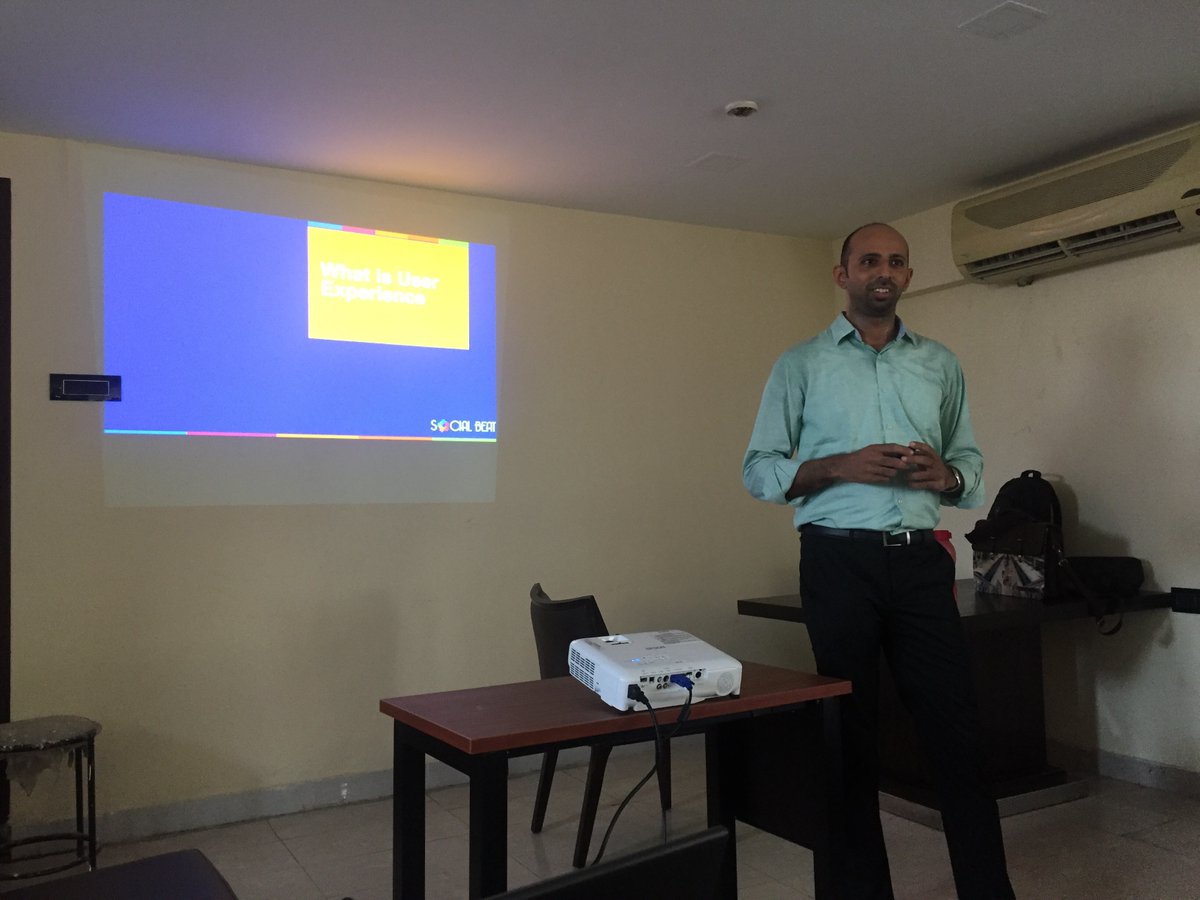
The seventh edition of the Digital Chai Pe Charcha was held in Workafella, one of the best business centres in Chennai on 8th October, 2016. The event saw over 25 participants who were a mix of entrepreneurs, digital marketers, and professionals. User Experience, an important element in any website or app these days, the entire session was insightful, engaging and very informative!
UX or User Experience is exactly what the name suggests – the overall experience one has when they land on your website or your app and the interaction with the company, its services, and its products throughout. In short, the way a website or an app works plus the look and feel of it all together making your user want to come back to your site.
Benefits of good UX –
Research shows that the overall experience of a user right from landing on your site, navigating and scanning through your pages till moving out of your site to another, the emotions that the user feels throughout – satisfied or unhappy – plays a major role on how your brand performs online in comparison to your competitors.
It helps in converting a user into a potential customer and not just that – but converting them at a low cost.
Do a quick study on who your competitors are and analyze their digital mediums. Understand what they do to provide their users with a great experience on their site. Work on your content, have collaborative discussions and put down the necessary inputs to go on your site.
Have a good idea on the different elements you would like to add on to your site – be it a revised sitemap or navigation flowcharts by analyzing user personas and scenarios.
Work on your website with a neat and clear wireframe that should include digital touch-points further building the virality loop.
After your new website is ready to launch, have a quick A/B testing and experiment with heat maps on your site. Analyze the results and rework on the design perspective if necessary.
The speed at which a new user navigates on your site, understands your business and moves through different pages says a lot about the flow of your site.
The user needs to have a smooth experience while navigating through your site, moving from page to page and gathering all the information required.
If your site has a landing page with a form, make sure the form is simple with limited fields keeping in mind to not ask for information that is too personal to the user or fields that will require the user to go back and forth too many times.
Your user’s information should remain confidential and should not be hampered with.
How good is your site’s layout and balance? Is there a consistency in the font? Are the clickable items clear to the user and is the entire page pleasant and easy to navigate?
UX can be improvised with the help of some efficient tools. To improve the overall look and feel of your site, make use of customer surveys, user interviews and case studies. To track your customers’ behavior on your site, experiment with Zarget, Inspectlet, CrazyEgg, Optimizely, Google Analytics and MouseFlow. To understand prototyping, try Balsamiq, Axure, Invision and Pen & Paper.
When the site’s design and flow is focused on establishing a good user experience, the bond between the company and your customer grows building the brand as well as the overall experience of the user with the company.
Click here to understand more on how UX Can Make or Break Your Business
Those of you who missed the first six editions of the Digital Chai Pe Charcha can check them out below:
For a fashion brand to be successful, the people behind it must understand, they are not just selling a product, they are selling an entire lifestyle! This has become increasingly easier to convey to the customers, since social media made their entrance. The use of social media in the fashion retail industry is on the rise, because of visual channels like Instagram, Snapchat, Pinterest and YouTube, simply because image is what these brands are selling.
Creating a solid, quality social media following should be a big part of any brand’s social media strategy and these channels are providing the perfect platforms for engaging with users, in order to raise brand awareness, drive website traffic and generate sales. With this in mind, we present seven ways to leverage social media for your fashion business.
A platform like Instagram is perfect for a lot of things; including sharing ‘behind the scenes’ pictures for your brand, like major fashion house Chanel or Dolce & Gabbana does. This will make your followers identify with your brand on a more personal level, and that makes them more likely to choose your brand next time. It also portraits a certain lifestyle, to which the consumer wants to belong, and again is more likely to choose your product.
To know more about how to use Instagram for your business.
When it comes to fashion on social media, one of the great things is that your followers will often create a lot of content for you, and it is right there for the taking! User-generated content works like word of mouth endorsement, with the users advertising your brand by sharing photos of themselves wearing your products. These posts, ofcourse reach the followers and provides free advertisement for your brand, but even more important, you can also share these pictures from your own platform, which not only makes the user feel valued, but further more provides any potential customer with an even more relatable post. Companies like Calvin Klein and Nike has some dedicated followers, who always posts their brand.
If you have yet to build up a strong group of followers, that automatically posts pictures of your products and tags you in it, you can consider running a campaign, that urges people to compete in posting their favorite outfit (including your brand, of course!), giving them a chance to win a price from you.
In today’s world where people believe people more than brands, Influencer marketing has become the most effective way of advertising. Over the time, many brands from different sectors and industries have shifted their marketing strategy to influencer marketing. Tie-ups with popular influencers help brands reach the right target audience.
Craftsvilla a well- known e-commerce fashion brand achieved great results through influencer marketing. The brand did a campaign with famous fashion influencers across different social media platforms. Neha, one of the fashion influencers shared her experience with crafts villa on her blog and other platforms titled ’Embrace the ethnic wear this season with craftsvilla.’ This post on Instagram received great amount of engagement from her followers.
If you have not explored influencer marketing its time you leveraged this option. So, go ahead and try it out today!
According to recent statistics, India has around 8.19 million Pinterest users. It is one of the fastest growing social platforms and allows users to save pins and create boards with anything from DIY projects to wedding ideas and fashion tips. Many fashion brands have used this platform successfully. It is a good idea for brands to explore Pinterest more.
Pinning just your products every time might make it monotonous for your users, hence, sharing some ideas or content related to the industry will be a great idea to increase engagement.
Gehna, one of India’s leading jewelry brands has over 5,000 followers on Pinterest. The brand has created boards belonging to different categories based on occasions and festivals. This is an interesting way to showcase your products. It makes it easy for followers to pin jewelry that they like directly from the category they are looking for.
For more tips on how you can use Pinterest, find out here.
Videos are always more engaging than just images. Video options are available in every social media channel today, be it Facebook, Snapchat, Instagram, YouTube, etc. Top Fashion brands are using videos as a promotion tool. You can showcase your products, take your audience behind the scenes, live stream a fashion show, etc., which in turn will drive more engagement to your page.
Free people, a fashion brand from the US has leveraged the videos feature on snapchat to connect with their target audience. Since the brand caters to the current generation, they decided to reach them through a medium that is most used by them, which is Snapchat. The employees, take their fans behind the scenes by giving them tours of the showroom, models during photo shoots, etc. The brand also connected with their fans on a personal level through a campaign called “Question Wednesdays”where snappers can personally snap their questions to the brand’s snapshot account. They even ask snappers personal and friendly questions. The overall involvement and engagement through Snapchat that Free People provides users ultimately creates a valued and elite relationship for the user.
Snapchat is one platform that needs to be explored for your business. Check out how you can use snapchat for your business here.
Reach a wider set of audience by targeting the right audience through your Facebook or Instagram ads. Instagram has proven to be the most appropriate and a successful platform for any fashion brand to leverage. Create and place ads with visually appealing creatives on Instagram with a Shop now or Buy no call to action button.
Fossil, created a look by putting together products that would appeal to their target segment and at the same time communicate their brand’s personality. They did this through an Instagram ad in which they used a very attractive image with a call to action button and also added a quirky caption.
Customer service is always key to any business. It is essential to make sure your customers are happy with your products and services. With social media you can do this by responding to their comments, queries, messages or tweets as quickly as possible. Also, ensure you come across as fun and exciting. People on social media do not want to interact with anything that is monotonous or dull.
Another way of making customer experience a delight would be by easing the process of shopping. With the introduction of social shopping, brands can use this feature to reduce the purchase process. Facebook shop is one of the best ways to do so. So, go ahead and leverage this feature for your brand today!
So, what are you waiting for? Go ahead and explore all these tips and tools today! Find the right one that will suit your business and make the best use of it.
- Other contributor to this blog is Stine
E-Commerce Product Photographers & Studios in Mumbai
According to recent statistics, more than 800 million people from Asia are expected to buy products online, and the number of digital buyers in India is estimated to reach more than 112 million, so online sellers are increasing rapidly in numbers. One of the biggest challenges that the retailers face is, “how to convince their potential buyers through captivating product images?”
To satisfy their customers, the sellers must find a perfect way to showcase their products. That’s why e-commerce product photographers play a vital role in selling a product. Here is the list of top photographers who will help in capturing your e-commerce products to perfection.
Radiance Vision offers bountiful services to their clients. They have their e-commerce photography studio with experienced photographers and editors. They also provide photographer and videographer services for other stuff like events, TV commercials, corporate films, animation film, etc.
Faisal Miya Photuwale is a Mumbai-based fashion photographer, who has an experience of 5+ years in the field of photography. The studio has a team of 19 photographers, and they have done more than 350 photo shoots that include fashion catalogs, portfolios, product shoots, glamor, wedding photography, and wedding videos.
He likes experimenting new concepts in different genres and has won many accolades. He has worked with various well-known actors, models, and designers like Rohit Verma, Karan Malhotra, etc.
Contact him at +91 91676 19991.
When Amit Desai was a kid, he loved to paint, play music, create art & read literature. Once he grew up, he completed his Bachelors in Commerce (Honors) and Masters in Finance from Mumbai University. He is passionate about photography; thus, he made his passion his profession.
He is one of finest photographers when it comes to candid photo journalistic wedding photography. He says, “I love the thrill and the excitement of capturing ‘the moment’ in my frame.” His knowledge about colors, lights, and tones helps him to give better outputs that satisfy his clients.
Contact Amit Desai at +91 98201 51581.
Pashminu Mansukhani is a Mumbai-based photographer, who specializes in industrial and corporate photography. Pashminu always had a great passion towards photography. Understanding his passion, he fine-tuned his talents to become a professional photographer. He has done photography in diverse genres like events, real estate projects, and industrial site projects, etc.
Pashminu has worked with more than 100 major clients like Sony India Pvt. Ltd, NELCO Ltd, Godrej & Boyce Ltd, Castrol India Ltd, Aditya Birla Group Ltd, Indiamart Intermesh Ltd, Hitachi Lifts India Ltd, Calyx Chemicals & Pharma Ltd, etc.
Contact Pashminu Mansukhani at +91 98205 78189.
As the name suggests, photographers of True shades photography will observe and retain the lights and shades of subjects. Arshid Bhimji is the founder of True shades photography. He started his career as a compositor in the VFX industry. Gradually, he began his career in wedding photography. Right now, he is primarily doing wedding, fashion, and product photography.
True shades have a team of 16 specialists, and they have completed about 210 projects with 196 clients. Almost all of their customers are delighted with True shades photography.
Contact him at +91 96995 44211.
Are you looking for a photographer who clicks creative and attention-grabbing product photos? If yes, Pixelmania photography should be your ultimate choice. They are doing photography services for more than 12 years. They provide high-quality product photography at affordable prices. They also provide other value added services like catalog design and printing, ad design, all web based designs, and website development.
Contact them at +91 99209 66691.
Are you looking for photographers from other cities? Check the top e-Commerce product photographers in Bengaluru and Chennai.